Fiction
Director’s Kut Productions’ Rajan Shahi on exploring new genres, spin offs and challenges of running daily shows
He plans to produce two new shows in new genres.


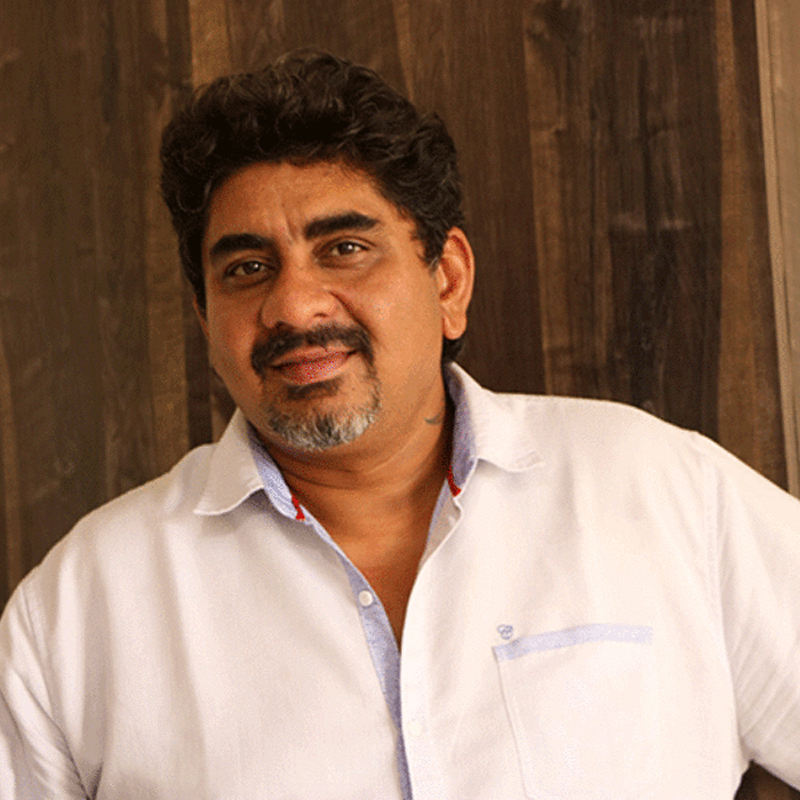
MUMBAI: Director’s Kut Productions is known for producing family drama shows like Jassi Jaisi Koi Nahi, Sapna Babul Ka… Bidaai, Yeh Rishta Kya Kehlata Hai. But this year the company tried its hand in the comedy genre with the show Baavle Utaavle for Sony SAB. Going forward in 2020, the company will be focusing on exploring new genres on television. It will produce two new shows which will be different from family dramas.
In an interaction with Indiantelevision.com, Director’s Kut Production founder Rajan Shahi spoke on his journey, challenges, long running shows, competing with OTT, its YouTube channel First Kut Productions, and plans for 2020.
Edited Excerpts:
You started your career as an assistant director in 1993 and now you run a successful production house. How do you look at your journey from director to producer?
I started my journey in 1993 and I was working as an assistant director and I started my career as a director in 1999. I started directing many weeklies and dailies and my first weekly Jassi Jaisi Koi Nahi was a very big hit. Then I started directing many different shows on many different channels. Some of them were Maika, Betiyan Ghar ki Laxmi, and many more.
While working as a director, I realised that there was a disparity between what is being shot and what has been delivered to the audience. Therefore, I believe that there should be a one man vision behind every show.
Sapna Babul Ka… Bidaai gave me a big strength and foothold in the industry. The show continued for 3 years as a top-rated show and Rishta coming in 2009 strengthened my production house. After that we were known as people who do fewer shows but with continuity and content.
Major changes you observed in the television industry over a decade.
The transition that I saw between the weeklies and dailies were that dailies need more management and creativity. Slowly the time was going where producers would just be financers. Even the channels wanted something creative from the producers and the entire management of the show, who clears the cheque and who talks creatively should be ideally one person which becomes a very cohesive type of a force.
Challenges
The first challenge was turning the weeklies to dailies because so much of output is needed and managing things was the big challenge. Another was to keep ourselves abreast with the latest technology and creative ideas. Yeh Rishta Kya Kehlata Hai is an ideal case study for the television industry because over these 11 years of shooting the society, economics and the social fabric of the country have undergone many changes. The aspiration of the youth, the changing dynamics of a family relationships ‘Yeh Rishta…’ has seen all that.
How did you succeed in running Yeh Rishta Kya Kehlata Hai for such a long time?
In this digital world the show has gone through different genres different market so how does that show survive all these years is basically due to the fact that we kept reinventing and recreating ourselves. These two are my biggest mantras and my biggest learning. Today a maker also has to understand the market, the dynamics of the economy because all that is interdependent. Today, people want to watch what they can relate to in real life.
Now-a-days a very good element has come across is the value of research. Rishta has covered so many social issues, family issues which relate to the real life. Five years ago, the rituals and customs were very different. Keeping up the quality of today’s aspiration or today’s desires and the emotions of the society is such, whenever we do any track we do a lot of research on it. For example when we wanted to show episodes on divorce we contacted top 10 lawyers to know the kinds of problems faced. So there has to be an outreach and serious study. Earlier we used to dictate our audience on what we want to show them but today our audience dictate us on what they want to see.
Role of social media
Social media has tremendously helped us grow. Earlier we could only rely on the channel's person for the feedback on the show. So there was a problem of loss in translation but today from the director to actor everyone is aware about the performance of the show through social media. We get to know about the reaction, aspiration and the needs of the audience immediately. Now we don’t have to rely on somebody for that. It has become a direct connection with the audience. With new portals coming up we don’t want anything or anyone to come between us and our consumers. Obviously consumers are king and that is the thing we follow. We also try to fulfill their wants not completely but at least understand them and cater to them accordingly.
How does technology impact the production cost?
There are two types of technologies, one is what we use in shoot and other one is from what we create. We have to use technology very well to make our product of international standards. Yes money is invested in upgrading the entire set-up but it helps in the future as we can’t use the same technology from past to future. Yes technologies help in connecting the audience And it has become a tool to make our product more appealing in the eyes of the audience.
Brief us on the need to create the spin-off show Yeh Rishtey Hai Pyaar Ke.
On 16 March 2019 we made a new show Yeh Rishtey Hai Pyar Ke and we were more concerned about the spin off of the show. We always see the spins occurred while making of the show and especially the negative spins of it. A lot of spinners have not work and very few were successful. And on television many few shows are becoming brand names. Broadcasters and capitalisers really want to invest on brand names and recreate the success of the mother show. So we decided to create a spin off because we were convinced with the story and not just to make for the sake of making.
Therefore from 9.30 pm to 10.30 pm are both my shows. Though the roots are the same of both the shows but Yeh Rishtey Hai Pyaar Ke is becoming an independent show itself. So that 1 hour slot is very important for me because it has recreated my journey of 1 hour slot few years back with Bidaai and Yeh Rishta. Both the shows got the ratings of first and second for 2 years in the primetime slot.
Tell us about your YouTube channel First Kut Productions
We have our own YouTube channel called First Kut Productions. It has different quirky kind of content like Love Sex Vaigra, Guddu Beds Guddan, we also made a short film – Kharonch. It was a platform built to raise the standards of our production on OTT. We wanted to create something new and we got many writers, directors, from outside to get new stuff in the production.
Plans for 2020
Exploring different kinds of genres have also become very important, so we will focus on that. Recently we made a show for Sony SAB, Baavle Utaavle. We had never made a comedy show before and this year I made it. So having different types of genres and different platforms OTT and many more are my focus.
How do you look at long-running shows?
It is a success, not only for me but also for the entire Indian television industry. In today’s time where shows don’t work, it is a chaotic market with the worst stability whether it could be actors, producers, technicians and the whole team who makes the show and for a show to have 3060+ episodes, it's a remarkable achievement for the Indian television industry.
Pros & cons of long running shows
There are only pros of having a long running show because in the market where we don’t have any long running shows, we are the only one ruling the hearts of Indian television because we have continuity and a base line. It has hardwork of the content of 1600 hours. There are no cons for me, it’s good to have a long-running show, instead of cons I would say there are challenges. The only challenge was to keep the team together.
Do you think there would be any long running shows in future by you or any other producers?
Every maker of the show wants the show to run long. I feel that there would be only few shows that would be able to go such a long or would be able to sustain the demand of the consumer. This is what we have done for 11 years with our show.
New shows in 2020 from Director’s Kut Productions
Of course we will be coming with the new shows in the future. We are planning to do something out of our comfort zone in future. We are also working on 2 new shows that would be coming out that is not the family genre what we have been known for.