News Broadcasting
News Broadcasting Standards Authority issues advisory on coverage of Ayodhya dispute verdict


MUMBAI: While the Supreme Court ended the daily hearings of the Ayodhya dispute case on Wednesday, the News Broadcasting Standards Authority (NBSA) has issued a special advisory for reporting of the sensitive issue. News broadcasters have been advised to conform strictly to subserving the public interest of maintaining communal harmony and preservation of the secular ethos of the country while telecasting news related to the matter.
“You will appreciate that the reporting of the Ayodhya issue being heard by the Hon’ble Supreme Court is one such matter in which extra care and caution needs to be exercised to ensure that the telecast of any news relating to it should not be sensational, inflammatory or provocative,” the organisation said in the advisory.
The advisory also added that in view of the sensitive nature of the Ayodhya issue, reporting requires adherence to the Code of Ethics and Broadcasting Standards and certain specific guidelines issued from time to time in this regard.

“It is, therefore, necessary that all news broadcasters should not only ensure strict compliance of the guidelines but should also ensure that no occasion arises for any speculation about the accuracy, neutrality and impartiality of the content,” it added.
Additional specific guidelines:
1. No broadcast should be made in any speculative manner in respect of the present proceedings before the Hon’ble Supreme Court nor of the judgement before it is pronounced; and of its likely consequence thereafter which may be sensational, inflammatory or provocative.
2. No news in relation to the present proceedings pending before the Hon’ble Supreme Court shall be broadcast unless the reporter and/or editor have adequately ascertained the accuracy, authenticity and correctness of what is reported, preferably from Court records, or at the very least, by being personally present during such proceedings.
3. For clarity and adherence it is emphasized that programmes/telecast should not speculate on issues relating to the Ayodhya judgement or its repercussions.
4. No footage of the demolition of the Babri Masjid is to be shown in any news item relating to the Ayodhya matter.
5. No visuals need be shown depicting celebration or protest by persons in respect of the Ayodhya matter.
6. In view of the sensitivity of news reporting on this issue, extra care should be taken to ensure accuracy by vetting and clearance at the highest editorial level.
7. Telecast of any news/programme must not give any impression of bias or prejudice in favour of, or against any community.
8. Care should be taken to ensure that no opportunity is given to anyone to express any extreme view, including in debates in order to influence the viewers.
9. Debates which are provocative and inflammatory and likely to create tension in the public should be avoided.





News Broadcasting
BBC to cut up to 2,000 jobs in biggest overhaul in 15 years
Cost pressures and leadership change drive major workforce reduction plan
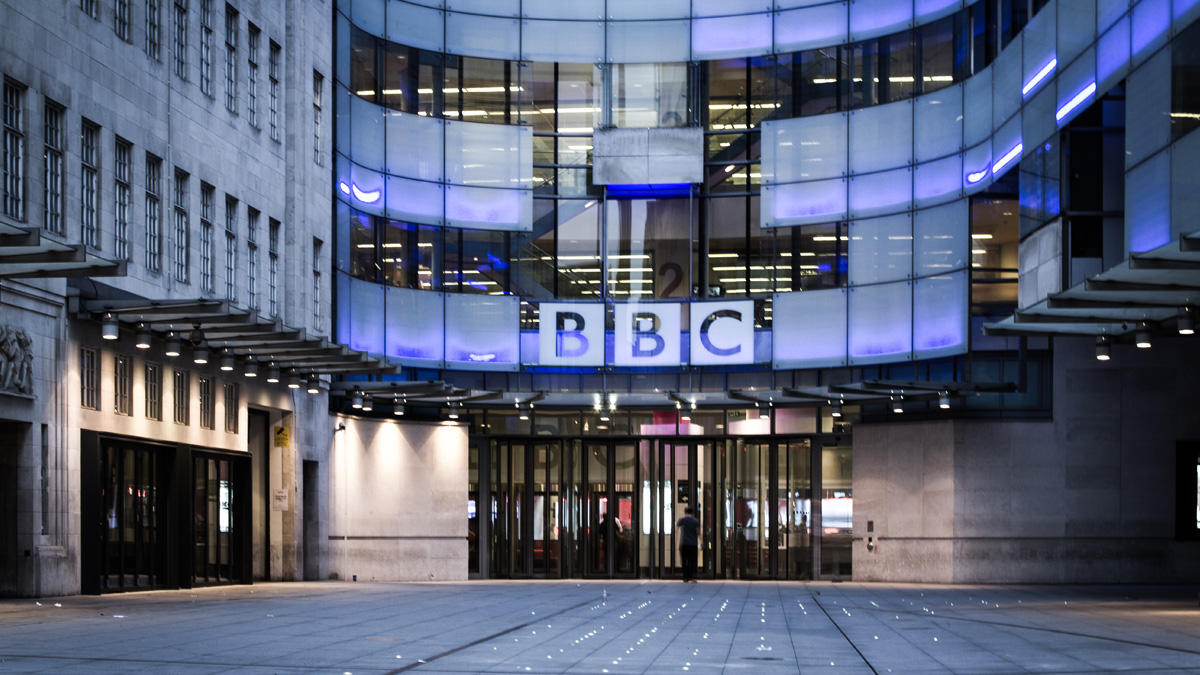
LONDON: BBC has unveiled plans to cut up to 2,000 jobs, roughly 10 per cent of its global workforce, in what marks its biggest downsizing in 15 years.
The announcement was made during an all-staff meeting led by interim director-general Rhodri Talfan Davies, as the broadcaster moves to tackle mounting financial pressures and reshape its operations.
Between 1,800 and 2,000 roles are expected to be eliminated from a workforce of around 21,500. The cuts form part of a broader plan to save £500 million over the next two years, aimed at offsetting rising costs, stagnating licence fee income and weaker commercial revenues.
In a communication to staff, BBC interim director-general Rhodri Talfan Davies said, “I know this creates real uncertainty, but we wanted to be open about the challenge,” acknowledging the impact the move would have across the organisation.
The restructuring comes at a time of leadership transition. Former director-general Tim Davie stepped down earlier this month, with Matt Brittin, a former Google executive, set to take over the role on May 18, 2026.
While some cost-cutting measures are being implemented immediately, the majority of the structural changes are expected to roll out over the next few years, with full savings targeted by the 2027–2028 financial year.
The broadcaster had earlier signalled its intent to reduce its cost base by around 10 per cent over a three-year period, warning of “difficult choices” as it adapts to shifting economic realities and audience expectations.
With operating costs hovering around £6 billion annually, the BBC’s latest move underscores the scale of the financial challenge it faces, as it balances public service commitments with the need for long-term sustainability in an increasingly competitive media landscape.