
Executive Dossier
‘I am a very dissatisfied man because I believe satisfaction is living death’ : Lekh Tandon


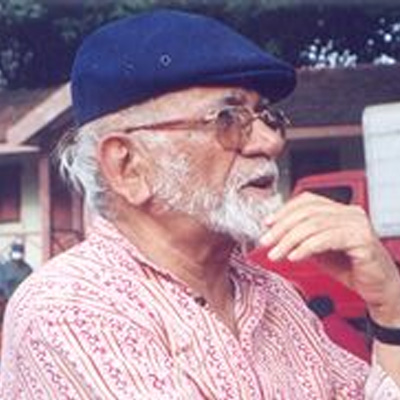
Lekh Tandon is to television what Dev Anand is to the Indian film industry.
A half century of films and TV serials later, the septuagenarian director is indefatigable, still bubbling with energy. After a distinguished career as a film director (his last project was the unforgettable Rajesh Khanna-Rekha-Raj Babbar starrer Agar Tum Na Hote), Lekhji took to television nearly 17 years ago. .
He started with Phir Wahi Talaash on DD1, and his last TV offering has been the recently concluded Khushi on B4U. But Tandon is not one to rest on his laurels. For someone his age, he is still unbelievably charged up to meet the challenges posed to directors by TV, though movies remain his first love..
Lekhji is passionate about his stories and subscribes to that school of thought among directors that believes in story telling holding center stage. An amazing powerhouse of energy, he is equally blunt while spelling out his dissatisfaction with his career. As if to finally be able to do things his way, Lekhji has turned producer and will shortly be rolling out serials under his own banner.
Indiantelevision.com’s correspondent Amar met Lekh Tandon in his office at Andheri to find out what makes the man tick.
When did you first realise that you had an inclination towards film direction?
I first came to Mumbai in 1944 on a holiday and happened to stay with Prithviraj Kapoor. Raj Kapoor, who had entered films by then, took me around some of the studios. I was instantly fascinated by the medium. That was when I decided that I wanted to be a director.
What are the natural instincts required of a successful director?
The ability to discern and make the right selection. This applies to everything – from the choice of the subject to the creation of the characters, the locations, settingseverything. The director has to be driven by his convictions, not be someone guided by his compulsions.
What kind of a storyline appeals to you?
Stories that revolve around human relationships, where the elements of sacrifice and care hold center stage.
Many directors complain that TV offers them very limited freedom to improvise. Your comments?
I agree that TV has its limitations. There are tremendous pressures of budget and time, and of course, channel guidelines under which one has to operate. But this is what makes directing TV serials all the more challenging. It sharpens your skills a lot more than films do. Frankly, I feel there is no point in complaining. One should instead take it up as a challenge and enjoy it.
How different is directing serials vis–vis movies?
Cinema is a no-compromise medium – no shortage of time, money etc. The attitude is – go all out and create a quality product. The atmosphere and pace are more relaxed and the energy levels are much higher. Cinema is like writing a book- it has the shelf life of a lifetime. Good cinema can raise you to the level of immortalit Correspondingly, the commitment and motivation levels are much higher when one is directing movies.
Given a choice today, would you prefer to direct a movie or a serial?
Personally, I would prefer to direct movies.
|
‘The director has to be driven by his convictions, not be someone guided by his compulsions.’
|
 |
You directed your first serial – Phir Wahi Talaash over 15 years ago. How different is directing a serial today vis–vis the mid-eighties?
Very different. In those days, the pace at which we worked was much smoother. Today, there’s a frenzy to save costs and meet deadlines. As regards the time required for shooting one episode, I took three shifts then and I take three shifts now, but back then, there was some reassurance that if, perchance, the episode did not complete in three shifts, it could be extended to a fourth. Today, such a thing is unthinkable. As far as costs go, I would not be in the best position to comment because I have turned a producer only now.
Technology, of course, has changed remarkably. The quality of cameras, editing facilities have all changed.
There is also a major shift in the storylines. The same passion in story telling is just not there. The thrust seems to be more on technique instead. The marketing requirements of channels tend to play a role in the shaping of storylines. In terms of performances, actors then worked in one or maybe two projects at a time. Today, with actors doing so many projects, it is obvious that performances will suffer.
Do you write the serials you direct?
I write the stories of most serials that I direct. The screenplay and dialogues are handled by other people though. But I am open to stories from others because at my age, I realize that my ideas might be a little out of sync with the times.
Is being the writer-director of the same project beneficial or harmful?
It certainly is beneficial. The story being your brainchild, it gives you the maximum scope to improvise on at the stage of shooting.
How do you plan out your work schedules?
Till the last few months, I was directing two serials simultaneously, which required me to shoot for almost 20 days in a month. Now that I have turned producer, I still plan to take up two projects. (Laughs) I still have a lot to do. I am not as old (at heart) as I look.
How do you instruct the actors? Do you personally enact scenes for them?
No, never. I feel that amounts to questioning the capabilities of the actor. I just talk to the actors on a one-to -one basis, make them understand the situations and feel the emotions.
Who are your model directors?
Raj Kapoor, Kidar Sharma, Frank Caprah and Binny Wilder.
As a director, what marks your style and makes you stand apart from others?
I believe it is my sensitivity in story telling. Let me put it this way. There are some directors who are actor-directors, some are story-directors, and some are camera- directors. I know for sure I am not a technical buff, my strength lies in my stories. But I have also managed to extract superlative performances from my actors.
Which subject is closest to you at the moment?
It’s the disintegration of values, especially among women. I feel a section of women have crossed limits and become repulsive, all in the name of modernity. Under the pretext of having been suppressed in the past, they are now prejudiced against society. I would like to work on this subject.
Are directors/ scriptwriters recognized for their work or is the respect confined to stars?
Stars are definitely recognized more than directors or technicians and that is understandable. Stars belong to the audience. Their work is directly seen by the audience. But if a director or writer is respected in his professional community, he should not complain.
 |
‘I am open to stories from others because at my age, I realize that my ideas might be a little out of sync with the times.’
|
Who are your favorite actors?
A lot of them- Kanwaljeet, Pawan Malhotra, Arundhati, Divya Seth, Arun Bali, Naveen Nischol, Vinita Malik, Seema Bhargava, Lillette Dubey.
Which is your favorite piece of work?
I am not happy with any of my projects. I feel my best is yet to come. I am a very dissatisfied man because I believe satisfaction is living death.
How do you unwind?
By playing on the computer and spending time with my grandchildren.
How would you like to be remembered?
As a man who came here with a lot of conviction but was not able to do a single damn thing he could be proud of. (Laughs) My innings is not through. I have just turned producer and there is a lot to come.






