MAM
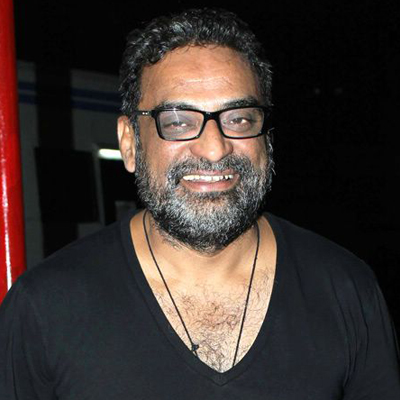
Awards shouldn’t be taken very seriously: R Balki
MUMBAI: A leader is said to be the one who takes criticism in his stride and recognition is the last thing on his mind. We wonder if this is the driving thought of filmmaker and the chairman and chief creative officer of the ad agency Lowe Lintas & Partners R Balki?
At the recently concluded Effie Awards conducted by the Advertising Club, Lowe Lintas walked away with the Agency of the Year honour as it bagged six gold, five silver and five bronze metals at the award ceremony. But the man, who is the driving force behind the stupendous work, proclaims that awards have never been in his priority list.
In fact, most of the award shows of the advertising world have in any way not earned the required respect from the ad fraternity. While some have been shunned by most of the advertisers, some have not even been noticed. And some agencies have started their own award shows in order to bring in quality, for instance Lowe Lintas’ True Show or Ogilvy and Mathers’ Envies.
Unlike the showbiz that’s full of award functions and celebrities gracing them as well, the award shows of the ad world are a low key affair attended by few and the number of participants being even fewer. And if in such a scenario, an award function manages to bring almost the entire fraternity together, it certainly means something. The 13th edition of Effie received a great response with almost every agency gracing the event.
Lowe Lintas led the Effies leaving Ogilvy & Mather behind by 35 points, but the winning companies’ boss still stood by his belief that these functions are about partying and winning and losing doesn’t really matter. Indiantelevision.com probed Balki a little more to get an insight after his agency’s grand victory. Excerpts:
On a personal level, you have been very vocal about what awards (don’t) mean to you! So what do you and your team have to say about winning the Effie?
It is not about winning or losing but an evening of celebration. Effies have always been a constant part of the industry and we have always participated in it. It is a democratic agency where many feel that we should enter the agency and not others. So we enter in the shows where the team as a whole wants to participate.
So if you win, you party with a lot of noise and if you don’t win then you should party without making a big noise. I think winning and losing is a part of the game and I don’t think awards should be taken so seriously. It’s not a death and life scenario at all; it is not that if one wins an award we are better or otherwise. I believe that it is the work that speaks and it could be good or bad without winning an award.
Awards are not important but if the team feels that they want to participate in a certain award then they are free to do so. The team right now felt that it should participate in the Effies and so we went ahead and did. Tomorrow, if the team feels that it doesn’t want to participate in any award then we will not. It all depends on the team.
Anything you would like to change about Indian advertising awards?
One hundred per cent we would like to initiate an award where advertising should be just the way it is. It can neither be all about effectivity nor creativity. I think creativity is to make things better and sometimes it is not about making it better. Sometimes great ideas also don’t work. It cannot be just about effectiveness or blind creativity. There is a way to judge advertising ads. It is funny that an industry which creates so many ads and brands hasn’t been able to create an awesome award function for itself.
Whom do you see as your main competitor especially during award shows?
We don’t believe in award shows so we don’t believe in competitors. There are a lot of good agencies; O&M is a great agency which is during great work. There are few others as well but two agencies which are doing some great work are O&M and Lintas.
Which would be the one award which you would like to hold in your hands? Since you have dabbled in films it can be a film award too?
Since I don’t believe in them, I guess I will have to think hard before I say that. Right now, I don’t know if there’s an award that exists that really catches my fancy.

MAM
Madison World to launch AI platform M BrAIn for media planning
Agency group invests about $1 million as it shifts to AI driven growth planning.
MUMBAI: If media planning once ran on spreadsheets and gut instinct, the next chapter may run on algorithms and curiosity. Madison World is preparing to roll out the first version of its proprietary artificial intelligence platform Madison M BrAIn in early April, as the independent agency group accelerates its transition toward AI driven planning and product led media services.
The platform, expected to involve an investment of around $1 million, is designed to reshape how the agency approaches strategy by combining internal knowledge, external data sources and advanced AI models into a single intelligence ecosystem.
According to Madison Media, OOH and Hiveminds partner and group CEO Ajit Varghese the initiative forms part of a larger structural rethink within the organisation. “Traditionally agencies built frameworks around media planning and allocation. We are redesigning that structure into what we call a Growth Planning System (GPS),” Varghese said.
The shift reflects a growing belief that effective media strategy must begin earlier in the decision making process. Instead of jumping directly to channel allocation, planners must first decode the market itself identifying consumer barriers, purchase triggers and the core challenges facing a brand.
Once those insights are mapped, agencies can build clearer growth agendas for clients and design media strategies that connect more closely with business outcomes.
To support that approach, Madison has built Madison M BrAIn as what it describes as a human AI cognitive ecosystem. Acting as a central intelligence hub, the platform aggregates proprietary insights alongside external data sources and large language models, enabling planners to access deeper market intelligence before building campaign strategies.
Varghese said one of the core objectives is to democratise knowledge across the organisation. “In the past, this level of understanding was largely available to senior leaders or experienced strategists. With Madison M BrAIn, even a junior planner should be able to access the same intelligence and approach clients with a far more informed perspective,” he said.
The agency has already implemented the new planning philosophy internally and completed three months of testing for the AI platform, with early trials showing encouraging results in terms of learning capability and system performance.
While the first version relied on global large language models, Madison is now developing its own proprietary Small Language Model (SLM) to serve as the core of the M BrAIn ecosystem.
“The SLM will be able to read global LLMs, but the LLMs cannot read the SLM,” Varghese explained. “That ensures all the intelligence we build remains within the Madison ecosystem and strengthens our proprietary knowledge base.”
The first version of Madison M BrAIn is expected to go live in early April, with a more refined version targeted by the end of June. Over time, the platform will integrate additional external data streams and APIs including consumer insight platforms, social listening tools and client datasets.
These integrations are expected to enhance the system’s learning capability and enable it to generate increasingly sophisticated strategic recommendations.
Although the platform is currently being deployed for internal use, Madison sees potential for it to evolve into a licensable product in the future.
“At the moment, our focus is to stabilise and strengthen M BrAIn internally. But over time there is potential for this to become a product that could be licensed externally,” Varghese said.
The AI platform is also part of a wider technology transformation underway at the agency group. Alongside M BrAIn, Madison is building a broader digital infrastructure called the Catalyst operating system, which aims to integrate operational processes, data and product platforms into a unified ecosystem.
This broader technology stack could require an additional $1 million to $1.5 million investment over time, though spending will be phased and reviewed regularly.
“We are evaluating progress every three months and prioritising the most critical capabilities first,” Varghese said.
Madison expects the full AI and operating ecosystem to be fully functional within 12 to 18 months, positioning the agency to combine human strategy with machine intelligence as the advertising industry enters its next data driven phase.