Reality
Family Full House with Rohit Sharma: Why Sony is betting on game shows to drive brand engagement
Sony Pictures Networks India’s Akshay Agrawal on advertiser demand, festive ad spending and content-led brand integrations around its new family game show


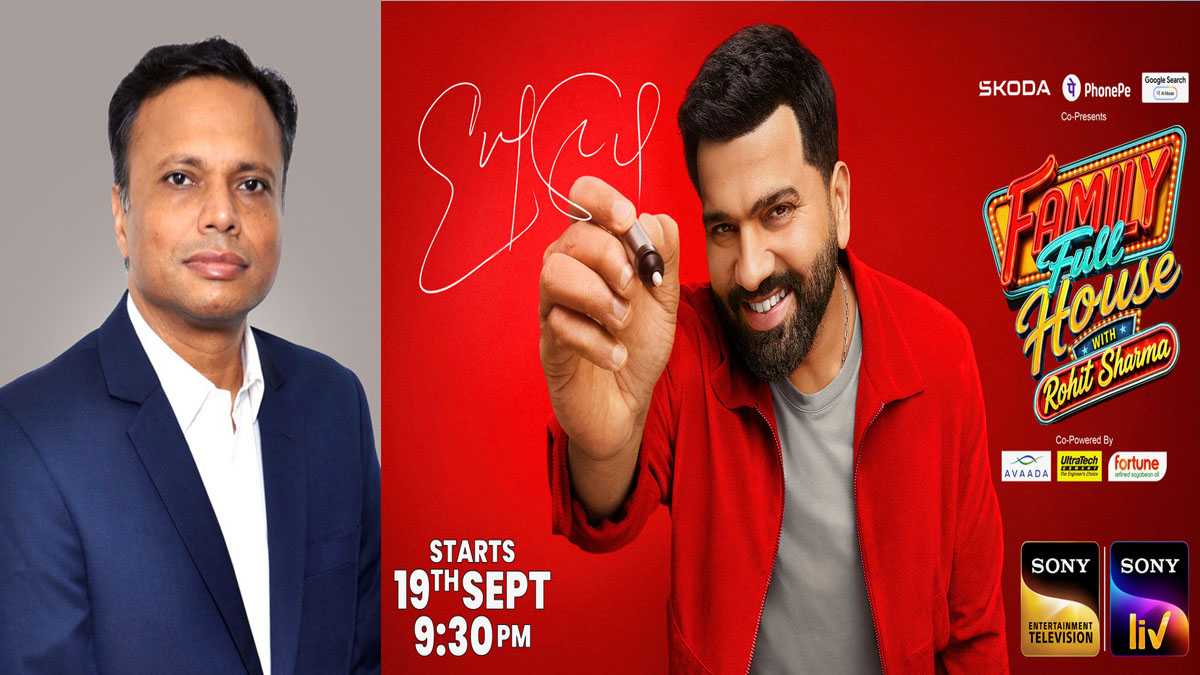
MUMBAI: As television networks look beyond traditional advertising spots to create deeper brand engagement, game shows are emerging as a strong proposition for both audiences and advertisers. Sony Entertainment Television is leaning into this opportunity with Family Full House with Rohit Sharma, a new family game show that brings India’s World Cup-winning captain into entertainment for the first time.
The show premiered on 19 September, bringing together family co-viewing, a mass personality and content-led brand integrations during the crucial festive period for television advertising. For Sony Pictures Networks India (SPNI), the bet is not just on the familiarity and appeal of Rohit Sharma, but on the ability of non-fiction formats to create participative viewing and give brands a more organic role within the content.
In this conversation, Akshay Agrawal, Head – Linear Ad Sales, Sony Pictures Networks India, discusses why SPNI is doubling down on game shows, what advertisers are seeking from content partnerships in 2026, the commercial proposition of Family Full House with Rohit Sharma and how brands can move from being advertising interruptions to becoming part of the viewer experience.
Rohit Sharma is a massive sporting icon, but this marks his entertainment debut. What was the core commercial rationale behind partnering with him for a non-fiction game show format? And how does Rohit Sharma’s personal brand and fan demographic translate into linear television ratings and ad sales potential?
Rohit Sharma is an international cricketer and a world cup-winning captain, loved across age groups and income strata, with a massive fan base and immense fandom. From a commercial standpoint, that credibility and mass appeal make him a very strong proposition for brands. Every brand would want its messaging to be associated with someone as credible and widely loved as Rohit Sharma. However, for us, the opportunity is beyond leveraging his cricket fandom. It is about bringing that credibility and familiarity into a completely different entertainment format and creating a new connection with families. This has also led to strong interest from brands wanting to be a part of the show because of the credibility that he brings, with brands across Auto, AI, BFSI, FMCG and other categories coming on board. The opportunity is to take his equity and make Rohit an integral part of the content and brand narratives, with brands being woven into the show in a way that is relevant and organic to the format.
The show premiered on September 19, landing directly in the peak festive season. How are advertisers responding to Family Full House with Rohit Sharma, and what does the festive ad spend outlook look like for SET this year?
The festive period is a very critical period for us. This year, we already have the 18th season of Kaun Banega Crorepati on air, we are launching Family Full House with Rohit Sharma in September, and then we have the new season of Indian Idol coming up in October. So, across the festive period, we have a very strong non-fiction slate.
The response from advertisers for Family Full House with Rohit Sharma has been very encouraging. The show brings together a strong family-viewing proposition, a differentiated format and a personality like Rohit Sharma, which has created strong interest among brands. We already have sponsors and partners across a diverse set of categories, including Škoda, Avaada, UltraTech Cement Ltd., Fortune Refined Soyabean Oil, Reserve Bank of India, BHIM Payments App and Supersox. The show also has PhonePe and Google Search AI Mode coming on board.
What specific brand integration opportunities does Family Full House with Rohit Sharma offer that traditional fiction/drama shows cannot match?
With shows like Family Full House with Rohit Sharma, our game show proposition helps us bring the entire family together. Today, it is no longer about running a 30-second spot within the show. It is about how we are able to bring the brand on the show within content, drive traffic to our app and downloads, create a surge in search traffic, and drive customers to showrooms.
We are creating solutions that are native to the content. Google Search AI Mode is a good example. Family Full House with Rohit Sharma is a question-and-answer format where the answers are based on surveys, not conventional textbook knowledge. That naturally creates curiosity. Google Search AI Mode can provide trivia and context around the questions on the show, adding value for Rohit, contestants and viewers. Similarly, Avaada, which operates in the clean-energy space, is partnering around a round for contestants, creating an opportunity to educate viewers around clean and always-on energy, while Škoda is the grand-prize partner for the winning family.
Why double down on a fresh game show format right now? What are advertisers asking for in 2026 content partnerships that led to this decision?
At Sony Pictures Networks India, we have always believed in the power of non-fiction formats. We were among the first networks to bring several of these formats to the country, and in recent times, we have doubled down on that belief. Within non-fiction, we have a particular focus on family game shows because they work strongly from both a viewer and an advertiser standpoint. What these formats do particularly well is bring the entire family together – from children to senior citizens – to watch and participate. These are not passive viewing experiences. Because they are question-and-answer formats, viewers naturally want to lean in and participate. Whether they are formally playing through an app or simply answering along with the contestants, there is an inherent desire to compete with other members of the family and see who gets the answer right.
These moments of conversation, participation, sharing and competition are moments audiences genuinely cherish. And those are precisely the moments that advertisers and brands want to be part of. The opportunity today is therefore no longer just about chasing passive reach; it is about creating participative reach and participative engagement. I think that is what brands increasingly want, and it is also the ambition we have as a network.
Non-fiction formats carry heavy production costs compared to daily soaps. What makes the game show format a winning economic model for SET right now?
The economics of a format cannot be looked at purely through the lens of production costs. For us, the larger equation is the value a property creates across audiences, advertisers and the broader ecosystem. Non-fiction, particularly game shows, has demonstrated strong resonance with viewers and, equally importantly, with our brand partners.
The format gives advertisers a highly engaging environment with multiple opportunities to integrate brands organically into the content, rather than relying only on conventional ad inventory. It also allows us to build bespoke solutions across categories, which is increasingly what advertisers are looking for. That is why we are continuing to invest behind our non-fiction slate. The response from both viewers and advertisers gives us confidence in these formats. Therefore, we are doubling down our investments in this space.
Since Family Full House with Rohit Sharma launches simultaneously on SET and Sony LIV, how are you structuring ad inventory? Are brands forced to buy hybrid bundles, or can they target linear and OTT separately?
The consumer journey has become very fluid today. Audiences are constantly moving between platforms, so the content also must move with them. That is the lens we are applying to the content we create across the network. When we look at Family Full House with Rohit Sharma, we are not creating content with just one platform in mind. It must travel across platforms. It is not just about television and OTT; we also want the content to live on social media and reach new audiences through influencers and content creators.
Sports stars doing ad endorsements is standard, but anchoring a full GEC reality format is rare. Does this mark a permanent shift in how television networks will look for host talent moving forward?
For us, the opportunity with Family Full House with Rohit Sharma is not simply about putting a sports personality into an entertainment format. It is about finding the right personality–format fit. Rohit brings a distinct connect and familiarity, but the format itself has to give him a natural space to be himself and engage with families and contestants.
From an advertiser standpoint, this also creates an interesting proposition. A personality with strong equity outside television can bring a different audience connect and open up new possibilities for brands to participate in the format through relevant, bespoke integrations.
Viewers today suffer from rapid format fatigue across both TV and streaming platforms. How does Family Full House with Rohit Sharma plan to keep audiences hooked week after week to protect advertiser investment?
With Family Full House, the opportunity was to create a game show that brings the entire family together and creates moments of participation, conversation and competition. The format of the show is based on everyday-life questions, with answers drawn from surveys, making it relatable and accessible rather than a conventional knowledge-based quiz. We have seen that family game shows have a strong co-viewing index. When a question is asked on screen, everyone in the family wants to participate, answer it and compete with each other. That creates a very different kind of engagement with the content.
Brand solutions are core to what we do today. For Family Full House with Rohit Sharma, the proposition is a combination of family co-viewing, Rohit Sharma’s fandom and credibility, bespoke solutions, and a brand-safe environment. Our focus is on creating content-led solutions that can contribute to business outcomes, with integrations that are native to the content. The objective is to make the brand a part of the viewer experience rather than an interruption.
For SPNI, Family Full House with Rohit Sharma represents a broader shift in how television can create value for both audiences and advertisers. The focus is moving beyond conventional ad inventory towards content-led integrations, participative viewing and solutions that can connect brands with consumers across television, OTT and digital platforms.
With the show launching during the festive season, the opportunity also comes at a time when advertiser demand is closely tied to high-impact, family-oriented programming. As Agrawal puts it, the objective is to make the brand “a part of the viewer experience rather than an interruption”.
For Family Full House with Rohit Sharma, therefore, the larger proposition extends beyond having a sporting icon at the centre of a game show. It is about combining his audience equity with the reach of non-fiction and creating a format where entertainment, participation and brand storytelling can work together.