TCHxVAM2026
Goldie Behl bets big on vertical dramas, regional content and AI storytelling at TCH x VAM 2026
Rose Audio Visuals founder says creators must adapt fast as screens shrink and habits shift

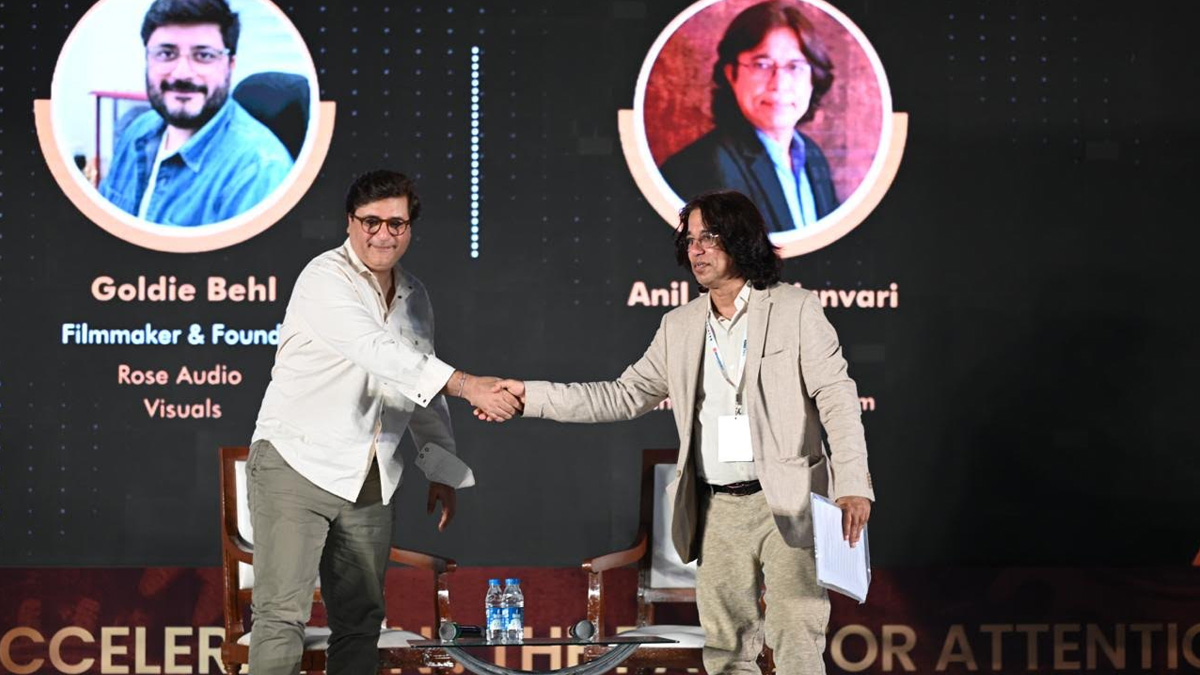
MUMBAI: From pocket-sized dramas to panoramic theatrical spectacles, Rose Audio Visuals founder and filmmaker Goldie Behl made one thing clear at The Content Hub x VFX & More Summit 2026: the entertainment business can no longer afford to stand still.
In a candid fireside chat with Indiantelevision.com co-founder and editor in chief Anil Wanvari, Behl unpacked how storytelling, viewing habits and production economics are rapidly changing across television, OTT, theatrical cinema and the fast-growing vertical drama space.
The conversation moved briskly across formats, platforms and business models, mirroring the fragmented but fast-expanding world of Indian entertainment itself.
Behl revealed that his company is currently producing three television shows while simultaneously scaling premium OTT projects in Hindi, Telugu and Tamil. Alongside linear television, the company is also developing regional originals for major streaming platforms, including projects being developed with teams connected to Netflix and Amazon.
A major focus of the discussion was the rise of vertical dramas, the short-form mobile-first storytelling format that has exploded globally. Behl appeared particularly energised by the format’s restless pace and compact storytelling grammar. Rather than treating vertical videos as trimmed-down television scenes, he stressed the need to write specifically for the format, with every few minutes delivering its own emotional payoff and hook.
To tap this space, Behl said the company has launched a separate vertical-focused studio named Studio 160, aimed at creating snackable, youth-driven content for Gen Alpha audiences. Around 10 projects are already in different stages of production and delivery.
Interestingly, Behl did not frame vertical storytelling as a threat to traditional entertainment. Instead, he described it as a necessary evolution in audience behaviour. According to him, creators who resist changing viewing habits risk becoming irrelevant, especially at a time when viewers seamlessly move between cinema halls, televisions, OTT platforms and mobile screens.
The veteran producer also spoke at length about the changing economics of content creation. Rather than relying on one large tentpole project, he argued that modern studios need multiple smaller bets spread across platforms and formats. Leaner production models, diversified IPs and platform-specific storytelling are increasingly becoming survival tools in an overcrowded market.
That diversification strategy is visible across the wider Rose ecosystem. Beyond television and OTT, the company is scaling podcast and audio content through RosePod, while also expanding branded content operations under ConnectNext. Behl said the company plans to build its own IP library and YouTube catalogue, particularly as it now operates across three languages.
Regional expansion was another strong theme. Behl said the company is aggressively pushing into Telugu content and has also opened a Tamil office to curate local stories. Filmmaker Nandini Reddy is leading creative development for the Hyderabad operations.
At the heart of Behl’s approach was a recurring emphasis on flexibility and delegation. He described transformation and resilience as the defining values shaping the company’s culture, adding that creative teams must be empowered with ownership rather than tightly controlled structures.
The discussion also turned reflective at times. Looking back at Drona, Behl admitted that projects lose their spark when creators stop enjoying the process. For him, the emotional energy behind a production remains closely tied to both creative satisfaction and commercial success.
On the theatrical front, Behl argued that cinema halls now need stories that justify collective viewing experiences. Grand spectacles, horror films, socio-political dramas and emotionally charged community-viewing stories are among the formats he believes can still pull audiences away from personal screens and back into cinemas.
His observations on audience behaviour extended into platform-specific storytelling as well. Television, he suggested, still works as a companion medium woven into everyday household routines. OTT demands immersive world-building and active engagement, while vertical content survives on speed, hooks and relentless pacing.
The session also touched on artificial intelligence and its growing role in filmmaking. Behl described AI as a powerful creative tool that creators must learn to embrace rather than fear. However, he maintained that human instinct, imperfections and emotional nuance still remain essential to compelling storytelling. According to him, flaws and unpredictability often give films their soul, something fully AI-generated content may still struggle to replicate authentically.
As the session wrapped up, one idea lingered above everything else: Indian entertainment is no longer operating in neat silos of television, film or digital. It is becoming one constantly shifting screen economy where adaptability matters as much as storytelling itself.