Education
Govt to set up creator labs in 15,000 schools to boost AVGC sector
Budget boost and WAVES initiatives aim to scale India’s creator economy

NEW DELHI: The government is doubling down on India’s so-called orange economy, rolling out an ambitious plan to expand content creation infrastructure and skill development across the country.
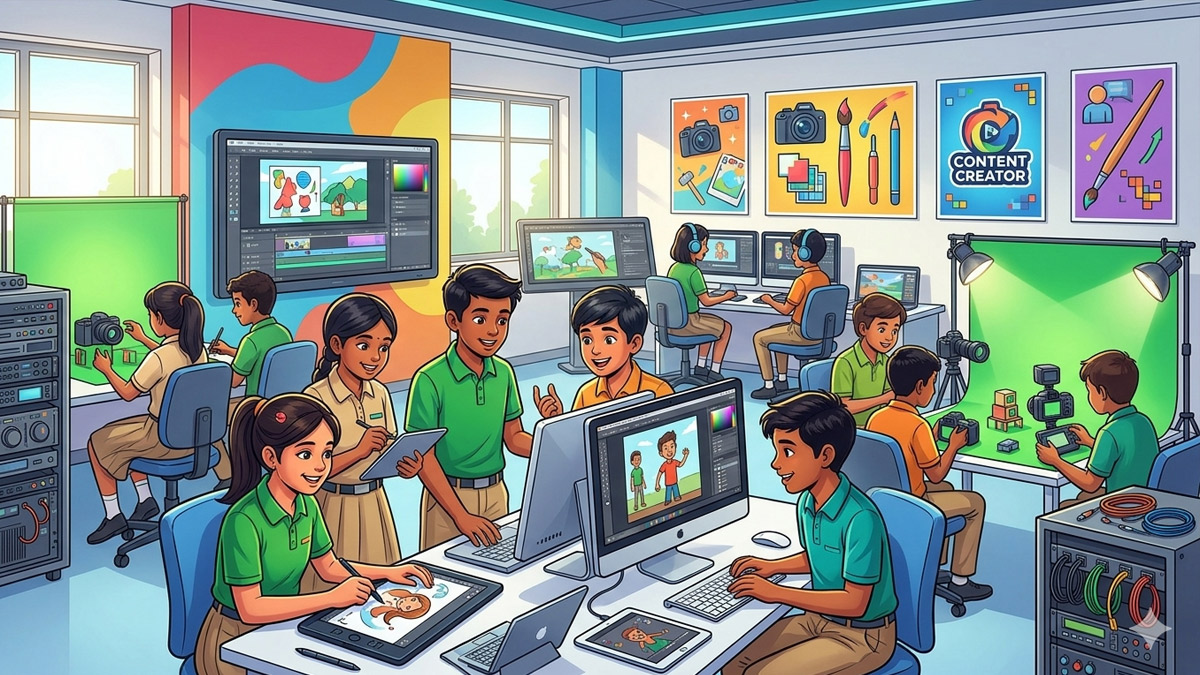
At the heart of the push is a proposal to set up AVGC Content Creator Labs in 15,000 secondary schools and 500 colleges, backed by an allocation of Rs 250 crore in the Union Budget 2026-27. The move is aimed at nurturing talent early and building a pipeline for the fast-growing animation, visual effects, gaming and comics sector.
The Indian Institute of Creative Technologies has been designated as the nodal agency to steer this rollout. Operating from the campus of National Film Development Corporation in Mumbai, the institute has already launched 18 courses, with over 130 students enrolled and a trainer network beginning to take shape.

The broader ecosystem push is rooted in recommendations by the AVGC Promotion Task Force, which estimates that the sector could require around two million skilled professionals by 2030. The government is now working to align training, infrastructure and policy to meet that demand.
Flagship platforms such as WAVES 2025 are playing a central role in this strategy. The summit brought together creators, investors and global industry leaders, while initiatives like the WaveX Startup Accelerator Programme are helping startups scale through mentorship, funding access and international exposure.
The Create in India Challenge has also emerged as a key talent pipeline. Its first edition saw 33 challenges and participation from over one lakh creators, including many from smaller cities, signalling a democratisation of content creation across India.
Sharing details in Parliament, Ministry of Information and Broadcasting minister of state L Murugan outlined the government’s multi-pronged approach in response to queries raised by Kriti Devi Debbarman and Eatala Rajender.
With policy, funding and platforms now aligning, India’s creator economy is getting a structured push. The message is clear. From classrooms to global screens, the next wave of storytellers is being built at scale.






Education
Internshala launches 6 founder-led internships with stipends up to Rs 50,000
Intern With Icon offers direct access to top founders, mentorship and hands-on roles

MUMBAI: Internshala, an upGrad company, has launched a new initiative titled “Intern With Icon”, offering six students a chance to work directly with some of India’s most recognisable founders and faces from Shark Tank India.
The programme brings together a high-profile line-up including Vineeta Singh, Varun Alagh, Peyush Bansal, Namita Thapar, Kunal Bahl and Aman Gupta. One intern will be selected to work with each founder, gaining hands-on exposure across business functions along with direct mentorship.
The internships come with stipends ranging from Rs 30,000 to Rs 50,000, along with a one-on-one session with the assigned founder. Applications open on April 27 and close on May 10, with final selections to be announced on May 18. The internship will run from May 27 to July 31, 2026.
Unlike traditional programmes, the initiative is degree-agnostic and focuses on potential rather than pedigree. Candidates are expected to demonstrate curiosity, adaptability and problem-solving skills, with basic familiarity in tools like Excel, PowerPoint and Canva seen as an added advantage.
Internshala founder and CEO Sarvesh Agrawal said, “Intern With Icon is designed to bridge aspiration with access. Young talent often admires iconic founders from afar. This programme gives them a chance to learn directly and understand how businesses are built.”
The initiative reflects a broader shift in early-career learning, moving from classroom-style exposure to real-world, founder-led experience. By placing students in the thick of decision-making and execution, Internshala is aiming to make internships less about observation and more about participation.
As competition for meaningful work experience grows, programmes like this could well set the tone for how India’s next generation of professionals gets its first real taste of the business world.