Regulators
TRAI moves to regulate free streaming TV apps
India’s telecom watchdog wants app-based linear TV services brought to heel on content accountability and consumer protection

NEW DELHI: India’s telecom regulator has trained its sights on a fast-growing corner of the broadcasting market that has so far operated in a regulatory grey zone. The Telecom Regulatory Authority of India (TRAI) released a consultation paper on Monday seeking to build a formal regulatory framework for application-based linear television distribution (ALTD) services, a category that includes free ad-supported streaming television, better known as FAST services.
The move follows a reference from the Ministry of Information and Broadcasting, made on 15th December 2025 under Section 11(1)(a) of the TRAI Act 1997, asking the regulator to examine and recommend rules for FAST services with a focus on three things: parity with existing broadcasting platforms, content accountability and consumer protection.
ALTD services cover a broad and booming segment: apps that deliver live, linear TV channels to viewers, whether pre-installed on smart television sets and other devices, downloaded as mobile or smart TV applications, or accessed through web browsers. As these platforms have multiplied, they have done so largely without the licensing and content obligations that govern traditional cable and satellite broadcasters, a gap that regulators are now keen to close.

The consultation paper puts two sets of questions on the table. The first concerns the terms and conditions under which application providers should be authorised to offer ALTD services. The second addresses the obligations that broadcasters, content providers and aggregators must meet when placing linear TV channels on these platforms.
Stakeholders have until 4th May 2026 to submit written comments and until May 18th to file counter-comments, preferably by email to advbcs-2@trai.gov.in and jtadvisor-bcs@trai.gov.in. The full text of the consultation paper is available on TRAI’s website at www.trai.gov.in. For clarifications, Deepali Sharma, advisor (B&CS) at TRAI, can be reached at +91-11-20907774.
India’s streaming market has exploded in recent years, and FAST channels, which cost viewers nothing and are funded by advertising, have emerged as a potent vehicle for reaching mass audiences on connected televisions. Regulators the world over are scrambling to catch up. TRAI has now made clear it does not intend to be left behind.







Regulators
India Post & DTDC sign MoU to boost logistics reach across India
Partnership taps 1.64 lakh post offices to speed up e-commerce deliveries
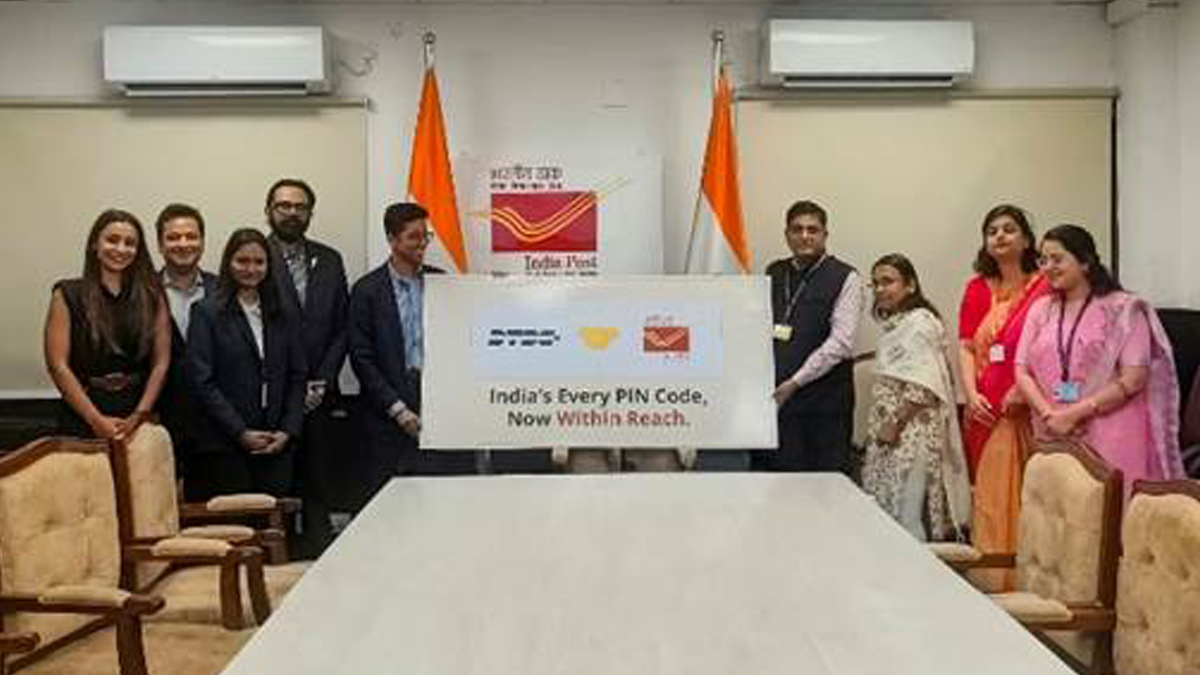
NEW DELHI: In a move aimed at strengthening India’s fast-growing logistics and e-commerce ecosystem, the Department of Posts under the Ministry of Communications has signed a memorandum of understanding with DTDC Express Limited to enhance parcel delivery capabilities across the country.
The agreement was formalised in New Delhi by Department of Posts general manager parcel directorate Neeraj Kumar Jha and DTDC Express Limited ceo Abhishek Chakraborty, in the presence of senior officials from both organisations.
At its core, the partnership looks to combine India Post’s extensive nationwide network with DTDC’s operational expertise in logistics. The collaboration will allow DTDC to tap into more than 1.64 lakh post offices, significantly widening its reach, particularly in remote and underserved regions.
The MoU builds on an existing association that began in 2025 and focuses on expanding joint logistics operations, sharing capacity, and aligning best practices across the parcel ecosystem. Both organisations will also coordinate marketing strategies and hold quarterly review meetings to track progress and identify new growth opportunities.
For DTDC, the tie-up offers scale and deeper market penetration, helping it meet rising demand driven by e-commerce. For India Post, the partnership is expected to strengthen its parcel business, improve delivery timelines, and reinforce its role in the country’s logistics value chain.
The inclusion of services such as cash on delivery is also set to make the collaboration more relevant for online sellers and consumers alike, especially in regions where digital payment adoption is still evolving.
As India pushes towards becoming a global logistics hub, this public-private partnership signals a practical step forward, blending legacy infrastructure with modern delivery capabilities to keep pace with the country’s e-commerce boom.