Regulators
Rohit Jain appointed RBI deputy governor for three-year term
Veteran central banker to succeed T Rabi Sankar in key financial role

NEW DELHI: The Appointments Committee of the Cabinet has approved the appointment of Rohit Jain as deputy governor of the Reserve Bank of India for a three-year term, according to a notification issued by the Department of Personnel and Training.
Jain will take charge on or after May 3, succeeding T Rabi Sankar, whose tenure concludes this week.
A career central banker, Jain brings over three decades of experience at the RBI, having worked across supervision, human resource management and core banking functions. He was appointed executive director in December 2020 and most recently oversaw the Department of Supervision, focusing on risk, analytics and vulnerability assessment.

Within the RBI’s leadership, Jain becomes one of the deputy governors elevated from within the institution, alongside SC Murmu, who was promoted in October 2025. The central bank’s deputy governor bench also includes Poonam Gupta and Swaminathan J, both appointed from outside the organisation.
Jain holds a master’s degree in commerce and an MBA, along with professional certifications such as the International Certificate in Banking Risk and Regulation and the Certified Associate of the Indian Institute of Banking and Finance qualification.
He is expected to take on portfolios previously handled by Rabi Sankar, including financial markets regulation, foreign exchange and payment and settlement systems, though the RBI is likely to formally allocate responsibilities in the coming days.
His appointment follows a selection process in April, during which multiple executive directors were considered for the role before Jain was finalised.
With his deep institutional experience and background in risk and supervision, Jain’s elevation comes at a time when the RBI continues to balance financial stability with the rapid evolution of India’s digital payments and market ecosystem.






People
Prasoon Joshi appointed chairman of Prasar Bharati
The lyricist and creative heavyweight takes the helm of India’s public broadcaster as it battles a fast-changing media landscape
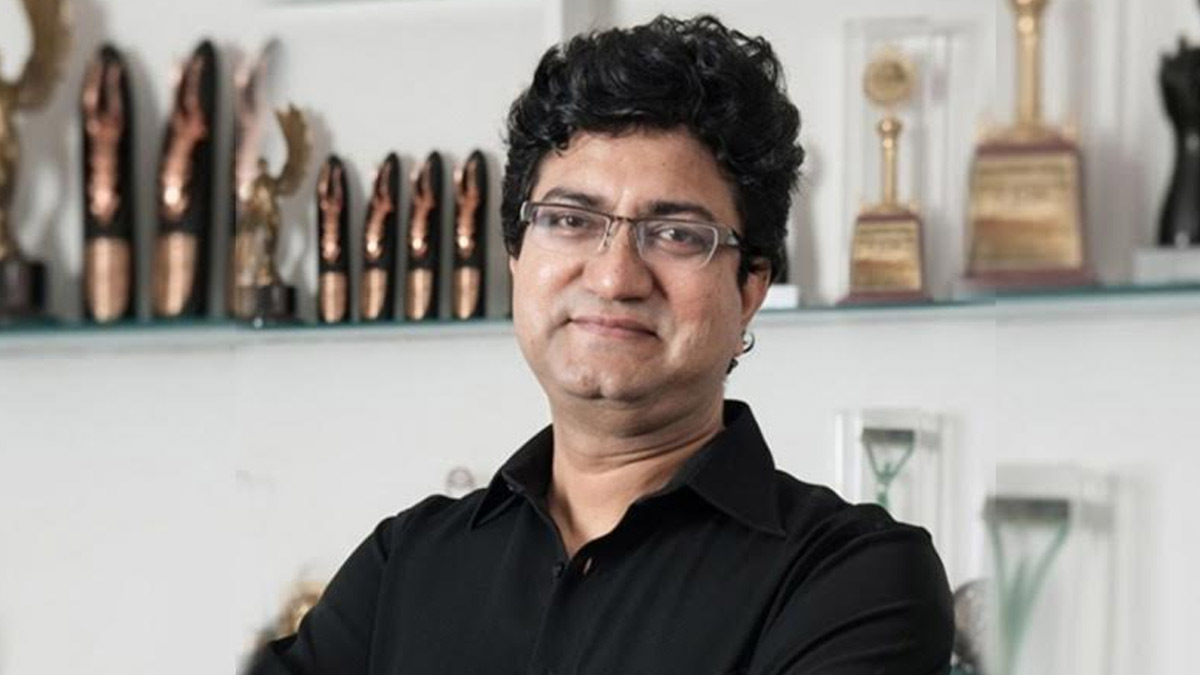
NEW DELHI: India’s public broadcaster has a new boss, and he is not your typical bureaucrat. The government on Saturday named Prasoon Joshi, one of the country’s most celebrated lyricists, poets and advertising minds, as chairman of Prasar Bharati, ending months of vacancy at the top of the organisation since former chairman Navneet Kumar Sehgal, a bureaucrat, quit in December.
The Ministry of Information and Broadcasting made the announcement, a day after it named filmmaker Ashutosh Gowariker as director of the International Film Festival of India, signalling a deliberate pivot towards creative figures in key cultural posts.
Joshi is no stranger to public life. Since August 2017, he has served as chairperson of the Central Board of Film Certification in Mumbai, navigating the perpetually thorny terrain between creative freedom and regulatory duty. Before that, he was chief executive of McCann World Group India and chairman of McCann World Group Asia Pacific. He has also been a trustee of the Indira Gandhi National Centre for the Arts since 2016.
His body of work, spanning film lyrics that lodge themselves in the national consciousness, advertising campaigns of uncommon resonance and poetry rooted in the rhythms of everyday India, has made him a rare crossover figure, equally at home in a Bollywood studio and a boardroom.
Union Minister of Information and Broadcasting Ashwini Vaishnaw was effusive. “Prasoon Joshi is a rare creative spirit celebrated across the world in advertising, literature, art and cinema. Yet his heart beats unmistakably for India. His words carry the fragrance of our soil, and his vision reflects the timeless essence of our culture,” he said, adding that under Joshi’s stewardship, “Prasar Bharati will discover renewed energy, deeper purpose, and a fresh creative voice.”
The challenge is formidable. Prasar Bharati, established under the Prasar Bharati (Broadcasting Corporation of India) Act of 1990 and operational since 1997, oversees two behemoths of Indian media: All India Radio, one of the world’s largest radio networks, and Doordarshan, the national television broadcaster. The organisation has also launched Waves, a free-to-air OTT platform, as it scrambles to stay relevant in an era of streaming giants and shrinking attention spans.
For a man who has spent a career turning words into movements, the brief is clear: make India’s oldest public broadcaster matter again.