I&B Ministry
Government rolls out TV Ratings Policy 2026 to boost transparency
New rules tighten audits, expand data tracking and curb rating distortions

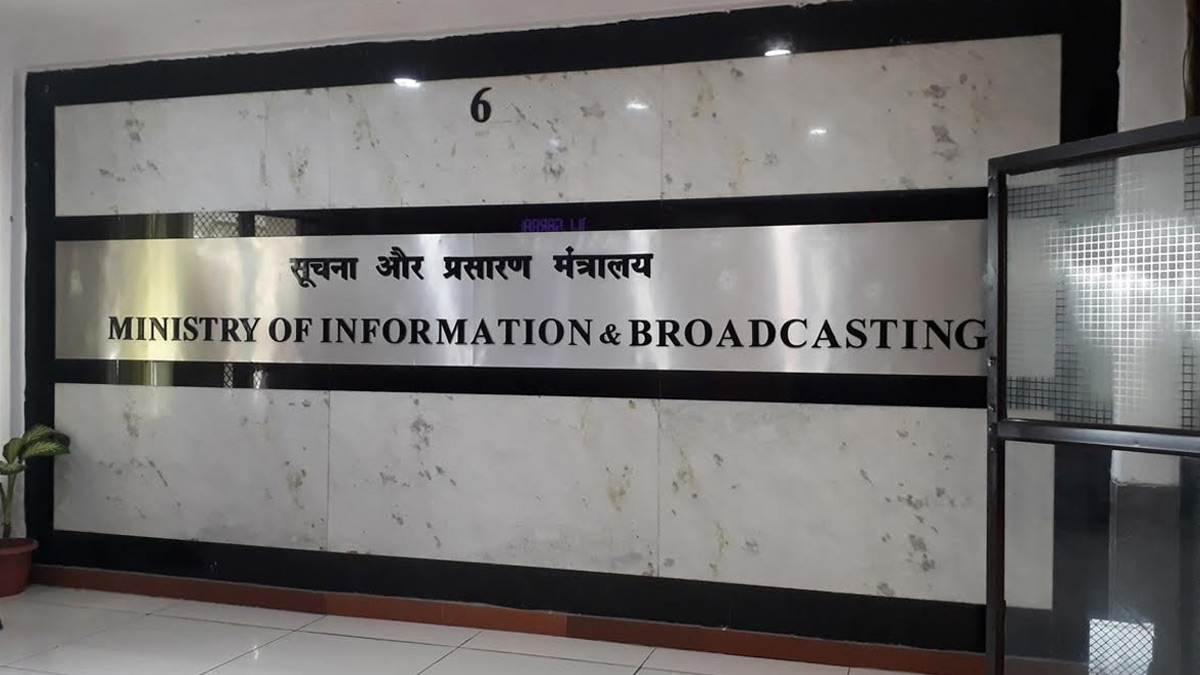
NEW DELHI: The Ministry of Information and Broadcasting has unveiled the TV Ratings Policy 2026, introducing a sweeping overhaul of how television viewership is measured in India.
The new framework aims to bring greater transparency, accountability and credibility to audience measurement, while addressing long-standing concerns around data accuracy and potential conflicts of interest.
Among the most notable changes is the exclusion of landing page viewership from ratings calculations. While broadcasters can still use landing pages for promotion, such views will no longer count towards official audience metrics, a move expected to curb inflated numbers.

The policy also lowers the entry barrier for rating agencies, reducing the minimum net worth requirement from Rs. 20 crore to Rs. 5 crore. At the same time, it tightens governance norms, mandating that at least half of a rating agency’s board must comprise independent directors with no links to broadcasters or advertisers.
To improve reliability, agencies will be required to significantly expand their sample size to 80,000 metered homes within a defined timeline, eventually scaling up to 1,20,000 homes. Measurement will span cable, DTH, OTT and connected TV platforms, reflecting the evolving ways in which audiences consume content.
Transparency is another key pillar. Agencies must publicly disclose their methodologies and anonymised data, while ensuring full compliance with the Digital Personal Data Protection Act 2023 to safeguard viewer privacy.
A dual-audit system has also been introduced, combining quarterly internal checks with annual external audits. In addition, the ministry will deploy its own oversight teams for periodic inspections, adding another layer of scrutiny.
The policy outlines strict timelines for grievance redressal, requiring complaints to be addressed within 10 days, and introduces graded penalties for non-compliance, ranging from temporary suspension to cancellation of registration.
With these measures, the Government of India is looking to reset the rules of the ratings game. The new policy replaces the 2014 guidelines and signals a clear push towards a more transparent and trustworthy broadcasting ecosystem.






I&B Ministry
MeitY proposes continuous labelling for AI-generated content
Draft IT Rules amendments mandate visible labels, feedback open till May 7, 2026

MUMBAI: If AI is blurring the line between real and rendered, the government wants the label to do the talking non-stop. The Ministry of Electronics and Information Technology has proposed tighter disclosure norms for AI-generated content, signalling a sharper regulatory push on transparency across digital platforms.
Under draft amendments to the Information Technology (Intermediary Guidelines and Digital Media Ethics Code) Rules, 2021, the Ministry has moved to strengthen how such content is identified. The key shift lies in Rule 3, sub-rule (3), clause (a), sub-clause (ii), where the earlier requirement of “prominent visibility” is being replaced with a stricter mandate labels must now remain “continuous and clearly visible” for the entire duration of the content.
In simple terms, no more blink-and-miss disclaimers. If content is AI-generated, the label must stay on screen, start to finish.
The Ministry has also extended the deadline for stakeholder feedback on the proposed changes to May 7, 2026, widening the consultation window as it seeks industry and public input. The move follows earlier consultation papers released on March 30 and April 10, which addressed intermediary compliance and digital media oversight in light of existing advisories and directions.
Alongside the amendments, the government has released multiple documents, including draft rules covering intermediary obligations, artificially generated information and digital media governance, as well as a consolidated version of the IT Rules incorporating the proposed revisions.
The direction of travel is clear. As AI-generated content becomes more sophisticated and more difficult to distinguish from reality, the regulatory response is shifting from guidance to enforceable visibility.
For platforms and creators alike, the message is straightforward: if it’s generated, it must be declared and not just once, but all the way through.