MAM
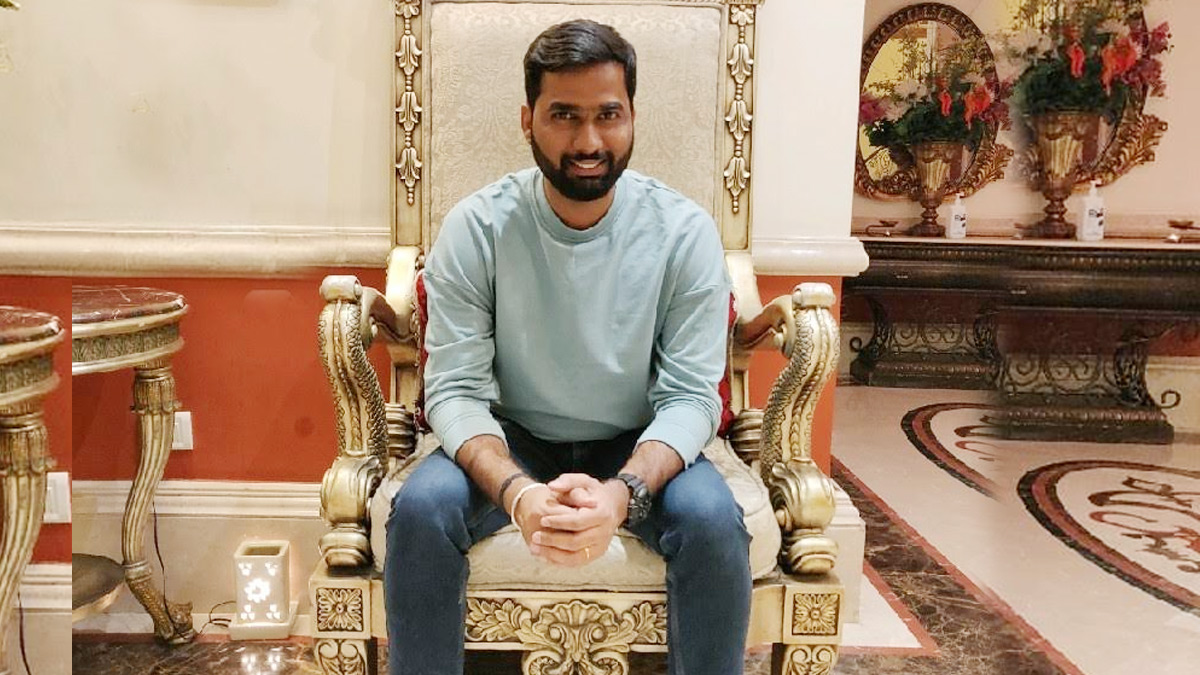
Piyush Kale joins JioStar as director programming strategy and insights
Media strategist brings experience from Star TV Network and Network18.
MUMBAI: In the fast moving world of television strategy, sometimes the biggest story unfolds behind the screens rather than on them. Piyush Kale has taken on a new role as director – programming strategy and insights at JioStar, strengthening the company’s leadership bench in programming analytics and audience strategy. Kale shared the update on his professional network, announcing that he has stepped into the position after several years working in programming strategy roles across India’s broadcast and media landscape.
Before joining JioStar, Kale served as manager – programming strategy and Insights at Star TV Network, a role he held from December 2019, where he focused on analysing viewership trends and helping shape programming strategies using audience data.
Earlier in his career, Kale spent 3 years and 7 months at Network18 Media & Investments Limited in multiple roles including manager, assistant manager and senior executive. During this period, he worked on media analytics, programming insights and market research aimed at improving channel performance and content scheduling decisions.
His professional journey began in the television research ecosystem with TAM Media Research Pvt. Ltd., where he spent 1 year and 6 months, first as a management trainee in 2015 and later as a senior executive.
At TAM, Kale’s work focused on translating television viewership data into actionable insights for broadcasters and advertisers. His responsibilities included analysing audience behaviour at a micro level for new channel launches, advising networks on programming schedules, repeats, distribution and promotion strategies, and delivering performance reports on TV channels and radio stations.
He also worked closely with advertisers, analysing data across product categories and media platforms including television, print and radio, while preparing weekly reports on channel performance and audience trends.
With more than a decade of experience spanning media analytics, audience behaviour and programming strategy, Kale’s move to JioStar comes at a time when broadcasters and streaming platforms are increasingly relying on data led insights to shape content decisions.
In a market where programming strategy is becoming as much about algorithms as it is about storytelling, Kale’s expertise in audience intelligence and media analytics could play a key role in guiding JioStar’s programming roadmap in the evolving Indian entertainment ecosystem.

Brands
Google nears Nvidia in race for world’s most valuable company
Market cap gap narrows as Google hits $4.65 trillion, Nvidia at $4.86 trillion.
MUMBAI: In the AI gold rush, even the giants are sprinting and Google is suddenly gaining ground. Google is rapidly closing in on Nvidia in the race to become the world’s most valuable publicly listed company, with the gap between the two narrowing sharply amid diverging stock momentum. The tech giant’s market capitalisation has surged to around $4.65 trillion, following a more than 140 per cent rise in its share price over the past year.
That rally has added over $2.6 trillion in value in just 12 months, including nearly $900 billion since January alone. Its stock recently hovered at $381.80, slipping marginally by 0.04 per cent, but still reflecting strong upward momentum.
Nvidia, meanwhile, continues to hold the top spot with a valuation of approximately $4.86 trillion. The chipmaker crossed the $5 trillion milestone in October last year and peaked at $5.27 trillion on 27 April. However, its shares have largely plateaued over the past six months, rising just 0.2 per cent recently to $199.99.
The contrast in trajectories is striking. While Nvidia has seen relatively flat movement, Google has gained over 36 per cent in the same six-month period. Barron’s estimates suggest that if current trends hold, the valuation gap could shrink to as little as $190 million by the time Nvidia reports its first-quarter earnings on 20 May.
Daily momentum paints a similar picture. Nvidia recorded average daily gains of about 0.66 per cent last month, compared to Google’s stronger 1.42 per cent, an edge that could prove decisive in the short term.
Driving Google’s resurgence is its aggressive push into artificial intelligence across its ecosystem, from search and YouTube to cloud computing. The company has already invested $144 billion in capital expenditure over the past two years and plans to deploy a further $490 billion over the next two.
Its cloud division is also gathering pace. Google Cloud reported an order backlog of nearly $220 billion in the latest quarter, with total backlog touching a record $462 billion, around half of which is expected to be realised within two years. The company’s entry into chip sales is also beginning to factor into its growth narrative.
The last time Google briefly topped the S&P 500 by market value was in February 2016, when it edged past Apple for just two days. This time, the stakes and the numbers are far higher.
At the heart of the contest lies a single force: artificial intelligence. As both companies pour billions into infrastructure, chips and platforms, the leaderboard is no longer just about size, it is about who can scale the future faster.