Brands
Lotus Chocolate FY26 profit drops sharply, Q4 slips into loss
Revenue steady at Rs 579.55 crore, Q4 loss at Rs 4.47 crore

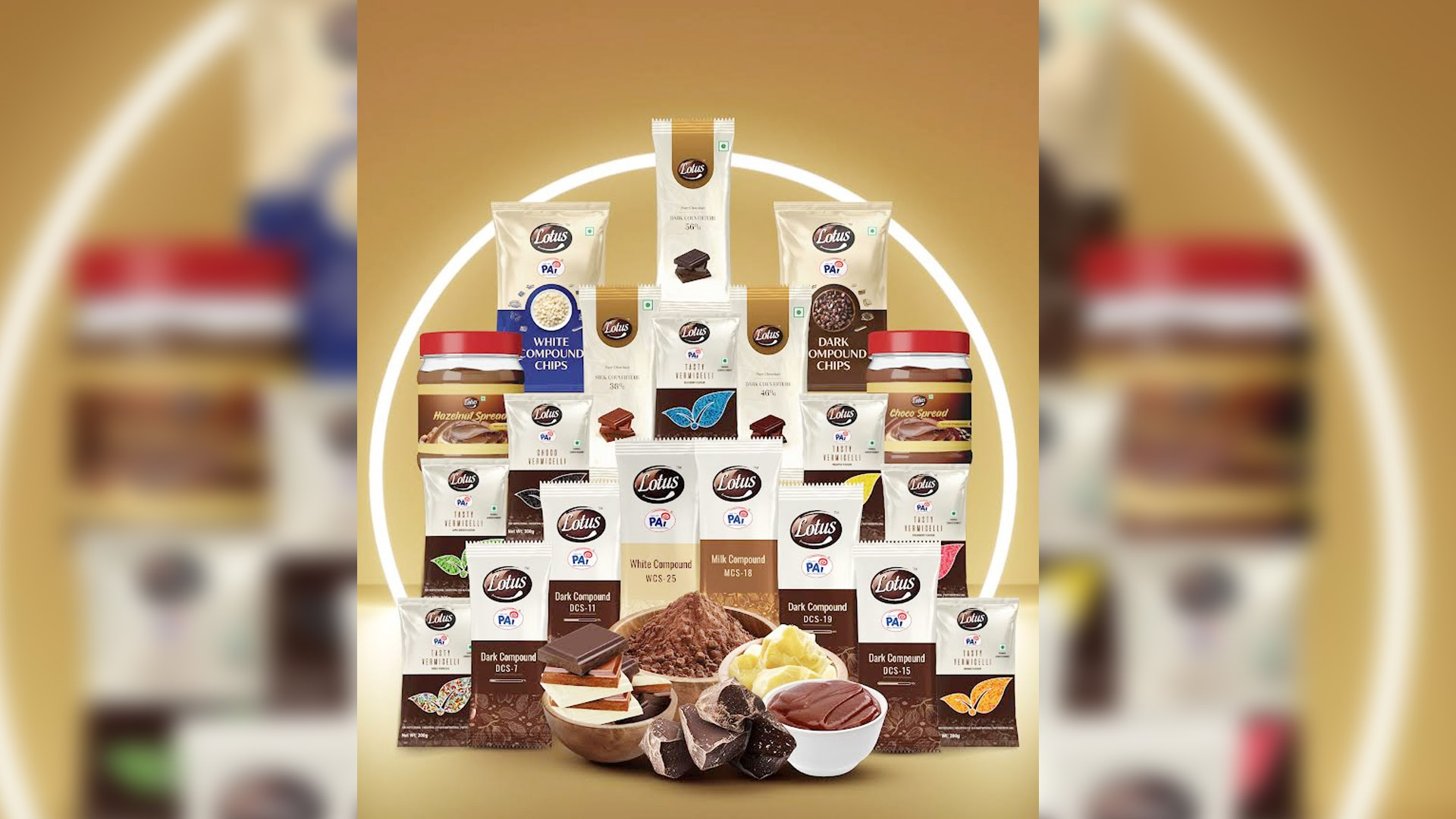
MUMBAI: Sweet on the top line, slightly bitter on the bottom Lotus Chocolate’s FY26 numbers tell a story that’s more dark cocoa than milk. The company managed to hold its revenue steady for the year, but profitability took a visible hit, capped by a loss-making fourth quarter. Lotus Chocolate Company Limited reported revenue from operations of Rs 579.55 crore for the year ended March 31, 2026, marginally up from Rs 573.75 crore in FY25. Total income rose to Rs 615.61 crore, compared with Rs 574.56 crore in the previous year, supported by a sharp jump in other income to Rs 36.06 crore from just Rs 0.81 crore.
However, the gains at the top did little to cushion profitability. Net profit for FY26 fell dramatically to Rs 0.10 crore, down from Rs 17.23 crore in FY25, reflecting significant cost pressures across the business.
The March quarter proved particularly challenging. The company reported a net loss of Rs 4.47 crore in Q4 FY26, compared with a profit of Rs 0.14 crore in the previous quarter and Rs 1.42 crore in the same quarter last year. Total income for the quarter stood at Rs 138.01 crore, down from Rs 150.21 crore in Q3 FY26 and Rs 157.52 crore in Q4 FY25.

Expenses remained elevated throughout the year. Total expenses rose to Rs 614.44 crore in FY26 from Rs 551.50 crore in FY25, eating into margins. A key swing factor was the cost of materials consumed, which stood at Rs 304.44 crore, while changes in inventories also reflected volatility, with a negative impact of Rs 62.44 crore in the previous year reversing to a positive Rs 52.93 crore this year.
Employee benefit expenses nearly doubled to Rs 34.00 crore from Rs 17.98 crore, while finance costs surged to Rs 16.31 crore from Rs 7.11 crore, indicating higher borrowing and funding costs. Depreciation and amortisation expenses also increased to Rs 3.92 crore from Rs 1.81 crore, reflecting ongoing investments.
On the balance sheet front, total assets stood at Rs 275.96 crore as of March 31, 2026, slightly higher than Rs 270.34 crore a year earlier. Borrowings remained significant, with current borrowings at Rs 89.00 crore, highlighting continued reliance on external funding.
Cash flow dynamics showed improvement in operations, with net cash generated from operating activities at Rs 93.23 crore, compared with a negative Rs 129.60 crore in FY25. However, financing outflows remained high at Rs 74.90 crore, driven largely by repayment of borrowings and interest costs.
Despite stable revenue, the sharp drop in profitability underscores the pressure of rising input costs, higher finance expenses and operational adjustments. The contrast between steady sales and squeezed margins leaves Lotus Chocolate at a crossroads proving that in business, as in confectionery, the real test isn’t just in the sweetness of sales, but in the richness of returns.

Brands
UK’s OnlyFans seeks US investor at $3bn valuation after owner’s death
The adult video platform is seeking stability after the death of its billionaire owner

LONDON: OnlyFans is looking for a new partner. The London-based adult video platform is in advanced talks to sell a minority stake of less than 20 per cent to Architect Capital, a San Francisco-based investment firm, in a deal that would value the business at more than $3bn (£2.2bn).
The move is driven by an urgent need for stability. Leonid Radvinsky, the Ukrainian-American billionaire who owned OnlyFans, died of cancer last month at the age of 43, leaving the future of one of Britain’s most profitable privately held businesses suddenly uncertain.
The choice of Architect Capital is not arbitrary. The firm has deep expertise in financial services, which aligns neatly with OnlyFans’ ambitions to offer banking products to its creators, many of whom have long struggled to access basic financial services because of the nature of their work.
The numbers behind OnlyFans are, by any measure, staggering. The platform posted revenues of $1.4bn in the year to 30th November 2024, with a pre-tax profit of $684m, up four per cent on the prior year. Payments to creators totalled $7.2bn over the same period, a rise of nearly ten per cent. Radvinsky personally collected $701m in dividends from the business in 2024 alone, on top of more than $1bn in such payments he had already received. The platform, run through its parent company Felix International, hosts 4.6m creator accounts, with performers keeping 80 per cent of subscription proceeds and the platform pocketing the remaining 20 per cent. It has 377m fan accounts in total.
The current minority stake talks represent a notable scaling back of ambitions. In January, OnlyFans was reported to be in discussions with Architect about selling a majority stake of 60 per cent. Before that, the company had explored a sale to a consortium led by Forest Road Company, a Los Angeles-based investment firm. Neither deal materialised.
OnlyFans has built an enormously lucrative business on content that mainstream finance has long refused to touch. Now, with its owner gone and a $3bn valuation on the table, it is looking for the kind of respectable institutional backing that might finally persuade the banks to take its calls.







