Brands
India’s smartphone shipments plunge 26 per cent as Samsung takes lead
Shipments hit a decade low of 35.8 million units in Q3 2026 as rising prices and cautious spending weaken festive demand.


MUMBAI: India’s smartphone market has hit a low battery moment, with shipments plunging 26 per cent year on year to 35.8 million units in the July-September quarter of 2026, marking the weakest third quarter since 2016. Even the arrival of the festive season failed to give the market a much-needed charge, as rising device prices and cautious consumer spending discouraged upgrades.
According to market research firm Omdia, the decline reflects a combination of higher smartphone prices, restrained demand and more conservative inventory planning by vendors. Weaker shipments through online-focused channels added to the pressure, while the later Diwali calendar pushed part of the festive stock build-up for offline retailers from September into October, weighing on quarterly volumes.
The downturn also reshuffled the leaderboard. Samsung emerged as India’s largest smartphone vendor for the first time since the January-March quarter of 2024, while Vivo slipped to second place after recording the steepest shipment decline among the five biggest vendors. Oppo, Xiaomi and Apple completed the top five, with all five companies facing a market in which consumers are becoming more cautious about spending on new devices.
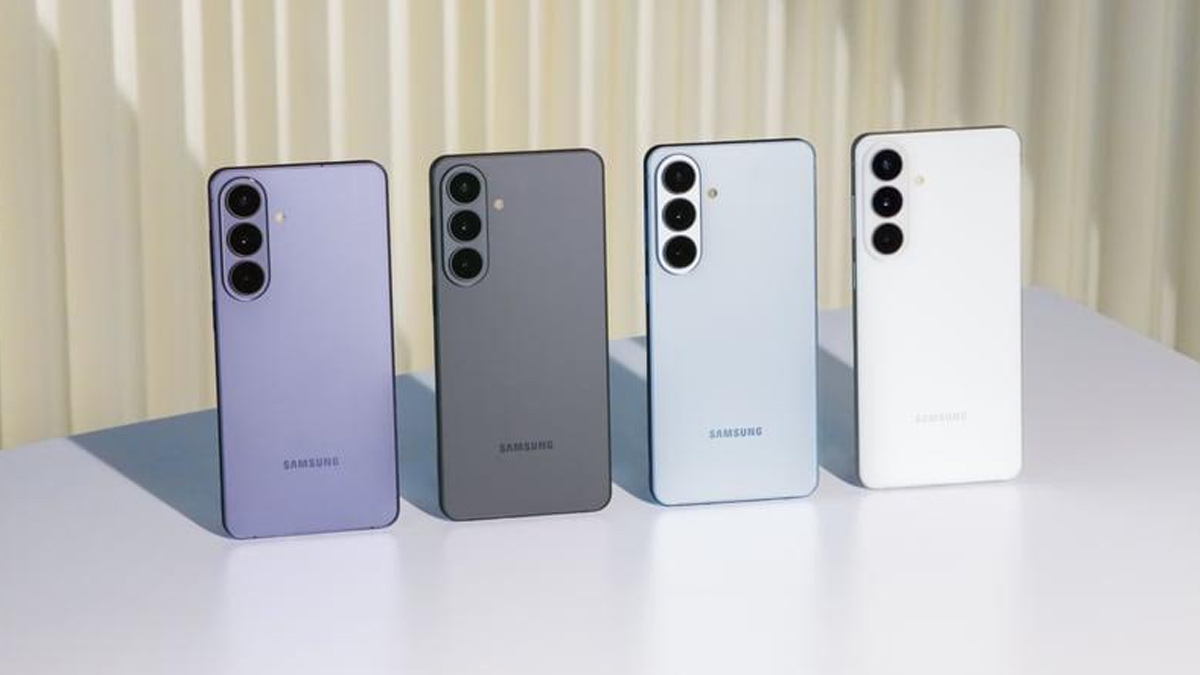
Samsung shipped 6.7 million units during the quarter, securing a 19 per cent market share despite a marginal year-on-year decline in shipments. Its performance was supported by models such as the Galaxy A07, A17 and A27, alongside its premium portfolio, which included the Galaxy S26 series, new Z foldables and the S26 FE.
The company also benefited from cashback offers, exchange benefits and extended financing options, which helped make purchases more manageable for consumers facing higher device prices. Its return to the top spot suggests that a broad product range and financing-led sales can provide some support even when the wider market is contracting.
Vivo, meanwhile, shipped 6.4 million units, down 34 per cent year on year, and fell to second place. Omdia attributed the sharper decline to repeated price increases, difficulties in planning channel inventory and limited availability of entry-level devices.
The company’s Y11 5G and Y21 5G contributed to shipments, alongside the returning S-series, led by the S2. However, the product line-up was not enough to offset the broader pressures affecting demand and distribution during the quarter.
Oppo ranked third, with shipments declining 24 per cent to 4.9 million units. Higher prices and cautious retailer orders affected its A-series, while the Reno16 range helped the company pursue higher-value sales through camera-focused features and financing offers. The results reflect the challenge facing brands trying to move consumers towards more expensive devices while household spending remains under pressure.
Xiaomi took fourth place after shipments fell 28 per cent to 4.7 million units. Higher component costs forced the company to adjust pricing and memory and storage configurations, putting pressure on its traditional value positioning.
The Redmi 15A and A7 supported Xiaomi’s volumes, while the Redmi Note 17 series and POCO X8 and X8 Power formed part of its higher-value range. The decline highlights the difficulty of maintaining a price advantage when component costs rise and consumers become more selective about upgrading.
Apple completed the top five with shipments of 3.9 million units. Omdia said channel stocking ahead of expected price increases, along with demand for the base iPhone 17 and iPhone 16 models, supported shipments in the absence of a new base iPhone 18.
The iPhone 18 Pro and Pro Max, launched late in the quarter, gained traction with support from cashback offers, exchange bonuses and no-cost equated monthly instalment (EMI) options. Apple’s performance illustrates how premium devices can continue to find buyers even in a weaker market, particularly when financing and promotional offers soften the upfront cost.
The contrasting fortunes of Samsung and Vivo also reflect a wider change in the competitive landscape. Chinese smartphone manufacturers collectively accounted for about 68 per cent of India’s market in the third quarter, down from 75 per cent a year earlier, according to Omdia Principal Analyst Sanyam Chaurasia.
Chaurasia said online sales channels had a weaker festive-season advantage, with fewer exclusive launches, a limited range of affordable models and smaller differences in promotional offers affecting shipment momentum in September.
Samsung and Apple benefited from their premium portfolios, consumer demand, established retail partnerships and structured upgrade programmes, he added. The shift in market share suggests that brands cannot rely on online discounts and frequent launches alone when consumers are delaying purchases or looking for a more compelling reason to upgrade.
The weakness is not expected to disappear quickly. Omdia forecasts that India’s smartphone market will contract by a further low-single-digit percentage in 2027, following a difficult 2026. Elevated prices and longer device replacement cycles are expected to remain challenges, with pricing pressure likely to continue through at least the first half of next year.
For manufacturers, that could mean a more difficult balance between protecting margins and keeping devices affordable. Price increases may help offset higher component costs, but they can also push consumers to hold on to their existing phones for longer. That, in turn, can slow the replacement cycle and leave vendors competing for a smaller pool of buyers.
Chaurasia said smartphone makers would need to offer more meaningful experiences rather than depend on incremental hardware changes. Artificial intelligence could become one way to make the next upgrade more compelling, particularly if features move beyond basic assistance towards more proactive and personalised functions.
Omdia’s User Innovation Readiness research found that nearly four in 10 respondents in India said useful AI features could make them willing to pay more for a smartphone. The finding points to a potential opportunity for manufacturers, although willingness to pay does not necessarily translate into an immediate purchase, particularly when budgets are tight.
The analyst also highlighted the importance of stronger retail partnerships, financing, trade-in offers and upgrade programmes in converting consumer interest into actual sales. Such measures could help brands address the upfront cost of new devices while giving buyers a clearer reason to replace their existing phones.
For now, however, the numbers tell a sobering story. Shipments of 35.8 million units represent the weakest third quarter in a decade, and the festive season has not provided the usual lift. Samsung has regained the top position, but the broader market remains under pressure, with competitors facing falling volumes and consumers taking longer to upgrade.
The next phase of competition will depend on whether smartphone makers can make new devices feel worth the extra money. Until then, India’s smartphone market may remain stuck in a holding pattern, with rising prices meeting buyers who are increasingly happy to keep their current phones switched on for a little longer.