MAM
India’s $14 billion interactive media boom: From micro-dramas to astro-apps
Micro-dramas, gaming, and niche apps are driving India’s interactive media boom.

MUMBAI: It seems India has decided that merely watching content is so last season; the sub-continent is now officially leaning forward, picking up the controller and clicking its way into a new era. While the rest of the world might be hitting the ‘snooze’ button, India’s interactive media market has surged to a staggering $13.8 billion in 2025, posting a robust 17 per cent year-on-year growth.
The secret sauce behind this digital boom isn’t just a love for entertainment; it is also the world’s most aggressive digital infrastructure. With data rates as low as $0.10 to $0.15 per GB and 877 million smartphone users, the barrier to entry has all but vanished. Add to that a UPI payment system that handles 85 per cent of all transaction volumes, scaling nearly six times to 228 billion transactions in 2025, and you have a frictionless ecosystem where discovery turns into a purchase in a heartbeat.
Video remains the heavyweight champion, valued at $5.4 billion and growing at 23 per cent. While traditional OTT platforms provide the foundation with $4.9 billion in revenue, the real “show-stopper” is the rise of micro-dramas. These bite-sized vertical stories, typically 30 seconds to 3 minutes, have exploded from virtually zero to a $300 million market almost overnight.

Despite their brevity, micro-dramas are proving that size doesn’t matter when it comes to engagement. Users now spend around 60 minutes a day on micro-dramas, nearly rivaling OTT’s 78 minutes. On the monetisation front, they command a $15 Annual Revenue Per Paying User (ARPPU), proving that cliffhangers are a lucrative business model. Looking ahead, the segment is projected to skyrocket to $4.5 billion by 2030.
The gaming sector hit $1.5 billion in 2025, maintaining a 17 per cent CAGR despite a significant regulatory curveball. The PROG Act of 2025 effectively banned Real Money Gaming (RMG), causing a 9 per cent dip in the total gamer base to 555 million. However, the “hardcore” crowd stayed put, with weekly time spent averaging 8 hours and payer penetration holding steady at 25 per cent.
Gaming’s punch-above-its-weight status is undeniable. While it accounts for only 8 per cent of downloads among India’s top 25 apps, it generates a massive 36 per cent of the revenue. In-app purchases (IAP) in mid-core games are particularly potent, boasting a $15 ARPPU compared to just $3 for casual titles.
Perhaps the most uniquely Indian trend is the success of high-intent “lean-forward” platforms. Astro-devotion apps have emerged as surprise leaders in monetisation per user, achieving an annual ARPU of $8.4, outperforming even social media. Meanwhile, interactive learning platforms, powered by AI tutors and gamified micro-learning, have carved out a $2.4 ARPU niche, proving that users are willing to pay when content solves a specific problem.
Audio, the category “no one heard coming,” grew 29 per cent to $0.4 billion. Audio series, with their episodic hooks, now drive 31 minutes of daily engagement, significantly higher than music streaming.
India is also moving from “back office” to “front of house” in the $1.6 billion Animation & VFX sector. While 80 per cent of revenue still comes from international exports, domestic IP like Mahavatar Narsimha and The Legend of Hanuman is gaining ground. AI is the new co-director, compressing production timelines by 50 per cent and allowing studios to turn what used to be four weeks of work into just six hours.
With a market at the same inflection point that social media reached in 2010, India isn’t just following the global digital script; it is rewriting it. For investors and creators alike, the message is clear: the game has only just begun.







MAM
G-Shock launches GA-2100CM series with camouflage design
New sand and grey variants priced at Rs 10,995 each in India.
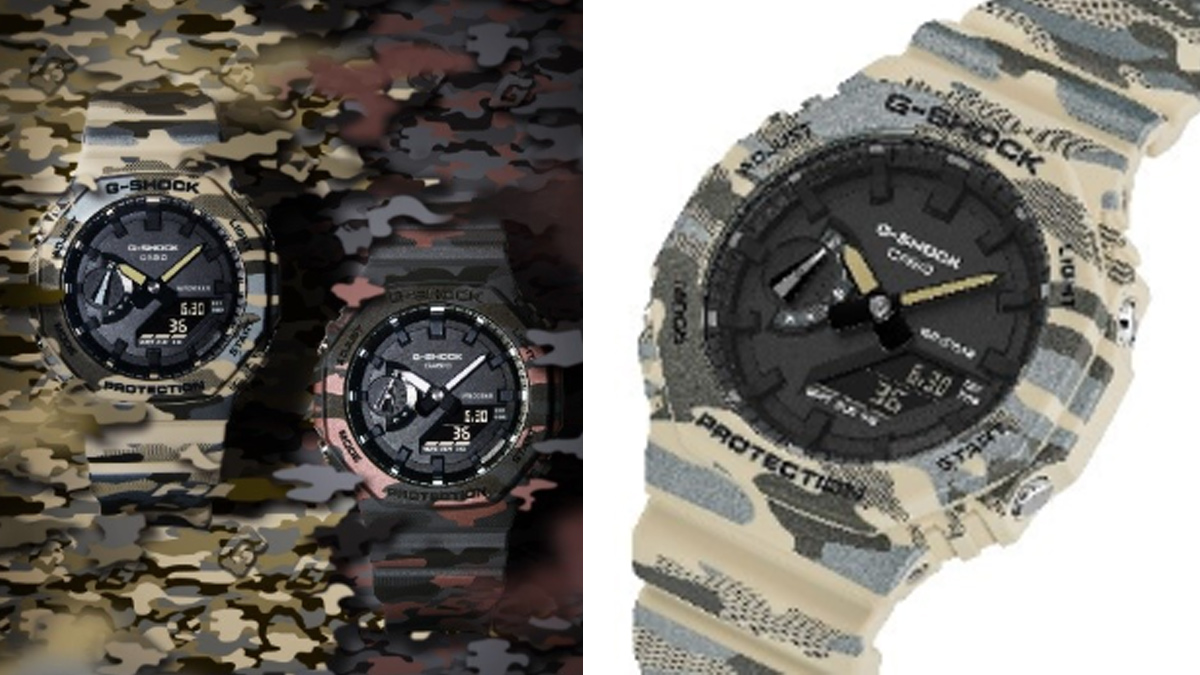
MUMBAI: Time just got a little more tactical and a lot more stylish. G-Shock has unveiled the GA-2100CM series, a fresh update to its popular GA-2100 line, bringing a camouflage twist to one of its most recognisable silhouettes. For the first time in the 2100 series, the watches feature G-Shock’s original camouflage pattern, subtly embedding the brand’s signature ‘G’ motif into the design. The move signals a shift towards more design-led storytelling, blending rugged functionality with fashion-forward detailing.
The new series introduces two colour variants sand (GA-2100CM-5A) and grey (GA-2100CM-8A) extending the model’s appeal across both streetwear and outdoor-inspired aesthetics. Built around the brand’s signature octagonal bezel and hybrid analogue-digital display, the watches retain a clean, modern look while adding layered visual depth.
Under the hood, the GA-2100CM continues to lean on performance. It features the Carbon Core Guard structure for durability, while maintaining a slim, lightweight profile suited for everyday wear. Functional elements include world time across 31 time zones, a 1/100-second stopwatch, countdown timer, LED light and 200-metre water resistance.
In line with evolving material choices, select components use bio-based resin, pointing to a gradual shift towards more sustainable design without compromising on toughness.
Priced at Rs 10,995, the GA-2100CM series is available across Casio India stores and online platforms.
As watch brands continue to balance utility with identity, G-Shock’s latest drop makes its intent clear, durability may be the legacy, but design is the new frontier.