Brands
Hyundai Motor targets 5.55 million sales, over 9 per cent margin by 2030
The automaker plans 100-plus launches, wider electrification and bigger AI bets


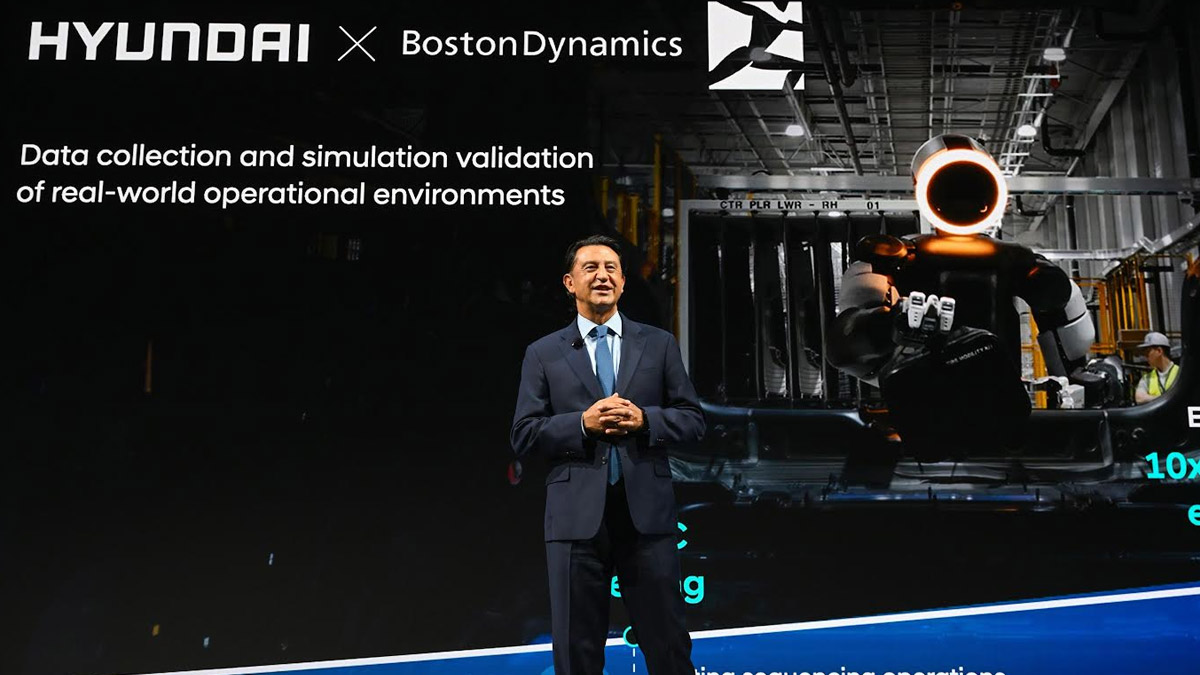
Seoul: Hyundai Motor Company has laid out an aggressive growth and profitability roadmap for 2030, targeting global sales of 5.55 million vehicles, a 6 per cent market share and a consolidated operating profit margin of more than 9 per cent.
The company unveiled the targets at its 2026 CEO Investor Day, alongside plans to launch or refresh more than 100 vehicles globally by 2030. Hyundai also aims to raise electrified vehicles to 60 per cent of its sales mix by 2030, compared with 23 per cent in 2025.
José Muñoz said Hyundai’s stronger fundamentals give it room to invest in new products and technologies while improving profitability. The company plans to offer multiple powertrain options and expand into new vehicle segments as it seeks to strengthen its global position.
Hyundai plans more than 100 new launches and model refreshes across major markets by 2030. The programme includes 58 launches in North America, 49 in Korea, 41 in Europe, 26 in India and 22 in China.
Seven new models are expected to arrive over the next eight months, including the new Elantra, IONIQ 3, Tucson and Tucson Hybrid, Santa Fe EREV, an A-segment electric SUV for India and new B-segment SUVs.
The company is also targeting segments where it currently has a limited presence, including body-on-frame vehicles, a midsize pickup and light commercial vehicles.
Hyundai’s first extended-range electric vehicle, or EREV, is scheduled to arrive in the first half of 2027. The Santa Fe EREV is expected to offer more than 600 miles of total range and will be built at Hyundai Motor Manufacturing Alabama in the US.
India remains a key part of Hyundai’s expansion plans. The company will launch an all-new electric SUV in the fourth quarter, designed and localised for the Indian market. The vehicle will feature next-generation infotainment and Level 2 assisted-driving technology.
Hyundai also plans to introduce a new internal-combustion-engine mid-size SUV in India.
The company is targeting 90 per cent local sourcing of vehicle content in India by 2030, supported by more than 1,400 local suppliers and over 900 local engineers. Hyundai’s Indian manufacturing operations have annual capacity of 1.1 million vehicles, with around 30 per cent of production expected to be exported by 2030.
Hyundai also plans to add 320,000 units of manufacturing capacity in India as part of a global capacity expansion of 1.27 million units by 2030.
Hyundai expects electrified vehicles to account for 60 per cent of global sales by 2030. In Europe, it aims to increase EV sales to more than 420,000 units by 2030, compared with 116,000 in 2025.
The company said its independently developed battery cells deliver more than twice the output of its previous high-nickel cells while reducing charging time by 40 per cent. Its upcoming EREV will use less than half the battery capacity of a comparable EV while maintaining similar battery performance and driving characteristics.
Hyundai also plans to use mid-nickel NCM cells in EV models launching next year, which it says could reduce battery costs by around 30 per cent.
Hyundai’s luxury brand Genesis is also entering a new phase of expansion.
Genesis will launch its first hybrid, the GV80 Hybrid, in the fourth quarter, followed by an EREV SUV targeting more than 640 miles of range in early 2027. Its flagship GV90 SUV will also form part of the brand’s expansion.
Genesis aims to reach 350,000 annual sales across more than 40 markets by 2030, supported by more than 270 retail locations globally. The brand plans to expand into India and other Asia-Pacific markets in the coming years.
Hyundai is also increasing its focus on robotics and autonomous driving. Its partnership with Waymo will see the first IONIQ 5 robotaxis delivered in the fourth quarter of 2026.
US production of robotaxis is planned from 2028, with annual capacity of 30,000 units. Hyundai’s Motional is also expected to deploy robotaxi-ready IONIQ 5 vehicles when its driverless commercial service launches later this year.
The automaker is accelerating robotics commercialisation through Boston Dynamics. Its Robot Metaplant Application Center in the US is set to expand ten-fold by the end of 2026, while Hyundai aims to deploy the Atlas humanoid robot at Hyundai Motor Group Metaplant America from 2028.
Hyundai’s autonomous-driving roadmap will progress from real-world data collection to higher levels of assisted and autonomous driving.
Atria AI will begin collecting real-world driving data in Korea this year. In 2028, Hyundai plans to introduce Level 2+ autonomous driving technology on its first mass-produced software-defined vehicle in collaboration with NVIDIA.
The company also plans to bring a 100-megawatt AI data centre online from 2029, with capacity for more than 50,000 GPUs. The facility is expected to support AI development and autonomous-driving systems using data collected from Hyundai’s global vehicle fleet.
Hyundai plans to add 500,000 units of manufacturing capacity in North America by 2030, while raising local parts sourcing to more than 80 per cent from its earlier 60 per cent target.
The company is also deepening partnerships across technology and mobility. Its relationship with Amazon will cover Amazon Autos’ international expansion, Alexa integration across Hyundai vehicles, cloud and AI capabilities through AWS, and potential use of Hyundai fuel-cell vehicles in Amazon warehouse operations.
Hyundai is also entering the electric three-wheeler market with TVS Motor Company, with Hyundai handling vehicle design and TVS manufacturing the vehicles.
Alongside its expansion plans, Hyundai has raised its 2030 operating profit margin target to above 9 per cent, from the previously guided 8 to 9 per cent range.
The company expects a 3 percentage-point reduction in its cost-of-sales ratio through lifecycle cost innovation, material cost reductions and greater localisation. It is retaining its 2026 operating profit margin guidance of 6.3 to 7.3 per cent.
In the first half of 2026, Hyundai delivered two million wholesale vehicles and generated 95.2 trillion won in revenue, up 2.7 per cent year on year, with an operating profit margin of 5.6 per cent.
The roadmap puts Hyundai’s next phase of growth on two tracks: selling more vehicles while making each part of the business more technology-driven and profitable. With EVs, hybrids, AI, robotics and new vehicle categories all in the mix, the automaker is betting that scale alone will not be enough for its 2030 ambitions.