
iWorld
YouTube Music introduces labels to identify AI generated songs
Three disclosure categories will clarify AI’s role in music as streaming platforms tackle synthetic content


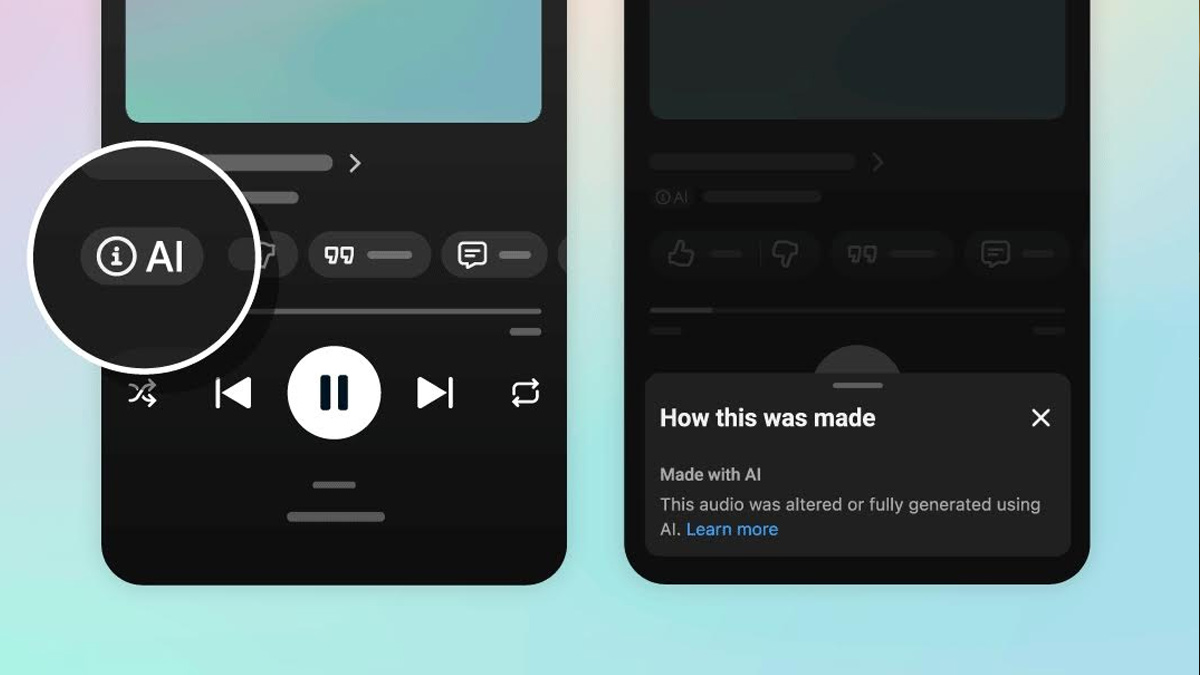
MUMBAI: As artificial intelligence finds its voice in the music industry, YouTube is turning up the volume on transparency. YouTube Music has begun introducing labels that help listeners identify tracks created with significant assistance from generative AI, with the feature also set to expand to the main YouTube app.
The labels will appear on the music player page, where users can select the disclosure to learn more about AI’s contribution to a track. YouTube is working with music industry partners and using its own detection systems to identify AI generated music, extending disclosure principles already applied to AI content across its platforms.
“Our goal is to make it as easy as possible for viewers and listeners to have the right information and clarity when it comes to the music they listen to,” YouTube said.
The platform’s framework allows music partners to classify tracks under three categories: Fully Gen AI, Partly Gen AI and No Gen AI. Fully Gen AI covers music generated entirely using AI, while Partly Gen AI applies when AI generated elements are combined with contributions created by artists, including live components. No Gen AI identifies tracks that do not fall into either AI generated category.
Not every digital tweak will earn a track an AI label, however. Conventional audio processing techniques, such as pitch correction using Auto-Tune, do not by themselves place a song in either AI generated category. The disclosures are intended to distinguish the use of generative models in creating compositions or vocals from routine production tools.
YouTube’s move comes as streaming platforms grapple with the growing volume of AI generated music and differing approaches to transparency. Apple Music plans to introduce ‘Made With AI’ labels through its AI Transparency Tags later this year, while Spotify has introduced AI related labelling measures and a filter aimed at tackling music spam.
The distinction matters because platforms are not taking an identical approach to AI made tracks. While some services impose restrictions on the distribution or monetisation of certain recordings, YouTube is focusing on disclosure. The presence of AI in a track does not, by itself, make it ineligible for monetisation.
YouTube is also experimenting with AI assisted music creation. Its Dream Track tool allows select creators to produce soundtracks featuring AI generated versions of participating artists’ voices, putting the technology on both sides of the equation: helping create music while introducing labels that explain how it was made.
As AI becomes a bigger part of music production, the challenge for streaming services is to give listeners more clarity without treating every use of the technology as the same. YouTube’s labels offer a way to make AI’s role more visible, leaving audiences to decide what they want to hear.






