iWorld
Netflix’s Bela Bajaria exit signals a content reset, but what changes for India?
The departure of the executive who championed Netflix’s global storytelling strategy comes amid layoffs, slowing engagement growth and mounting pressure to deliver hits. Peter Rice’s appointment could reshape the streamer’s priorities, with implications for Indian originals, creator partnerships and the economics of streaming


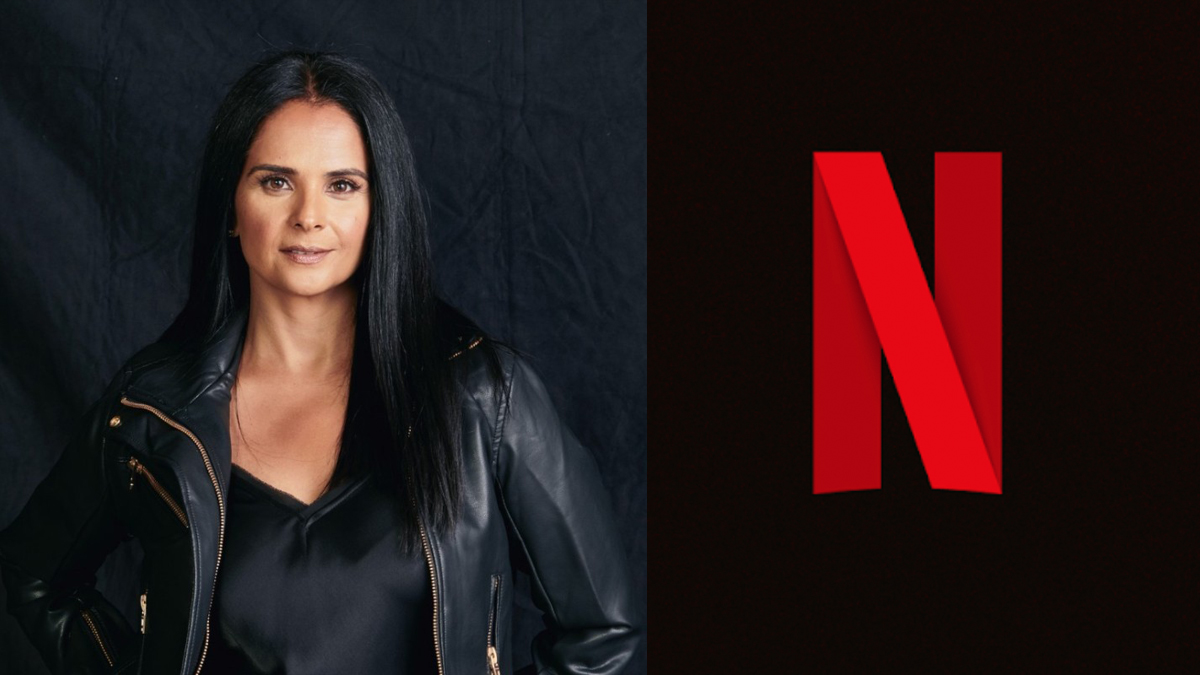
MUMBAI: For nearly a decade, Bela Bajaria helped shape Netflix’s transformation from a streaming service known for American originals into a global entertainment platform where stories could travel across languages, markets and cultures. Her departure, announced on 15 October, therefore represents more than a leadership change. It puts the future direction of Netflix’s content strategy under fresh scrutiny.
Netflix has appointed former Disney and Fox executive Peter Rice as chief content officer, effective 26 October. He will oversee the company’s global content organisation, spanning scripted and unscripted programming, films and live events across markets. Bajaria, who joined Netflix in 2016 and became chief content officer in January 2023, is leaving after nearly a decade with the company. Netflix has not publicly attributed her departure to a specific cause.
The timing, however, is significant. The announcement came a day after Netflix disclosed plans to cut approximately 1,000 jobs, around six per cent of its workforce. The company is also confronting concerns about slowing audience engagement, a less predictable pipeline of breakout hits and intensifying competition from platforms that command viewers’ attention without relying on subscription-led entertainment.
Taken together, the developments point to a company reassessing how it deploys resources and measures success. They do not establish that Bajaria’s exit was caused by any one of these pressures. But they make one question difficult to ignore: will Netflix continue to prioritise the breadth of its global content slate, or will its next phase place greater emphasis on fewer, larger bets with the potential to dominate popular culture?
From local stories to global entertainment
Bajaria’s most consequential contribution was helping institutionalise the idea that international content need not be a niche offering. A Korean thriller, a Spanish crime drama or an Indian series could become a global talking point without first conforming to conventional Hollywood storytelling.
The success of Squid Game, Money Heist and Bridgerton, alongside the platform’s expanding range of regional originals, demonstrated the value of programming for distinct audiences rather than treating English-language entertainment as the default. Under Bajaria, Netflix also expanded unscripted programming and moved further into live events and sports.
This approach was not simply about commissioning more titles in more languages. It required a decentralised creative model, with local teams identifying stories and talent that could resonate in their home markets, while a global distribution platform gave those productions access to audiences beyond their countries of origin.
The commercial rationale remains compelling. Netflix’s first-half 2025 engagement report found that more than a third of viewing came from non-English-language titles, while 10 of its 25 most-watched series during the period were non-English. The figures illustrate how international storytelling had become central to the service’s proposition rather than an add-on to its American slate.
Bajaria’s exit does not automatically mean this model will be abandoned. Netflix has built teams, relationships and production capabilities around it. Nor would a successor necessarily benefit from reversing a strategy that has helped the service differentiate itself from traditional Hollywood studios.
The more relevant question is whether the balance within that strategy will change: how much room will there be for locally resonant programmes that build loyal audiences, compared with productions expected to generate exceptional viewing across several markets?
The pressure to deliver the next big hit
Netflix’s challenge is not a lack of programming. It is converting the scale of its catalogue and investment into sustained audience attention.
The company reported 96 billion hours watched during the second half of 2025, according to its January 2026 engagement report. That is a substantial volume of viewing, but it does not eliminate the need to keep audiences returning as competitors multiply and viewing habits fragment. Netflix itself has described engagement as an important indicator of member satisfaction and retention.
The competitive threat is also changing. Netflix is not only fighting subscription rivals such as Amazon Prime Video and Disney+. It is competing with YouTube, short-form video and social platforms for the same finite pool of consumer attention. These services offer an abundance of entertainment, often free to the viewer, and can keep audiences engaged between the release of major series and films.
This puts pressure on the economics of content commissioning. A programme can attract a respectable audience and still struggle to justify its cost if it fails to generate the level of engagement, retention or cultural conversation expected of it. At the same time, an expensive production that becomes a global hit can strengthen the platform’s appeal far beyond its initial release window.
The danger is that the search for hits encourages excessive caution. If executives become too focused on replicating proven successes, original ideas, unfamiliar talent and stories rooted in specific communities could find it harder to secure investment.
For Netflix, the challenge under Rice will be to improve the consistency of its programming performance without narrowing the creative range that helped establish its global identity.
Why Peter Rice’s appointment matters
Rice brings a different professional background to the role. He has held senior positions at 21st Century Fox and The Walt Disney Company, including chairman of Walt Disney Television. His career spans broadcast television, film and large-scale entertainment operations, giving him experience in managing broad portfolios of programming and working with established creative talent.
His appointment should not, by itself, be read as evidence that Netflix will abandon its existing approach. However, it does introduce an executive whose experience could be particularly relevant as the company reassesses its programming mix, production priorities and relationships across the entertainment industry.
Rice will inherit an organisation that has already moved beyond its original subscription-video model. Netflix now invests in live programming, sports-related entertainment and other formats intended to bring audiences to the service at specific moments, rather than relying exclusively on the release of films and series.
That diversification presents an opportunity, but it also creates competing demands on content budgets and executive attention. Rice will need to determine which initiatives strengthen Netflix’s core proposition and which are best treated as complementary offerings.
His immediate task is not simply to commission another global hit. It is to establish a repeatable content strategy that can serve different markets, sustain audience engagement and justify investment across a growing range of formats.
India: continuity or a change in commissioning priorities?
For the Indian entertainment industry, the leadership transition raises a particularly important question: how will Netflix balance its international ambitions with the economics and creative realities of the Indian market?
Netflix has spent the past decade building relationships with Indian production houses, filmmakers, actors and writers. Its Indian programming spans crime dramas, thrillers, romantic comedies, films, reality formats and regional-language productions. The service has also pursued partnerships with established banners, while making room for newer creative voices.
Its 2025 slate included projects such as The Ba**ds of Bollywood*, Jewel Thief: The Heist Begins and Akka, alongside a range of films and series across genres and languages. Its 2026 India slate continues that breadth, including Hindi projects and a growing Tamil and Telugu offering.
This breadth matters because India is not a single, homogeneous audience. Hindi-language programming may offer scale, but regional-language productions can build strong connections with audiences whose tastes and viewing habits differ considerably. A strategy focused only on the size of a potential audience could overlook the value of developing distinctive programming for these groups.
Bajaria’s global approach was compatible with this diversity. It allowed Netflix to treat local authenticity as a potential strength rather than a limitation on international appeal. Whether Rice maintains the same balance will be closely watched by the Indian production community.
There is, however, no confirmed indication that Netflix plans to reduce its Indian-language commissioning or fundamentally change its local content strategy following Bajaria’s exit. Any immediate claims of a retreat from India would therefore be premature.
The more meaningful signals will emerge through future commissioning decisions: the kinds of stories receiving investment, the budgets allocated to different genres, the willingness to back emerging creators and the degree to which regional programming remains part of the platform’s long-term plans.
What changes for Indian producers and creators?
For production houses, the transition is likely to prompt renewed attention to how projects are pitched and evaluated. Netflix will continue to need compelling local stories, but producers may face greater scrutiny over a programme’s intended audience, production economics, franchise potential and ability to sustain engagement.
That does not necessarily mean every Indian original must be designed for an international audience. A series that speaks powerfully to a specific Indian community can strengthen Netflix’s relevance in the market. The commercial question is whether the project can find and retain the audience for which it is made.
The distinction is important. Global distribution does not require every story to become culturally generic. In fact, distinctive characters, settings and social contexts can be the very qualities that make a programme stand out in a crowded catalogue.
For smaller production houses and first-time creators, the concern will be whether a tighter focus on returns makes commissioning more conservative. Established franchises and recognisable talent can offer perceived commercial security, but an overreliance on them could limit opportunities for new voices.
For larger producers, the challenge may be to demonstrate that scale and ambition are supported by a clear creative proposition, rather than assuming that star power or production value alone will translate into sustained viewing.
Ultimately, the Indian industry will be watching not just how much Netflix spends, but where that investment goes.
A wider reset for streaming
Bajaria’s departure also reflects a broader transition in the streaming business. The early phase of the streaming wars was defined by expansion: acquire subscribers, commission originals, enter new markets and build a catalogue large enough to compete with established broadcasters.
The next phase is more demanding. Platforms must make their libraries work harder, maintain audience attention between tentpole releases and find additional ways to monetise their reach. Live events and sports can create appointment viewing; films and series can build long-term franchises; advertising can offer another revenue stream. Each comes with different costs, risks and measures of success.
Netflix has already begun pursuing this wider mix. Rice’s appointment could help the company sharpen its priorities, but the real test will be whether it can achieve greater consistency without weakening the creative diversity that distinguishes its service.
The leadership change also comes amid organisational cuts, making the question of creative capacity important. Reducing costs can improve efficiency, but the long-term consequences depend on whether the company protects the people, relationships and decision-making structures needed to identify promising stories and deliver them effectively.
The challenge is particularly acute for a global service. Centralising decisions may create efficiencies, yet local markets require an understanding of language, culture, talent and audience behaviour that cannot always be reduced to a universal formula.
The verdict will be in the content, not the appointment
Bajaria leaves behind a Netflix that has broadened its understanding of what global entertainment can look like. Its next phase will depend on whether the company can preserve that breadth while responding to legitimate concerns about growth, engagement and the returns on its programming investments.
Rice brings substantial industry experience, but his appointment is not, on its own, evidence of a new content philosophy. Nor does Bajaria’s departure establish that Netflix’s global strategy has failed.
What it does signal is that a successful model is not immune to reassessment. As competition intensifies, Netflix must demonstrate that it can continue producing distinctive local stories while delivering the big cultural moments that keep audiences engaged.
For India, the outcome will be measured in commissioning choices, creative partnerships and the range of stories that make it to the screen. The crucial question is not whether Netflix will continue investing in India, but whether it will preserve the willingness to take creative risks across the country’s many audiences.
Bajaria helped make the case that a story did not have to originate in Hollywood to travel around the world. The task facing Rice is to prove that Netflix can continue to believe in that principle while meeting the commercial demands of its next chapter.





