iWorld
Micro-dramas rewrite India’s digital storytelling rules
New format delivers 800 hours of content and Rs 650 crore in revenue in 2025 alone.

MUMBAI: Micro-dramas just turned two-minute attention spans into a full-blown industry because when your story has to hook someone before they swipe away, every second counts like a cliffhanger.
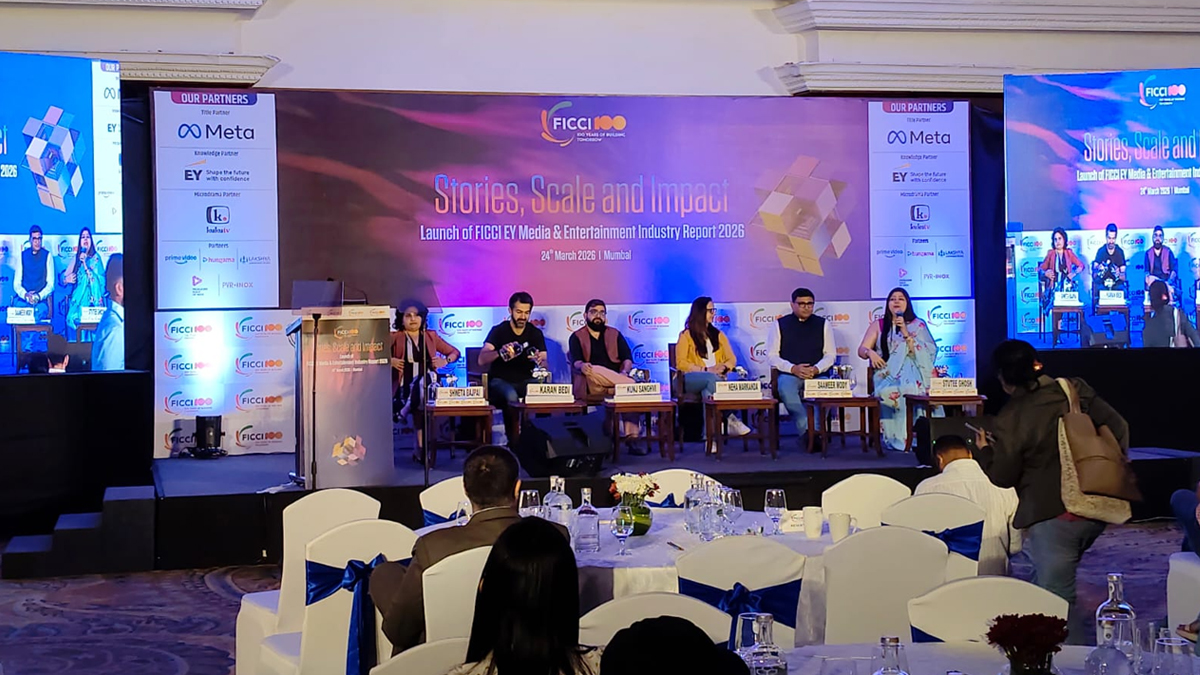
At the FICCI-EY Media & Entertainment Industry Report launch, a high-powered panel explored how micro-dramas are reshaping content creation, discovery and monetisation in India’s digital ecosystem. Moderated by film critic Stutee Ghosh, the session featured Karan Bedi (Director & Head, Amazon MX Player), Kunj Sanghvi (SVP – Content, Kuku TV), Neha Markanda (chief business officer, Sharechat and Moj), Saameer Mody (Founder & MD, Pocket Films & Pocket TV) and Shweta Bajpai (Group Director – Finserv, Media, Travel and Services, Meta India).
The discussion opened with a clear question: what exactly is a micro-drama? Kunj Sanghvi offered the most precise definition, positioning it as content that sits comfortably between long-form films and short-form Reels. “It is feature-length stories 90 to 100 minutes in total told in 45 to 50 episodes of roughly two minutes each,” he explained. The real differentiator, he added, lies in algorithmic distribution on social feeds. A strong cliffhanger at the end of each snippet creates an “uncontrollable urge” to download the app and continue, turning passive scrolling into active consumption.

Shweta Bajpai brought a platform perspective, noting that micro-drama perfectly combines three major trends that have been building for the past four to five years, short-form video, creator-led storytelling, and episodic entertainment. She pointed out that 71 per cent of consumers discovered the category only in the last six months, with a staggering 89 per cent stumbling upon it organically while browsing Reels or Facebook feeds. Once hooked, they click the call-to-action and start bingeing.
One of the most striking revelations was the solitary nature of consumption. According to Meta’s report with Ormax Media, 90 per cent of micro-drama viewing happens alone. This private, personal-screen habit gives creators room to experiment with edgier, more intimate or bold narratives that might not work in a shared family viewing environment.
The panel addressed the frequent criticism that micro-dramas are merely dopamine hits rather than proper storytelling. Saameer Mody countered that telling a compelling story in a very short time is actually harder than in long-form. “Short filmmakers have always said it’s tougher to deliver your message in limited time,” he noted, comparing it to advertising, which has told complete stories in under 30 seconds for decades. “Two minutes is luxury,” he quipped.
Neha Markanda observed that the format’s rapid acceleration has surprised even insiders. From 150 million daily views shortly after launch to 400 million today, with average time spent nearing 50 minutes per day, the growth has been “beyond phenomenal.” She estimated that 10–15 per cent of India’s internet population is already consuming micro-dramas across platforms, leaving massive headroom for expansion. EY predictions suggest the category could grow 3x in three years, but some panellists believe it could be even faster.
Kunj Sanghvi highlighted that genres in micro-dramas evolve and exhaust quickly. “Genres get exhausted really fast,” he said. “After the 50th micro-drama of the same type, the audience already knows what’s coming.” This forces constant innovation and micro-segmentation. Platforms are already serving very specific audiences, IAS aspirants, middle-aged romance seekers, or those who enjoy moral conflicts between doctors and billionaires proving the format’s ability to cater to niche emotional triggers.
Regionalisation is seen as inevitable. While Hindi currently dominates, Tamil and Telugu are growing fast, and vernacular supply is expected to catch up with demand. The cost of creation, already low, is falling further with AI tools, raising the prospect of hundreds of new titles every month in the near future.
Karan Bedi explained MX Player’s decision to keep the format entirely free, “We think there is potentially 800 million screens in India. If we’re at 10–15 per cent penetration today, we have 8x to go.” By removing the paywall, the platform aims to learn rapidly at scale and capture the massive untapped audience.
The panel agreed that micro-drama is not replacing traditional long-form storytelling but adding a new, highly addictive layer tailored to fragmented attention spans and mobile-first habits. As Shweta Bajpai put it, today’s audience is “entertainment hungry, but has less time to spare” and wants content that feels both personal and aspirational.
In a world where everyone is racing against the next swipe, micro-dramas have mastered the art of the perfect hook proving that the smallest screen can still deliver the biggest emotional punch, two minutes at a time. With India still at relatively low penetration compared to China’s 80 per cent, the format is poised for explosive growth, and the only question left is how quickly creators and platforms can keep feeding the insatiable appetite for the next cliffhanger.






iWorld
Instagram introduces in-video shopping via Reels in India
New features let users discover and buy products directly within videos
MUMBAI: Instagram has rolled out a major upgrade to its shopping ecosystem in India, positioning Reels as a central hub for product discovery and purchase, as the platform doubles down on the fast-growing social commerce trend.
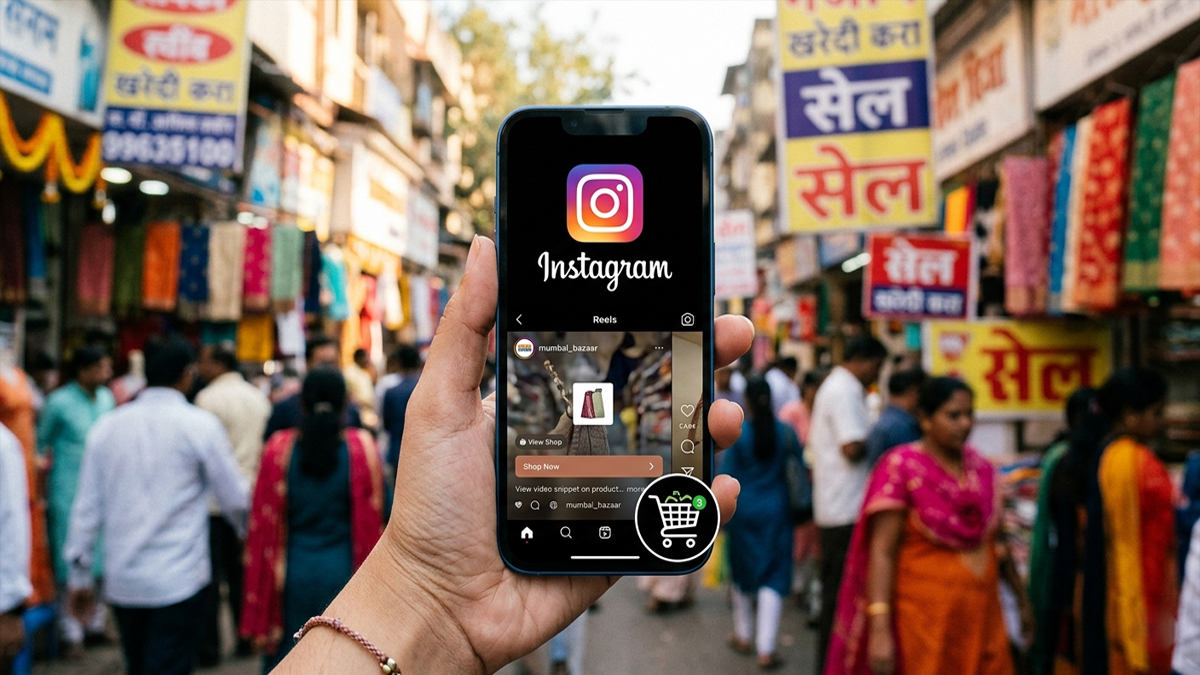
The update, introduced by parent company Meta, enables users to shop directly from short-form videos through integrated product tags and affiliate links. The move significantly reduces the gap between discovery and purchase, shifting away from older workarounds such as “link in bio” towards a more seamless, in-video experience.
Under the new system, users can tap on a “View Products” prompt within a Reel to access product details, pricing and purchase options. While transactions are completed on the seller’s website rather than within the app, the transition is designed to be quick and frictionless.
A key feature of the rollout is the expansion of affiliate commerce. More than five million creators in India can now add trackable product links to their Reels, earning commissions that typically range between 3 and 15 per cent per sale. This opens up new revenue streams, particularly for smaller creators who are increasingly influencing purchase decisions.
The development reflects a broader shift in how Indian consumers shop online. Unlike traditional digital advertising, purchase decisions are often driven by trust and relatability, with users preferring to see products in real-life scenarios such as fashion styling or tech demonstrations.
The platform’s updated algorithm also leans into this behaviour, prioritising content based on shopping intent rather than just follower networks. This means users are more likely to see product-led Reels tailored to their browsing and buying patterns.
For businesses and creators, the system requires a professional account and a synced product catalogue via Facebook Business Suite. Currently, only physical goods are eligible for tagging, keeping the focus on tangible, shippable products.
The rise of shoppable Reels also highlights intensifying competition in the space. Instagram is effectively countering similar commerce integrations from YouTube, while also responding to the growing use of WhatsApp Business for direct-to-consumer sales in India.
At the same time, the platform has introduced AI-led moderation to ensure product authenticity and reduce the risk of misleading listings, aiming to build greater trust within its marketplace ecosystem.
As social commerce continues to evolve, Instagram’s latest push signals a clear direction of travel. Shopping is no longer a separate activity but part of the scroll itself, where inspiration, influence and instant purchase now sit side by side.