iWorld
From Jamtara to CTRL: Five Indian titles that expose technology’s dark side
From phishing rackets to AI manipulation, these dramas and documentaries reveal how deception thrives in a digital world


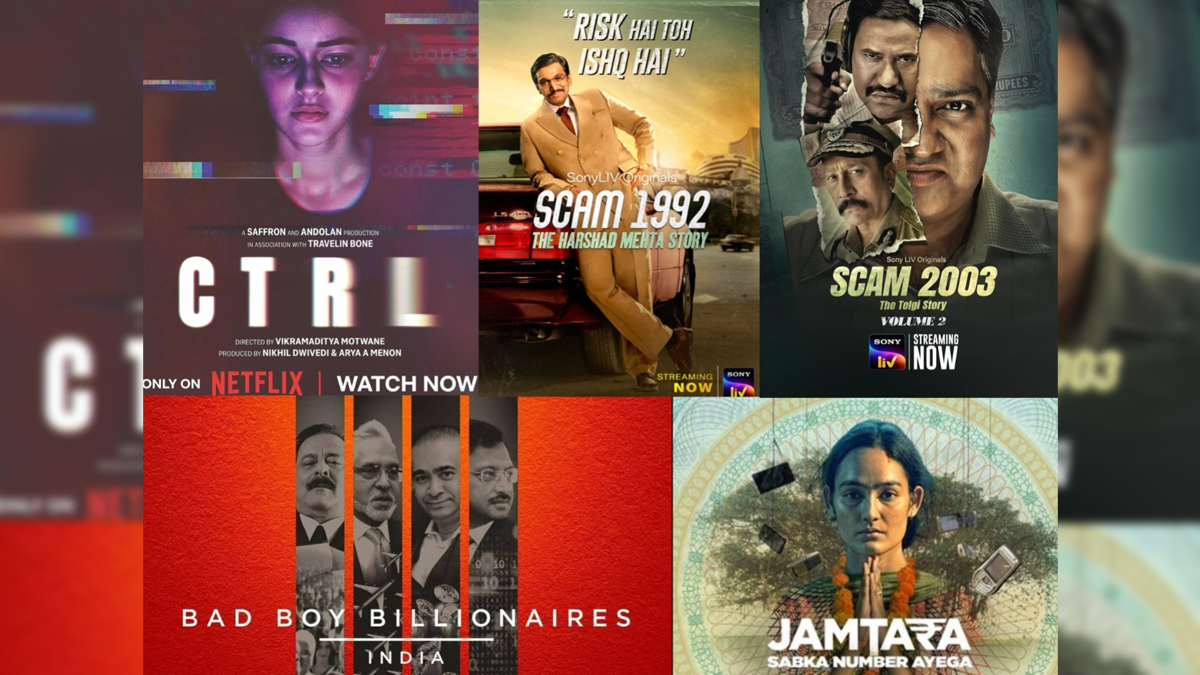
MUMBAI: When technology turns trickster, the plot thickens. From influencer Ankush Bahuguna’s reported 40-hour ordeal involving a digital-arrest scam to an AI-generated deepfake video featuring Janhvi Kapoor, digital deception is no longer confined to the darkest corners of the internet. It is increasingly part of everyday life, exposing how easily trust, personal data and even identities can be manipulated.
While such incidents highlight the real-world dangers of cybercrime and artificial intelligence, Indian entertainment has long explored the machinery of fraud, from financial rackets and phishing networks to digital surveillance and online manipulation. These stories may differ in scale and setting, but they share a common thread: deception flourishes when people let their guard down and systems fail to keep pace.
Here are five Indian series and films that examine the many faces of fraud, power and technology.
1. Scam 1992: The Harshad Mehta Story
Where to watch: Sony LIV
Long before digital wallets and online banking became everyday essentials, financial loopholes were capable of shaking markets to their core. Scam 1992: The Harshad Mehta Story revisits one of India’s most notorious securities scandals, charting the rise and fall of stockbroker Harshad Mehta.
Directed by Hansal Mehta and starring Pratik Gandhi, the series follows Mehta’s ascent in Mumbai’s financial world and the unravelling of the transactions that brought his empire under scrutiny. Adapted from The Scam: Who Won, Who Lost, Who Got Away by journalists Sucheta Dalal and Debashis Basu, it examines the banking mechanisms, institutional gaps and media investigations surrounding the scandal.
Though rooted in the pre-digital era, the series offers a timely lesson for an age of online transactions and instant payments. Sophisticated systems can create an illusion of security, but when oversight falters and scrutiny weakens, the consequences can spread far beyond the people who initiate the fraud.
2. CTRL
Where to watch: Netflix
What if an app promising to clean up your digital life ended up controlling it instead? CTRL turns that unsettling premise into a chilling thriller about artificial intelligence, personal data and the price of surrendering control to technology.
Starring Ananya Panday and Vihaan Samat, the film follows an influencer who uses an AI application to erase her ex-boyfriend from her digital life. What begins as an attempt to move on takes a sinister turn as the technology reveals its capacity to manipulate her world.
Directed by Vikramaditya Motwane, CTRL is not based on a specific real-life cybercrime case. Its concerns, however, mirror growing anxieties about digital surveillance, data misuse and the unchecked use of AI tools. As deepfakes make fabricated images and videos increasingly convincing, the film raises an uncomfortable question: how much control do people really have over their digital identities?
In a world where personal information is routinely exchanged for convenience, CTRL suggests that the most dangerous applications may be those people invite into their lives themselves.
3. Scam 2003: The Telgi Story
Where to watch: Sony LIV
The fraud may have been built on paper, but the scale of the deception was anything but small. Scam 2003: The Telgi Story traces the rise of Abdul Karim Telgi and his counterfeit stamp paper racket, which exploited weaknesses in the system to become a sprawling criminal operation.
Starring Gagan Dev Riar, the series is based on journalist Sanjay Singh’s book Telgi Scam: Reporter’s Diary. It follows how the racket expanded through a network that exposed vulnerabilities in the machinery responsible for producing and distributing stamp papers.
Unlike contemporary cybercrime, the operation did not depend on algorithms or stolen passwords. Yet its underlying mechanics remain familiar: identify a weakness, exploit gaps in oversight and build a network capable of multiplying the gains.
The series serves as a reminder that fraud evolves with its tools, but rarely with its underlying logic. Whether counterfeit documents or fabricated digital identities are involved, a weak link can become the gateway to a much larger scam.
4. Jamtara: Sabka Number Ayega
Where to watch: Netflix
A phone rings, a convincing voice speaks and a victim unknowingly hands over the keys to a bank account. Jamtara: Sabka Number Ayega brings the mechanics of phishing into sharp focus, showing how an ordinary call can become an instrument of financial deception.
Set in Jharkhand’s Jamtara, a town widely associated with organised phishing scams, the crime drama follows young men who trick unsuspecting victims into revealing sensitive banking information. Their methods rely less on technical wizardry than on social engineering: impersonating trusted authorities, manufacturing urgency and exploiting human vulnerabilities.
The series examines how small-scale operations can grow into organised networks, with fraudsters using basic communication tools to target people far beyond their immediate surroundings.
Its relevance has only sharpened as fraudulent calls, impersonation scams and digital-arrest schemes have become prominent concerns. Jamtara strips away the mystique surrounding cybercrime to reveal its most effective weapon: the ability to make a lie sound entirely believable.
5. Bad Boy Billionaires: India
Where to watch: Netflix
Fraud is not always a stranger calling from an unknown number. Sometimes, the story unfolds in boardrooms, financial institutions and business empires built on ambition, influence and public trust.
Bad Boy Billionaires: India examines controversies and allegations surrounding prominent business figures, including Vijay Mallya, Nirav Modi and Subrata Roy. Through archival material, interviews and investigative storytelling, the documentary series explores their rise, the financial and legal controversies that followed, and the wider questions of corporate accountability.
Unlike a conventional cybercrime thriller, the series does not centre on a single digital scam. Instead, it examines the broader relationship between wealth, power and accountability, showing how complex financial dealings can have consequences for institutions, investors and the public.
Its place on this list lies in that wider warning: deception does not always arrive through a suspicious link or a fraudulent message. It can also emerge from systems in which scrutiny fails to match the scale of the money and influence involved.
When deception becomes the plot
From the stock market to the smartphone screen, these five titles reveal that fraud is rarely just about technology. It is about trust, human behaviour and the vulnerabilities that criminals learn to exploit. AI may give deception a more convincing face, while digital networks allow it to travel at unprecedented speed, but the underlying playbook remains remarkably familiar.
The next scam may arrive as a phone call, a polished investment pitch or a video that looks unmistakably real. The screen may change, but the oldest trick in the book remains the same: make people believe what they want to believe, and the con is already halfway home.