Sports
Cricket eyes global takeover as ICC’s Sanjog Gupta maps next growth frontier
Record-breaking viewership, new markets and women’s surge power the sport’s global push

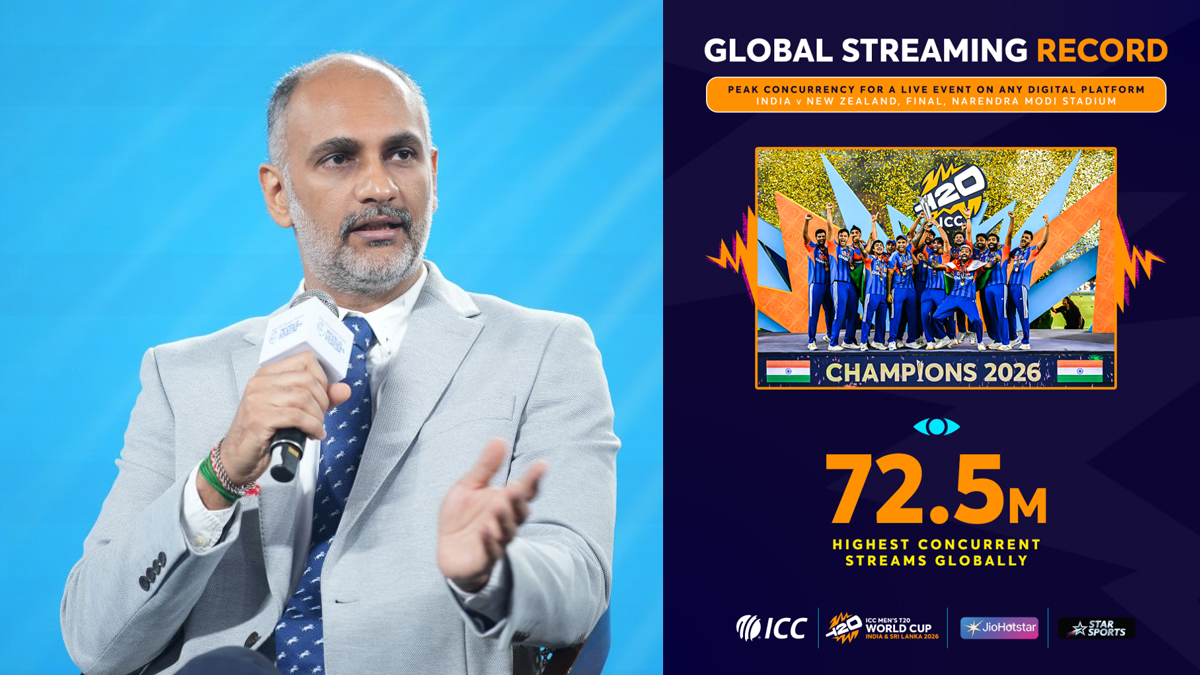
DUBAI: Cricket is no longer just a subcontinental obsession; it is pitching for global dominance. And the numbers are doing the talking.
As the clock struck 9 PM on March 8, 2026, the ICC Men’s T20 World Cup final triggered a historic surge, clocking 72.5 million concurrent digital viewers on JioHotstar in India—a new world record. The figure eclipsed the previous global benchmark set just days earlier during the second semi-final. Three of the four most-watched streaming events globally now belong to ICC tournaments, underlining the sport’s swelling digital muscle.
Sanjog Gupta, chief executive at the International Cricket Council, calls it unmatched scale and engagement. “No other experience, whether individual or collective, user-generated or curated, real or virtual, comes close to delivering this breadth of consumer attention and depth of fan affiliation,” Gupta writes in WPP Media’s Sporting Nation report.

The digital boom is matched by physical turnout. Nearly 1.3 million fans filled stadiums across India and Sri Lanka during the tournament, with strong attendance even for matches not involving host nations. Emerging teams such as Nepal, Italy and Scotland drew record crowds, signalling both deep-rooted passion and untapped headroom.
The global footprint is widening fast. The tournament delivered over 100 per cent viewership growth in markets such as Nepal, Germany and Japan on ICC.tv, while tailored content strategies drove engagement in Italy, Brazil, Indonesia and China. On social media, the ICC generated more than 15 billion views, amplified by over 300 content creators who collectively added another three billion views, offering fans a decentralised, creator-led lens into the game.
At the heart of this push lies a clear ambition: make cricket the world’s sport of choice. That requires more than marquee events. It demands grassroots participation, digital-first fan engagement and robust commercial scaffolding.
Traditional powerhouses such as India, Australia, England and South Africa continue to anchor the sport. But Gupta is clear that the future lies beyond them. The ICC is targeting expansion across the United States, Europe and emerging Asian markets, backed by development programmes and direct-to-fan digital ecosystems.
“The globalisation of the game is not simply about geography,” Gupta notes. “It is about ensuring that wherever the game travels, it retains its spirit while adapting to social contexts and localising when it enters new markets.”
The shift is already visible on the pitch. Associate nations are no longer fringe players. Nepal, Italy and the USA have begun to command global attention, while sides such as Sri Lanka and Zimbabwe have reasserted their pedigree. These performances, Gupta argues, are not anomalies but evidence of a broadening competitive base.
Parallelly, women’s cricket is emerging as a central growth engine. The ICC Women’s T20 World Cup 2026 in England and Wales is expected to accelerate momentum built over the past decade. India’s triumph in the ICC Women’s Cricket World Cup 2025 has further amplified interest, with ripple effects across markets. The ICC’s strategy is unequivocal: scale investment, expand visibility and create a pipeline of new stars.
Even as formats evolve, tradition holds firm. Test cricket, buoyed by the ICC World Test Championship, continues to anchor the sport’s legacy, while ODIs and T20Is drive accessibility and market expansion. The coexistence of formats, Gupta argues, is cricket’s unique strength, offering everything from endurance to instant spectacle.
None of this growth comes cheap. Global brands including DP World, Emirates, Aramco, Hyundai, Coca-Cola and Google are underwriting cricket’s expansion, turning sponsorship into a symbiotic engine of scale, visibility and development.
For Gupta, the direction is clear. Cricket’s future will not be defined by a handful of dominant markets but by a widening global community of players, fans and partners.
From packed stadiums in India to new builds in the United States and emerging hubs across Europe and Asia, the game is stretching its boundaries.
And if recent records are any indication, cricket is not just growing. It is accelerating towards a future where its reach is broader, its engagement deeper and its ambition unmistakably global.





Sports
IPL 19 TV Ad Volumes Rise 10 per cent Despite Fewer Brands
Google storms top spot as e-com services and mouth fresheners lead charge in four-match clash with IPL 18.
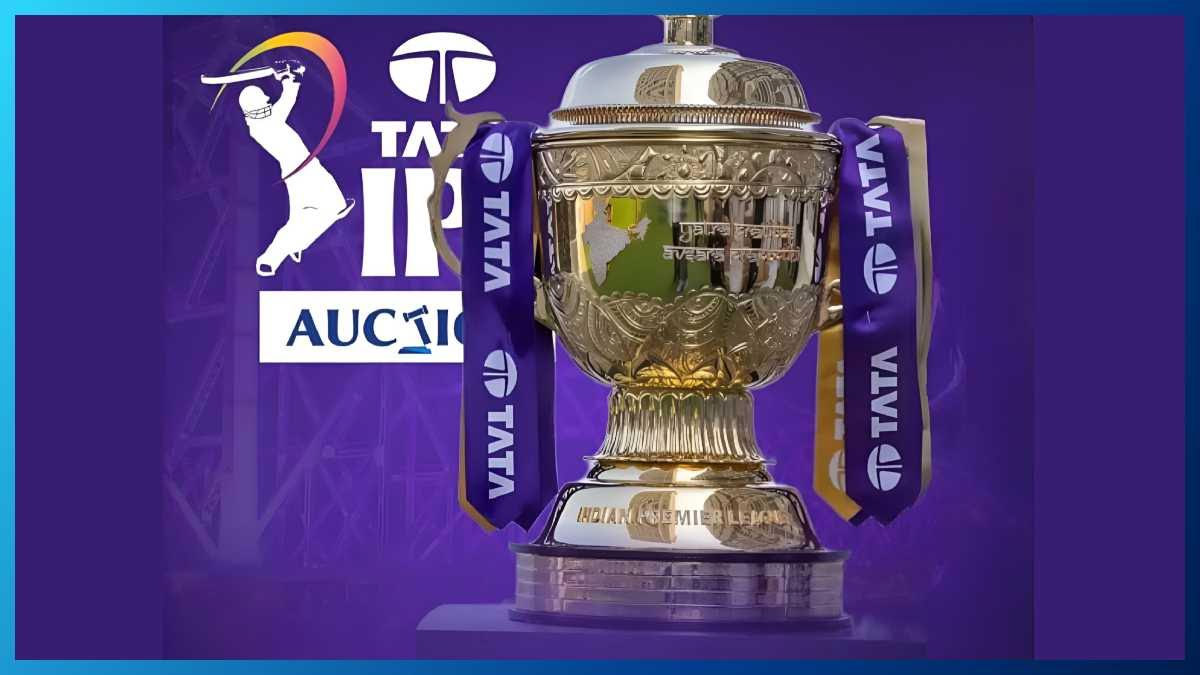
MUMBAI: Google has bowled a perfect googly in the IPL 19 ad arena while the batsmen chased sixes on the field, the search giant has quietly smashed the biggest boundary of all, claiming 12.67 per cent of commercial airtime and leaving rivals gasping. Overall television ad volumes for the four live matches of IPL 19 hit an indexed 109.94 compared with IPL 18’s baseline of 100, a crisp 9.94 per cent jump that proves advertisers still see cricket’s biggest stage as the ultimate pitch. Yet the numbers tell a more nuanced tale. Categories slimmed from 47 to 40 (a 14.9 per cent drop) and advertisers shrank from 58 to 43 (down 25.9 per cent), suggesting a leaner, meaner battle where the survivors are spending smarter.
The new pecking order makes for fascinating reading. In IPL 19, Ecom-Other Services surged to the summit with 13.78 per cent share, nudging out perennial favourite Mouth Fresheners (13.57 per cent). Air Conditioners (5.94 per cent), Corporate-Financial Institutes (5.69 per cent) and Paints (5.23 per cent) rounded out the top five, elbowing aside last season’s heavy hitters. Back in IPL 18, Mouth Fresheners led at 10.73 per cent, followed by Ecom-Gaming (10.62 per cent), Cellular Phones-Smart Phones (7.83 per cent), Biscuits (7.66 per cent) and Cars (6.60 per cent).
On the advertiser leaderboard, Google’s 12.67 per cent dominance is unassailable. Reliance Consumer Products (7.28 per cent) took silver, Havells India (5.94 per cent) bronze, while Vishnu Packaging (5.56 per cent) and K P Pan Foods (4.80 per cent) completed the top five. Contrast that with IPL 18, where Parle Biscuits (7.66 per cent) topped the chart, followed by Vishnu Packaging (5.92 per cent), Apple Computer India (5.52 per cent), Reliance Consumer Products (5.31 per cent) and Billion Brains Garage Ventures (4.52 per cent).
Fresh blood has clearly refreshed the mix. Nine entirely new categories and a whopping 45 new brands entered the fray. Among the debutants making an instant splash: Chocolates, Laptops/Notebooks, Range of Hair Care, Corporate-Pharma/Healthcare and Footwear. Stand-out new brands include Google Search Engine, Google Gemini, Lloyd Designer AC, Cadbury’s Dairy Milk Chocolate, Hero Splendor Plus Range and Joy Hello Sun Sunblock Anti-Tan Lotion, proof that even the most unexpected players are now eyeing cricket’s captive millions.
Conversely, 16 categories sat out IPL 19, including former stalwarts Ecom-Gaming, Cellular Phones-Smart Phones, Biscuits, Airlines and Fans. The message is clear: the ad economy is evolving faster than a T20 run-chase.
So while the on-field drama delivers its usual thrills, the commercial breaks are delivering something even more compelling, a masterclass in how to turn 22 yards of grass into serious brand territory. IPL 19 has shown that when the right mix of innovation and investment meets cricket fever, the ad scoreboard lights up in ways even the most optimistic analysts might not have predicted.






