Regulators
Trai plans appeal option in DND app; MyCall relaunch in March

NEW DELHI: India’s telecom regulator is sharpening its tools against spam and poor call quality, with a fresh round of upgrades to its consumer apps and a new appeals feature in the works.
Telecom Regulatory Authority of India chairman Anil Kumar Lahoti said the authority plans to introduce an appeals option in the Do Not Disturb app, allowing users to escalate complaints if they are unhappy with the telecom operator’s response. The feature is currently under development, with no launch date announced.
The move comes as spam complaints continue to pile up. Of the 31 lakh unsolicited commercial communication complaints recorded in 2025, more than half were filed through the DND app. The new appeals mechanism is expected to plug gaps where complaints are closed by operators with incorrect or unsatisfactory reasons.

Lahoti was speaking at the unveiling of revamped versions of the regulator’s consumer-facing apps. The updated DND app will come with multilingual support, simpler complaint steps, improved preference controls and better handling of dual-SIM phones. Users will also be able to identify the sender behind SMS headers or numbers in the 1600 series directly through the app.
The overhaul comes nearly a decade after the apps were first launched, reflecting the scale and speed of today’s telecom ecosystem. Regulators say the updates are designed to match changing user behaviour, rising digital connectivity and the persistence of spam calls and messages.
The authority has also widened its enforcement net to include unregistered telemarketers. Once five unique complaints are logged against a sender, outgoing services across all linked numbers are barred for 15 days. Repeat violations can lead to disconnection of telecom resources for up to a year and blacklisting across operators.
So far, more than 7.3 lakh notices have been issued to unregistered telemarketers. About 4.7 lakh have faced month-long restrictions, nearly 90,000 repeat offenders have seen six-month communication caps, and over 1.8 lakh telecom resources have been disconnected.
Alongside the DND revamp, the regulator will roll out a refreshed MyCall app in March. The new version will allow users to report call drops, muting and voice distortion, giving authorities clearer insight into real-world call quality.
Another upgrade is coming to the MySpeed app, which will now support multilingual use and test speeds across 5G, fixed broadband and Wi-Fi. It will also measure jitter and packet loss, helping users understand why video streaming or web browsing sometimes stumbles despite high headline speeds.
With these updates, the regulator hopes to make its apps less of a formality and more of a frontline tool for everyday telecom complaints.






I&B Ministry
MIB halts news TRPs for four weeks over sensational US-Iran conflict coverage
Government flags panic-mongering in television war coverage
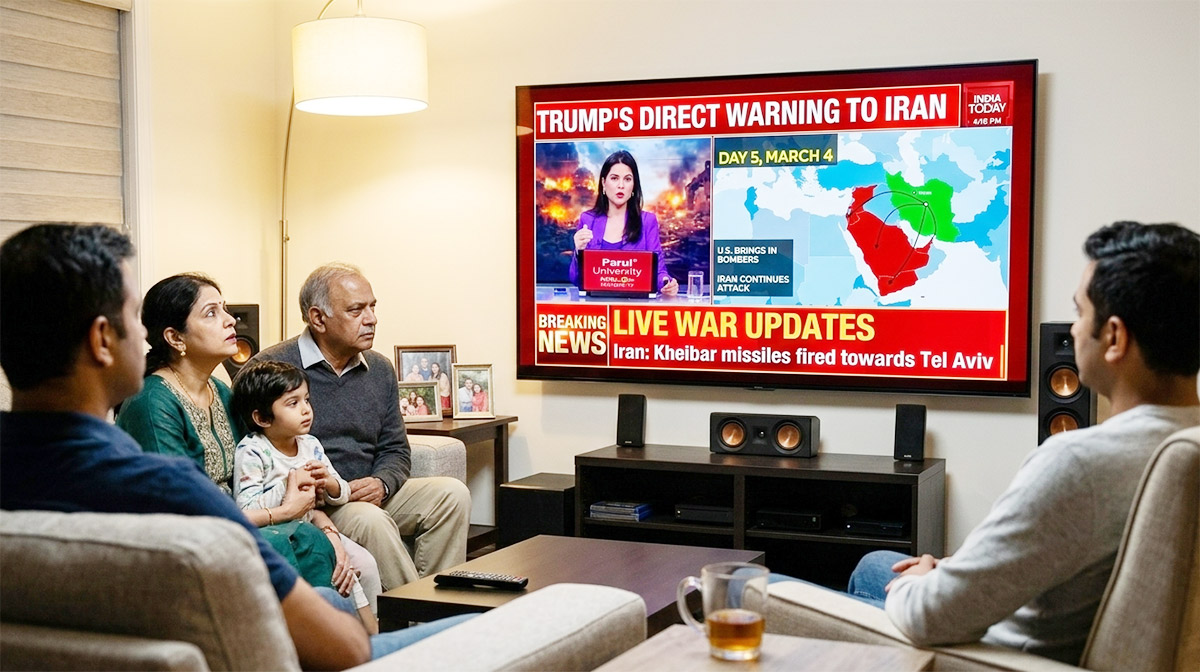
NEW DELHI: India’s Ministry of Information and Broadcasting directed the Broadcast Audience Research Council India (BARC) to suspend television ratings for news channels for four weeks amid concerns over sensational coverage of the ongoing conflict involving the United States and Iran.
According to media reports, the move intends to curb excessive dramatisation in television reporting that could trigger unnecessary public anxiety.
Officials have observed that several news broadcasters are amplifying developments in the conflict in ways that may fuel panic among viewers. By temporarily halting the publication of viewership data, the ministry hopes to ease the competitive pressure on channels to chase ratings through sensational content.
The suspension will remain in effect for one month for now. During this period, television news channels will continue to broadcast as usual, but their audience measurement figures will neither be counted nor released.
Authorities will monitor both the evolving geopolitical situation and the tone of television coverage during the pause. The four-week suspension could be extended if the government believes the risk of panic-mongering or sensational reporting persists.