Regulators
TRAI outlines 6G, AI and inclusion roadmap for broadcast sector
Ashok Kumar Jha calls for tech leap, rural reach and FAST rules.

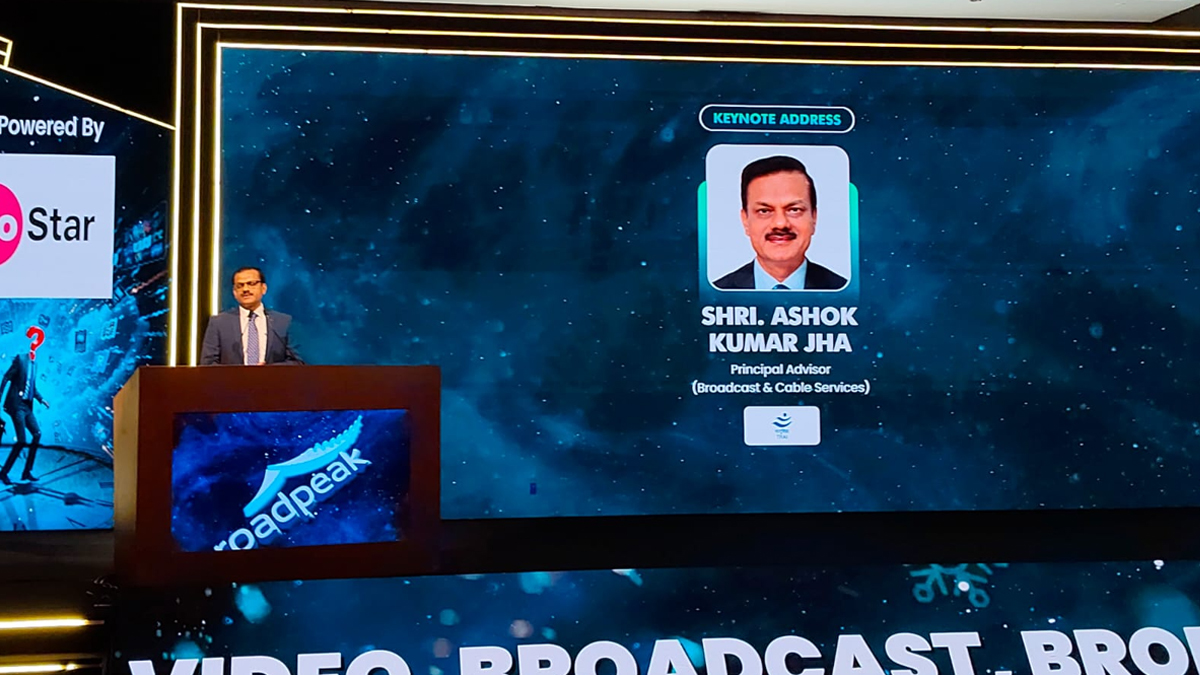
MUMBAI: The future of television, it seems, may not come with a remote at all. At the 22nd Video Broadcast and Broadband Tech Summit hosted by IndianTelevision Dot Com, Ashok Kumar Jha, Principal Advisor, Broadcast and Cable Services at the Telecom Regulatory Authority of India (TRAI), painted an expansive vision of what the next five years could hold for India’s media and entertainment ecosystem from gesture-controlled TV and AI agents to rural inclusion and regulatory reform.
Opening his keynote, Jha acknowledged IndianTelevision Dot Com founder Anil Wanvari and reflected on the platform’s journey from a news magazine 18 years ago to a digital presence that began 26 years ago. The focus then shifted to the summit’s theme: managing the great acceleration in technology and what that acceleration means for a diverse country like India.
For Jha, technological acceleration is not a uniform wave lifting all boats. It is layered and unequal. Out of roughly 33 crore households in India, around 23 crore have television access. On the telecom side, nearly 130 crore Indians own phones, but only about 100 crore have broadband connections. That leaves 30 crore people on feature phones without data access.

“How do we reach them?” was the question he returned to repeatedly.
He divided the challenge into two Indias those who have access and those who do not. For the connected viewer, the issue is no longer availability but experience. India’s combined pay TV base, including cable and DTH, stands at around 9.5 crore homes, with DTH alone accounting for roughly 6.4 crore. Yet consumer expectations have evolved far beyond channel surfing.
Today’s viewer, Jha argued, expects seamless switching between linear TV and OTT platforms, intuitive discovery and frictionless control. The traditional remote, he suggested, may soon give way to gesture and voice. With 6G technologies expected to take shape around 2030, integrated sensing and communication systems could allow networks themselves to act as sensors. A simple hand movement could change channels; a spoken command could summon archived content within milliseconds.
Artificial intelligence will sit at the heart of this shift. Jha envisaged AI agents that can access vast broadcaster repositories and data centres instantly, fetching specific episodes from specific years on command. Monetisation models will adapt, but the speed and responsiveness will redefine user experience.
Behind the screen, infrastructure will have to scale dramatically. India’s data centre capacity, currently estimated between 1.5 and 1.9 gigawatts, could rise to around 10 gigawatts by 2030. Technologies such as hollow core fibre which uses air instead of glass to transmit light, thereby reducing latency are being developed to support ultra-fast networks. Lower heat generation and higher efficiency will be critical as capacity expands.
Yet Jha was equally clear that innovation must not bypass the unconnected. In areas lacking electricity or broadband, low-cost set-top boxes and solar-powered solutions could bridge gaps. He referenced studies, including one by IIM Andhra Pradesh, suggesting that television penetration could grow alongside rural GDP growth and demographic shifts. As dependency ratios rise with larger proportions of young and elderly populations in-home media consumption is expected to increase.
Government incentives, including production-linked schemes, are already aimed at boosting domestic manufacturing and TV penetration. But Jha also pointed to emerging broadcast technologies such as ATSC 3.0 operating in the 470 to 582 MHz band, which could enable television delivery directly to mobile devices through software-defined radios and compatible chips. Such hybrid models would not only expand access but also strengthen communication resilience during disasters, when multiple layers GSM, radio and television become vital.
On the distribution front, Jha highlighted the flexibility of satellite, terrestrial and low Earth orbit systems, arguing that broader technology choices could reduce bandwidth constraints and expand high-definition offerings. Regulatory reforms are also under consideration. TRAI has recommended granting infrastructure status to broadcasters and cable operators to ease financing and operational bottlenecks. It has proposed faster clearances within 15 days to one month for local cable operators, enabling smoother service rollout.
Significantly, Jha urged local cable operators to consider becoming internet service providers. With fibre-to-the-home targets falling short of earlier ambitions to cover 50 per cent of households by 2022, cable networks present an existing last-mile opportunity. Bundled broadband and TV offerings, he suggested, could reverse stagnation in linear television revenues.
The financial landscape underscores the urgency. Digital media revenue is projected at around Rs 900 billion in 2025, growing at a CAGR of about 11 per ceent and having surpassed television revenue in 2024. Television revenue stands at approximately Rs 676 billion, reflecting a marginal dip of about minus 0.6 per cent. Online print media is steady at around Rs 262 billion, while online gaming, also near Rs 262 billion, faces disruption following the 2025 ban on real-money games.
In response, Jha called for collective action among network service operators and local cable operators to enhance consumer satisfaction rather than compete destructively. He proposed the creation of a formal Consumer Satisfaction Index for the sector, where operators would be rated on parameters such as picture quality, website usability, seamless OTT integration and service responsiveness. Transparency, he argued, would build trust and drive improvement.
He also turned to FAST free ad-supported streaming television noting its rapid growth and confirming that the Ministry of Information and Broadcasting has sought TRAI’s recommendations. A pre-consultation paper is expected shortly, and Jha urged industry stakeholders to participate actively in shaping guidelines that balance innovation with consumer protection.
Throughout the address, one theme resonated: collaboration. Technology, policy, entrepreneurship and industry coordination must move in tandem. The ultimate test, Jha suggested, is simple yet profound, when a child in a remote village opens their eyes, or when an elderly viewer seeks companionship in a screen, does the system deliver a smile?
The great acceleration is already underway. Whether it becomes a widening gap or a shared leap forward will depend on how decisively the industry acts now.






Regulators
‘Mandatory menstrual leave may hurt women’s jobs’: Supreme Court
Judges suggest a national law could lead to workplace discrimination and bias
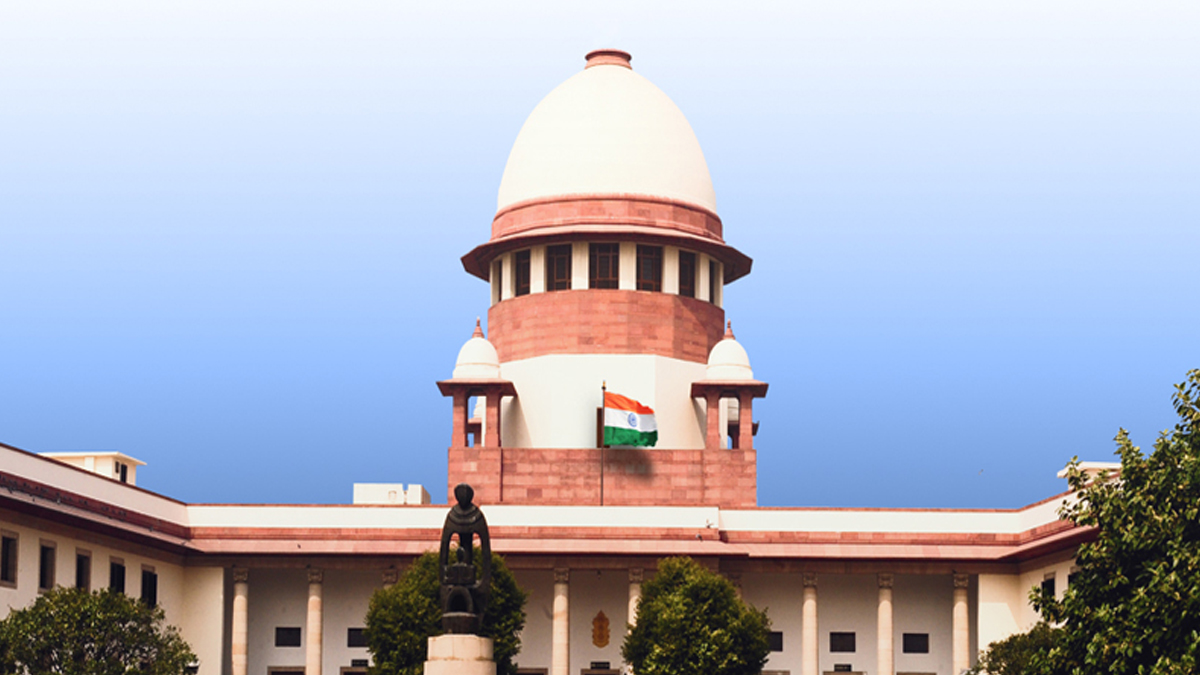
NEW DELHI: The Supreme Court of India has cautioned that legally mandating menstrual leave for women could prove counter-productive, potentially leading to a decline in the hiring of female employees across both the public and private sectors. While hearing a petition seeking a national policy on the matter, a bench led by chief justice Surya Kant and justice Joymalya Bagchi expressed concerns that such a mandate might inadvertently reinforce gender biases.
The court dismissed the writ petition on Friday, instead directing the central government to consider the petitioner’s representation and develop a model policy after consulting all relevant stakeholders.
The chief justice argued that while the intention behind the petition was to support women’s health, the practical reality of the job market could be harsh. He noted that if leave were made compulsory in law, it could create a psychological fear among employers, leading them to view women as less efficient than their male counterparts.
The bench warned that employers might hesitate to recruit women if they are legally required to provide monthly leave, fearing a loss in productivity and operational continuity. Such a requirement, the court suggested, could unintentionally create hiring bias against women in both public and private sectors.
The chief justice also noted that mandatory menstrual leave could affect women’s professional opportunities. If employers assume women may be unavailable for part of each month, they might be less likely to assign them important responsibilities. As an example, the court suggested that women might even be overlooked for roles such as presiding over a normal trial due to assumptions about their availability.
The bench further cautioned that such legislation could create a perception among young women that they have natural issues that prevent them from being at par with men in professional settings, reinforcing stereotypes rather than advancing equality.
The petitioner’s counsel, senior advocate Shamshad, pointed out that several states and private entities have already taken steps toward menstrual equity. Kerala recently granted leave to students in state-run universities, and Karnataka has also formulated its own policy addressing the issue.
However, the court drew a clear distinction between voluntary policies and a blanket national law. The judges observed that when private companies choose to offer such benefits voluntarily, it is generally viewed as a progressive welfare measure that supports employees’ well-being.
Justice Bagchi noted that turning such benefits into a legal requirement could introduce complications for businesses. According to him, transforming voluntary welfare measures into mandatory obligations changes the business model, and employers might begin to view workers as unattractive, if additional legally mandated claims increase operational burdens.
Despite declining to mandate menstrual leave, the Supreme Court reaffirmed its commitment to menstrual health as a fundamental right. The bench referred to a significant ruling from January that recognised menstrual hygiene as an “integral part of a girl child’s right to life, dignity, and health” under Article 21 of the Constitution.
In that ruling, the court issued mandatory directions to governments to ensure free sanitary napkins in schools, the availability of functional gender-segregated toilets, and widespread menstrual health awareness campaigns across educational institutions.
This was the third time the petitioner, lawyer Shailendra Mani Tripathi, had approached the court on this issue. The bench acknowledged that the petition had been filed in the interest of young women, but it held that the judiciary should not issue a positive mandamus directing the government to frame a policy that involves complex socio-economic considerations.
The matter has now been referred to the Union Ministry of Women and Child Development. The government is expected to consult with stakeholders and explore whether a balanced policy can be developed without undermining women’s position in the workforce.







