Regulators
India’s telecom ties tighten up
Broadband crosses 1,007 million as telecom adds 8.53 million users.

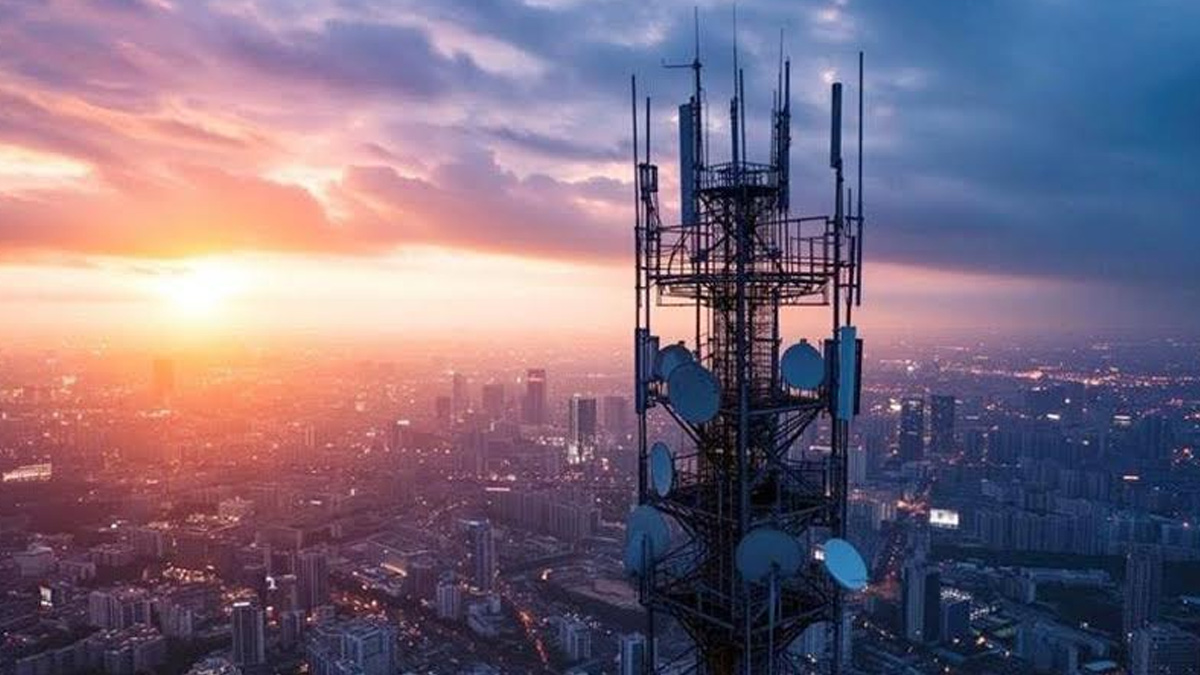
MUMBAI: In a nation where staying connected is practically a superpower, India’s telecom scene just powered up, crossing the billion-broadband threshold and adding millions more to the call queue in December 2025.
Imagine the buzz, from bustling Mumbai streets to remote rural pockets, signals are strengthening. According to the Telecom Regulatory Authority of India (TRAI), total telephone subscribers hit 1,306.14 million by month’s end, up 8.53 million with a 0.66 per cent monthly growth spurt. Urban areas led the charge with 762.44 million subscribers (net addition 7.20 million, 0.95 per cent growth), while rural regions dialed in 543.70 million (up 1.33 million, 0.25 per cent growth). The overall tele-density climbed to 91.74 per cent including machine-to-machine (M2M) connections, or 84.01 per cent without urban at a whopping 148.92 per cent, rural at 59.63 per cent.
Broadband’s the real star here, surging to 1,007.35 million users, a 0.37 per cent monthly hop from 1,003.65 million. Wired connections ticked to 45.29 million (0.39 per cent growth), fixed wireless zipped to 14.77 million (5.04 per cent jump), and mobile wireless held steady at 947.30 million (0.30 per cent rise). Reliance Jio ruled the roost with 514.35 million subscribers, followed by Bharti Airtel’s 314.26 million (using November data, mind you), Vodafone Idea at 128.47 million, BSNL 33.03 million, and Atria Convergence Technologies 2.37 million collectively commanding 98.52 per cent market share.

Drilling down, fixed wired broadband saw Jio at 13.80 million, Airtel 10.05 million, BSNL 4.47 million, ACT 2.37 million, Kerala Vision 1.45 million (70.96 per cent share). On the wireless broadband front (fixed and mobile), Jio dominated with 500.55 million, Airtel 304.21 million, Vodafone Idea 128.46 million, BSNL 28.56 million, IBus 0.12 million near-monopoly at 99.98 per cent.
Wireline subscribers edged to 47.37 million (up 0.32 million, 0.68 per cent growth), with urban density at 8.26 per cent and rural at 0.56 per cent. PSUs like BSNL, MTNL, and APSFL grabbed 19.70 per cent share, while private players like Reliance Jio (31.14 per cent), Bharti Airtel (23.13 per cent), Tata Tele (23.29 peer cent), Vodafone Idea (1.72 per cent), and others filled the pie pvt sector at 80.30 per cent.
Wireless (mobile + FWA) hit 1,258.77 million, growing 0.66 per cent with 8.21 million additions. Urban wireless, 720.15 million (0.96 per cent growth), rural 538.62 million (0.25 per cent). Mobile alone: 1,244.20 million (up 0.59 per cent, 7.24 million net), with urban tele-density 139.08 per cent, rural 58.36 per cent. Active mobile users (peak VLR), 1,162.97 million, 93.47 per cent of total. Airtel boasted 98.96 per cent VLR-to-HLR ratio, BSNL lagged at 58.23 per cent.
M2M connections exploded to 109.19 million (up from 103.48 million), thanks to Airtel’s inclusion Airtel led with 66.95 million (61.31 per cent share), Jio 19.73 million (18.06 per cent), Vodafone Idea 18.53 million (16.99 per cent), BSNL 3.97 million (3.64 per cent).
Fixed wireless details, 5G FWA at 10.99 million (up 5.59 per cent, urban 5.58 million/rural 5.41 million), UBR FWA 3.58 million (12.30 per cent growth, urban 2.54 million/rural 1.03 million), all via Jio.
Circle-wise, all showed wireless growth monthly and yearly, with Circle A adding 2.93 million wireless, Circle B 2.69 million. LSA highlights, Delhi’s tele-density soared to 359.50 per cent, Bihar’s lowest at 61.88 per cent. Nine LSAs below national average.
Switching sides? 16.12 million MNP requests, up from 14.69 million Zone-I 9.02 million (UP East tops at 2.30 million), Zone-II 7.10 million (Madhya Pradesh 1.52 million).
With providers like Jio and Airtel flexing muscles, private firms snagging 92.53 per cent mobile market, PSUs 7.47 per cent India’s telecom tango is far from over, blending urban zing with rural reach in a digital dance that’s got everyone hooked.







I&B Ministry
Press Sewa Portal digitises 1.5 lakh records, streamlines periodical registrations: MIB
Online system spans 780 districts; Rs 5.6 crore penalties, 88,315 titles cancelled
NEW DELHI: India’s print media registry has quietly moved from dusty files to digital dashboards. The government has digitised more than 1.5 lakh historical records of newspapers and periodicals and shifted registrations fully online through the Press Sewa Portal.
Introduced under the Press and Registration of Periodicals (PRP) Act, 2023, the portal now handles all applications for registering periodicals, replacing the earlier paper-heavy system created under the Press and Registration of Books Act, 1867, which has since been repealed.
The digital shift brings a wide range of services onto a single platform. Publishers can now register new periodicals, revise registrations, transfer ownership, file annual statements, pay penalties online and apply for circulation verification without navigating government offices.
As part of the rollout, specified authorities in 780 districts across India have been onboarded onto the platform. Since 1 March 2024, the portal has processed 11,081 applications and issued certificates across different categories.
The transition has also brought stronger compliance. According to government data, Rs 5.63 crore in penalties has been collected through the portal so far. States such as Maharashtra, Karnataka, Tamil Nadu, Uttar Pradesh and Madhya Pradesh account for some of the largest penalty collections.
At the same time, the authorities have carried out a major clean-up of inactive or non-compliant publications. A total of 88,315 periodicals have been cancelled nationwide, with Maharashtra, Uttar Pradesh and Delhi among the states reporting the highest number of cancellations.
The government says the system will continue to evolve based on feedback from users. The Press Registrar General of India (PRGI) regularly reviews suggestions to improve services and make compliance easier for publishers.
The full list of registered newspapers and periodicals is available on the PRGI website under the Registered Titles section.
The information was shared in a written reply in the Lok Sabha by minister of state for information and broadcasting and parliamentary affairs L Murugan, responding to a question from Damodar Agrawal.