Hindi
AI directors take the spotlight at India AI Impact Summit
LTM, NFDC and Waves Bazaar curate first AI Cinema Showcase with human-hearted films.

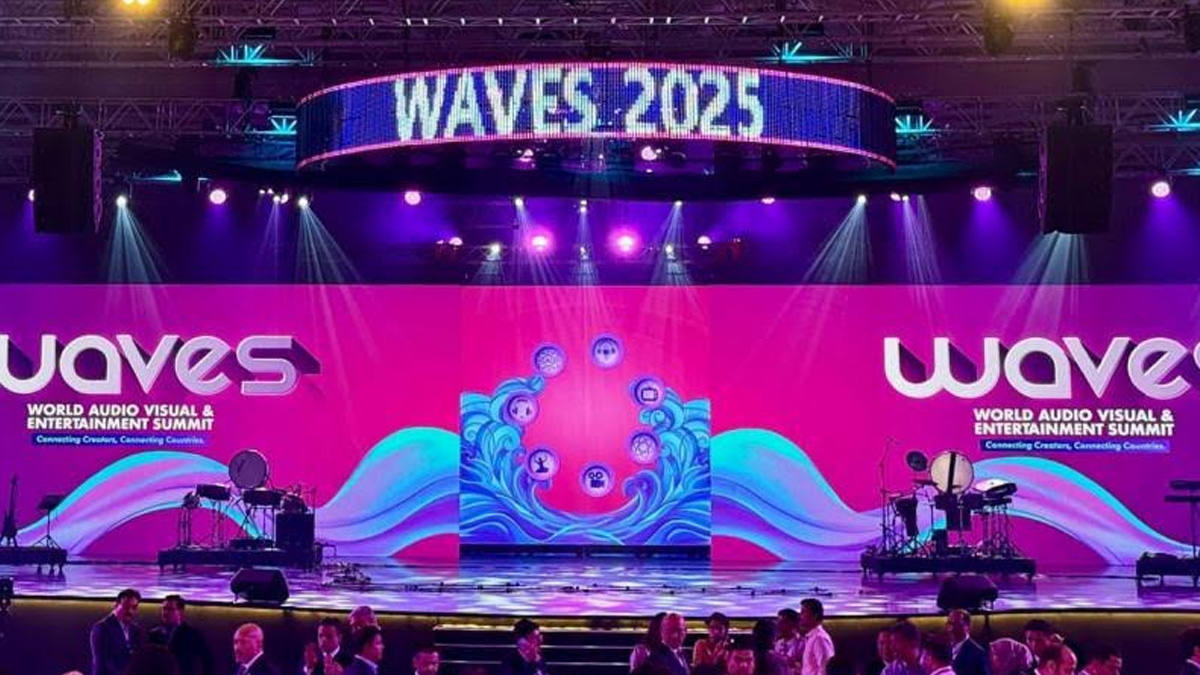
MUMBAI: Lights, camera, algorithm action! India’s film scene is about to get a futuristic twist as artificial intelligence steps into the director’s chair (well, sort of) at the India AI Impact Summit 2026. LTM, in partnership with the National Film Development Corporation (NFDC) and Waves Bazaar, is rolling out the AI Cinema Showcase under the Ministry of Information & Broadcasting’s watchful eye. The event runs from 16 to 20 February 2026 at Bharat Mandapam in New Delhi, pulling in policymakers, tech innovators, global creators and crucially storytellers who’ve already let AI into their edit suites.
This isn’t about robots churning out blockbusters overnight. The showcase spotlights a hand-picked collection of short films made by Indian filmmakers solo creators, collectives, studios and even students who’ve used AI as a genuine creative collaborator rather than a shortcut. Every selected piece has been judged on narrative punch, artistic vision, cinematic polish and, importantly, responsible AI use. The lucky films will screen in the sleek Immersive Room AI Theatre inside the Ministry of Information and Broadcasting pavilion.
The move builds on last year’s momentum, back in November 2025 at the 56th International Film Festival of India (IFFI) in Goa, the same trio Waves Film Bazaar, LTM and NFDC staged India’s debut AI Film Festival and Hackathon. That experiment proved there’s real appetite for exploring where code meets creativity.

By bringing the conversation into the cultural spotlight, the AI Cinema Showcase aims to nudge discussions beyond dry policy papers and tech specs into something far more human, how emerging tools can amplify storytelling without drowning out the soul. It’s part of a bigger push for ethical, human-centred AI that keeps the artist firmly in the driving seat.
So while the rest of the summit debates algorithms and governance, this corner of Bharat Mandapam will be quietly proving that the future of Indian cinema might just feature a very clever co-writer, one that never asks for coffee breaks. Catch the screenings if you’re in Delhi next week; who knows, you might spot the next big twist coming from a prompt rather than a pen.




Hindi
Remembering Gyan Sahay, the lens behind film, television and advertising
From a puppet rabbit selling poppadums to Hindi cinema, he framed it all.
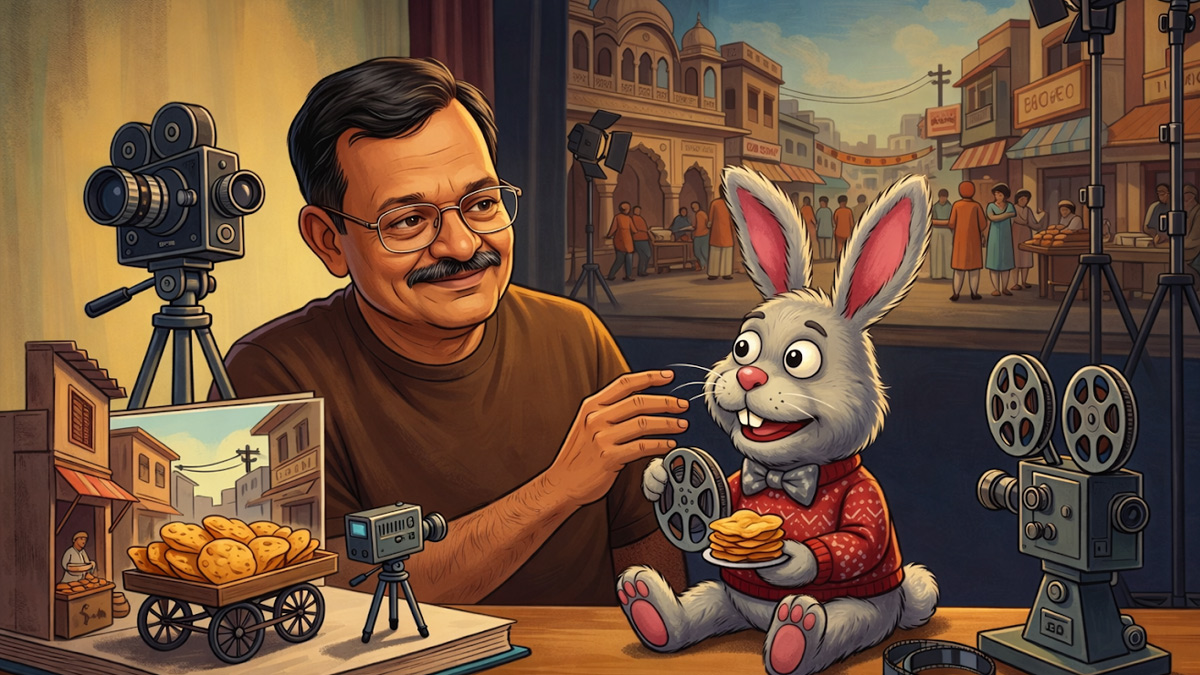
MUMBAI: There are careers, and then there are canvases. Gyan Sahay, the veteran cinematographer, director, and producer who passed away on 10 March 2026 in Mumbai, had one of the latter. Over several decades in the Indian film and television industry, he turned lenses, lights, and the occasional puppet rabbit into something approaching art.
A graduate of the Film and Television Institute of India (FTII) in Pune, Sahay built his reputation as a director of photography across a career that stretched from the early 1970s all the way to the digital age. He was the kind of craftsman who understood that a well-composed shot is not merely a technical achievement but a quiet act of storytelling.
For most Indians of a certain age, however, Sahay will forever be the man behind the rabbit. His direction of the iconic long-running television commercial for Lijjat Papad, featuring its now-legendary puppet bunny, gave the country one of its most cheerfully persistent advertising images. It was the sort of work that sneaks into the national subconscious and takes up permanent residence.
His big-screen credits as cinematographer include Anokhi Pehchan (1972), Pagli (1974), Pas de Deux (1981), and Hum Farishte Nahin (1988). In 1999, he stepped behind a different kind of camera altogether, making his directorial debut with Sar Ankhon Par, a drama that featured Vikas Bhalla and Shruti Ulfat, with a cameo by Shah Rukh Khan for good measure.
On television, Sahay was particularly prized for his command of multi-camera production setups, a skill that made him a go-to technician for large-scale shows and reality programmes. In an industry that has never been especially patient with complexity, he was the calm hand on the rig.
In later life, Sahay turned teacher. He participated regularly in masterclasses and Digi-Talks, often hosted by organisations such as Bharatiya Chitra Sadhna, sharing hard-won wisdom on cinematography, the comedy of timing in a shot, and the sweeping changes brought by the shift from celluloid to digital. He was also said to have been involved in a project concerning a biographical film on Infosys co-founder N.R. Narayana Murthy.
Tributes from the film industry poured in following the news of his passing, with colleagues remembering him as a senior cameraman who served as a rare bridge between two entirely different eras of Indian cinema. That is, perhaps, the finest thing one can say of any craftsman: he kept up, and he brought others along with him.