Brands
ZEEL transfers syndication business, invests Rs 505 crore in IP push
Restructuring, stake buy and FCCB moves signal sharper content strategy


MUMBAI: In the content economy, owning the story is half the battle monetising it is the real game, and Zee Entertainment Enterprises is doubling down on both. The company has approved the transfer of its syndication and content licensing business to its wholly owned subsidiary ZI-IPR Enterprises, alongside an investment of Rs 505 crore aimed at strengthening its play in content intellectual property (IP) acquisition, management and monetisation. The move, effective April 1, 2026, will see the business transferred on a slump sale basis at book value, including all associated assets, liabilities and commercial rights effectively consolidating IP operations under a more focused structure.
At its core, the restructuring signals a strategic shift. As content consumption increasingly fragments across digital and global platforms, the value of IP lies not just in creation but in how efficiently it can be distributed, repackaged and monetised across markets. By housing its syndication engine within ZI-IPR Enterprises, ZEEL appears to be building a more agile and scalable ecosystem, one that can better extract value from its vast content library while adapting to evolving distribution models.
But the company’s ambitions are not limited to restructuring. ZEEL has also approved an investment of up to Rs 20.09 crore in Culture of Real Experiences (CORE), acquiring a 51 per cent stake in the entity. The move expands its footprint into the broader creative and experiential space, suggesting a push beyond traditional broadcasting into areas where content, culture and immersive experiences intersect.

At the same time, ZEEL has moved to tidy up its financials, approving the redemption of $23.9 million in outstanding foreign currency convertible bonds (FCCBs) and cancelling an unused $215.1 million commitment. The twin steps are expected to ease pressure on its treasury, freeing up capital and improving financial flexibility as the company invests more aggressively in its IP strategy.
Taken together, the decisions reflect a company in recalibration mode streamlining legacy structures, sharpening its focus on content ownership, and exploring new avenues for growth. In a market where the lines between television, streaming and experiential entertainment are increasingly blurred, ZEEL’s latest moves suggest it is not just creating content, but building a system to make that content travel further and pay better.






Brands
YES Bank appoints S Anantharaman as chief risk officer
Former Jio Financial Services group chief risk officer takes charge of enterprise-wide risk at the embattled private lender
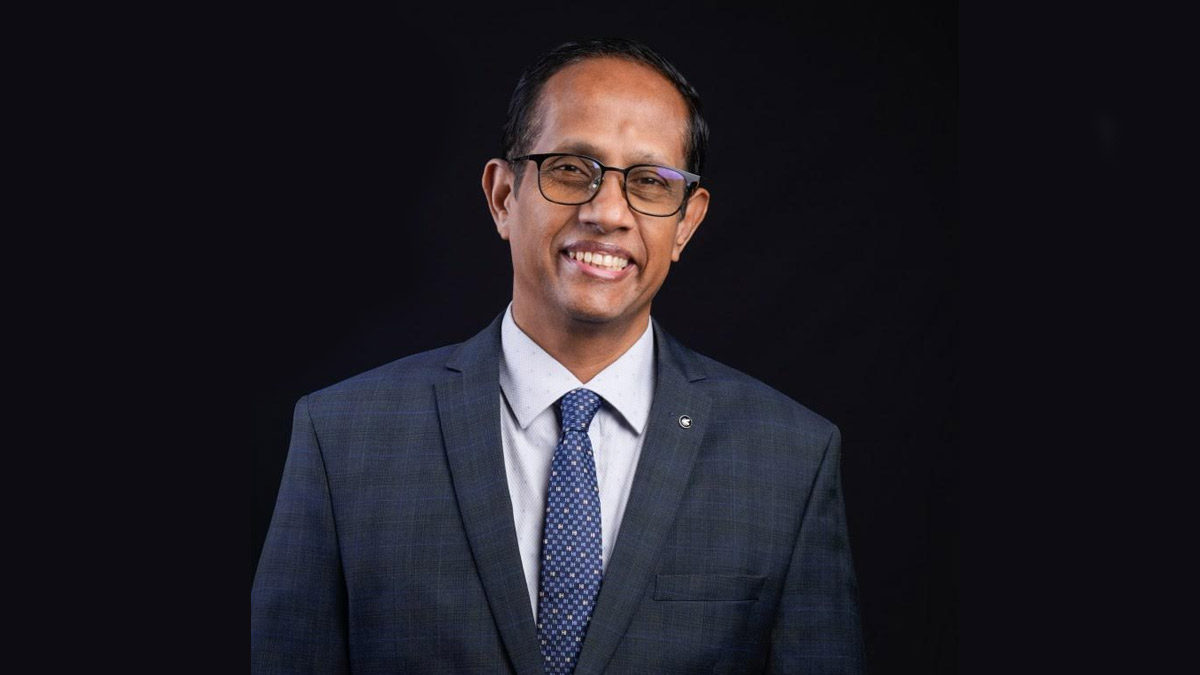
MUMBAI: YES Bank is not taking chances with risk anymore. The private lender has appointed S Anantharaman as its chief risk officer, a hire that signals the bank’s continued effort to rebuild credibility and tighten the controls that once famously slipped.
Anantharaman arrives from Jio Financial Services, where he served as group chief risk officer and built a risk management architecture spanning lending, payments, insurance broking and asset management from the ground up. Before that, he held the chief risk officer role at Bank of Baroda and senior leadership positions at HDFC Bank and L&T Finance Holdings. Three decades in banking and financial services, in other words, with scars and qualifications to match. He is a chartered accountant and a CFA charterholder.
At YES Bank, his brief is considerable. Anantharaman will oversee the bank’s entire enterprise-wide risk framework, covering credit policy, market risk, operational risk, information security, data governance, analytics, model governance and data privacy. It is, in short, every lever that matters when a bank is trying to prove it has grown up.
YES Bank’s turbulent past needs little rehearsing. What it needs now is exactly what Anantharaman has spent thirty years building: the kind of risk culture that stops problems before they become headlines. The appointment suggests the bank knows it.






