MAM
MiQ launches AI platform Sigma to simplify fragmented media planning
New system connects data, platforms and measurement for modern marketers.

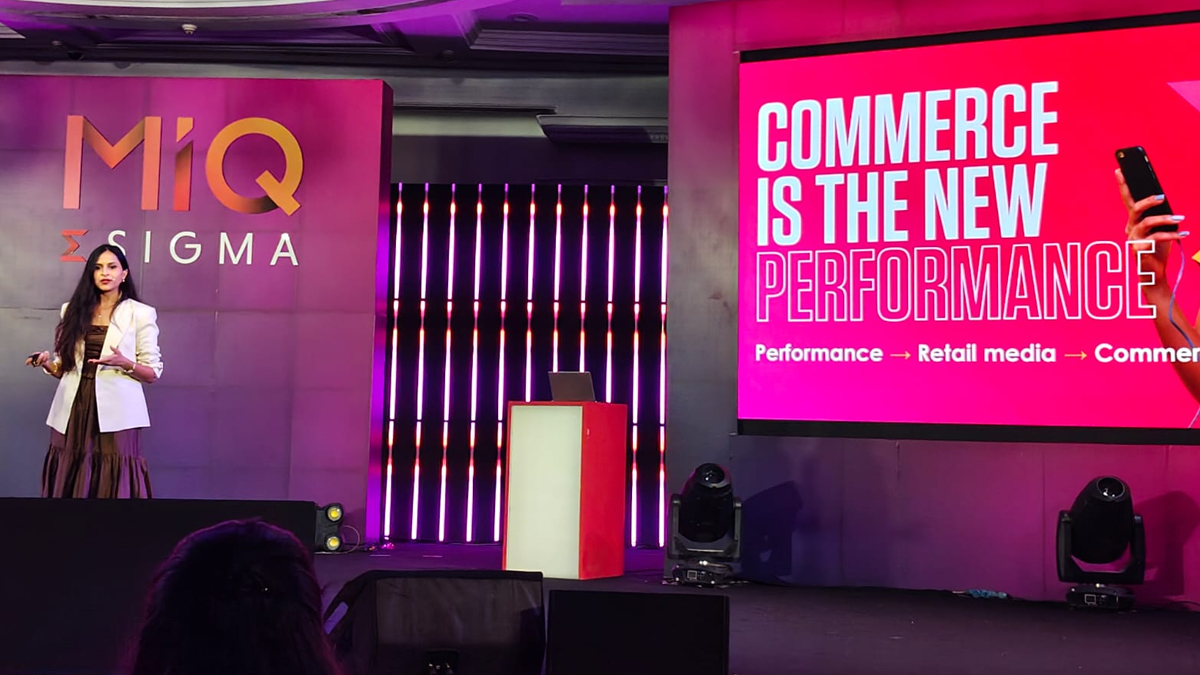
MUMBAI: In today’s advertising world, the problem is no longer finding audiences. It is finding them everywhere at once. At a launch event in Mumbai, global programmatic advertising company MiQ unveiled its proprietary AI driven platform MiQ Sigma, designed to help marketers navigate the increasingly fragmented landscape of modern media consumption. With audiences now spread across streaming services, social media platforms, creator channels and emerging AI powered search environments, advertisers face a growing challenge: planning campaigns across a maze of platforms, data sources and measurement systems. MiQ’s new platform aims to bring order to that chaos.
During the launch presentation, MiQ executives highlighted how audience behaviour has dramatically evolved in recent years. Consumers today frequently engage with multiple content platforms simultaneously, whether through streaming services, social media, digital video platforms or creator led channels.
That shift has created fragmentation not only in audience attention but also in the tools advertisers use to plan campaigns. Media planners now juggle separate systems for data analysis, campaign activation and performance measurement, often making it difficult to build a unified strategy.

The rise of AI powered discovery tools is adding another layer of complexity. Chat driven search platforms are beginning to change how users research, compare and potentially purchase products, opening the door to entirely new advertising environments.
At the same time, the pandemic era boom in ecommerce and quick commerce has accelerated the growth of retail media networks. Increasingly, sectors such as travel and financial services are also entering the commerce media ecosystem with their own first party data and advertising platforms.
The result, according to MiQ, is a digital landscape fragmented across data, platforms and measurement frameworks.
MiQ Sigma has been built specifically to address that fragmentation.
The platform aggregates massive global datasets capturing what consumers are watching, browsing and buying. According to the company, Sigma is trained on hundreds of trillions of connected data signals, enabling marketers to translate raw behavioural information into actionable insights.
The system connects three critical parts of the advertising process: data driven planning, cross platform campaign activation and unified performance measurement.
During the launch presentation, MiQ, product director Sachi Gurudanti described the platform as a bridge between artificial intelligence and human decision making.
“Sigma connects data for better planning, platforms for activation and campaigns for measurement,” she said. “By bringing together AI and human intelligence, the platform helps marketers make unbiased decisions that ultimately drive real business outcomes.”
The technology also builds on MiQ’s 16 years of experience in programmatic advertising, integrating the company’s proprietary tools and operational expertise into a single platform.
The launch event included a live demonstration by Krishnakumar Govindarajan, chief technology officer at MiQ, who showcased how Sigma converts complex data streams into practical marketing actions.
The demonstration walked through three core functions of the platform: turning data signals into intelligence, converting that intelligence into campaign activation and continuously optimising campaigns based on performance outcomes.
Govindarajan illustrated the process using a hypothetical automotive brand campaign. The system analysed data from television, streaming services, social media and digital video platforms to compare advertising performance across competing brands.
The platform can, for instance, identify how often different brands appear across TV and streaming platforms, which households have seen advertisements from multiple competitors and which regions have stronger exposure for certain brands.
One feature allows planners to visualise advertising penetration across geographic areas using a matrix based on postal codes. This enables marketers to identify regions where competitors have higher exposure and deploy targeted campaigns to close the gap.
The demonstration also showed how Sigma integrates insights from multiple digital ecosystems. Through partnerships with data providers, the platform can analyse advertising activity across streaming services, YouTube, social media and display networks.
Advertisers can review the distribution of ad formats, such as video versus image based creatives, evaluate the effectiveness of campaign frequency and identify emerging opportunities such as short form video placements. For example, the platform can highlight whether brands are underutilising formats like YouTube Shorts or certain social platforms, offering strategic insights for future campaigns.
One of Sigma’s most notable features is its ability to convert natural language marketing briefs into targetable audience segments. Using AI models, the platform can interpret a campaign brief such as “potential SUV buyers interested in cricket” and generate detailed audience personas based on behavioural data.
Each persona includes demographic indicators, viewing patterns, browsing behaviour and purchasing signals. These personas can then be mapped across thousands of available data segments spanning watching, browsing and buying behaviour.
During the demo, the platform generated multiple potential personas for an automotive campaign and identified thousands of audience segments across advertising platforms such as Meta and Google’s DV360.
Advertisers can then build audience “baskets” by combining relevant segments and activate campaigns across multiple demand side platforms directly from within Sigma.
Once audiences are defined, Sigma allows marketers to deploy campaigns using templates based on MiQ’s programmatic trading experience.
These templates incorporate best practices around brand safety, inclusion and exclusion targeting, inventory selection and budget allocation.
Campaign budgets can then be distributed across multiple line items, platforms and audience segments while the system continuously monitors performance and recommends adjustments.
According to MiQ, this approach allows advertisers to move from fragmented planning toward a unified, data driven campaign execution process.
The launch of Sigma also reflects MiQ’s growing focus on the Indian advertising market. The company has been operating commercially in India for more than six years and has expanded its presence alongside the country’s rapid digital transformation. With media consumption spreading across languages, devices and platforms, India represents one of the most complex yet opportunity rich advertising environments globally.
By introducing Sigma in India, MiQ aims to help brands navigate that complexity while building campaigns capable of scaling across multiple platforms and markets. As audiences continue to scatter across screens and channels, platforms like Sigma suggest that the future of advertising may depend less on choosing a single medium and more on connecting them all.





Brands
Vodafone Idea elevates Vineeth Jayendranath as VP, marketing head Mumbai
Telecom marketer takes charge of Mumbai circle with growth and brand focus

MUMBAI: Vodafone Idea Limited has promoted Vineeth Jayendranath to vice president, marketing head for the Mumbai circle, marking a key milestone in his career as the telecom operator sharpens its regional strategy.
In his new role, Jayendranath will lead marketing efforts across prepaid and postpaid segments in one of the country’s most competitive telecom markets. His mandate includes driving revenue growth, strengthening brand positioning, and deepening customer engagement, while also managing profit and loss responsibilities for the circle.
Sharing the update, Vineeth Jayendranath said, “Excited to share, I am starting my new stint as Vice President, Marketing Head for Mumbai circle at Vodafone Idea Ltd. Would like to thank everyone who has supported me in this journey.”
Jayendranath brings over 12 years of experience spanning telecom and IT, with a strong focus on customer value management and data-led marketing. Since joining Vodafone Idea, he has held multiple leadership roles, most recently serving as general manager leading customer value management and prepaid business across Gujarat, Maharashtra and Goa.
During this period, he handled large subscriber bases and multi-billion rupee revenue portfolios, while rolling out hyper-personalised campaigns and a “segment of one” strategy to improve customer retention and upgrades. He also championed a digital-first approach, pushing adoption of data services and unlimited plans through targeted, insight-driven initiatives.
Earlier, he worked with Idea Cellular Ltd in strategy and business intelligence roles, and began his career at Infosys as a systems engineer. A brief stint at Hyundai Motor India Ltd during his internship added early exposure to marketing strategy.
An alumnus of SVKM’s Narsee Monjee Institute of Management Studies, Jayendranath has steadily built a reputation for combining analytics with marketing execution.
His elevation comes as telecom players double down on circle-level strategies to stay competitive, and Vodafone Idea appears to be betting on data-backed marketing to keep Mumbai firmly in its corner.







