MAM
Star Plus rides new high with 445 GRPs

MUMBAI: Surely it has basked in its magnificence for plenty – nine years of continued leadership at the top and then salvaging its lost glory from Viacom18‘s Colors after a year-long gap. But never has its achievements been such a historic feat since the first season of KBC.
Star Plus, now walking the path of a new self discovery with its rebranded look, has touched a new GRP high for the week ended 19 June with 445 points in its kitty. And to differentiate it further from the Hindi GEC gang, the channel has taken an exorbitant jump of 108 points in just one week to cross the 400 fence patch and break its own record since its KBC days.
 |
Source: TAM
What has primarily helped Star Plus to attain this huge jump is its weekend event, Star Parivaar Awards, that attracted 55 GRPs to the channel as it delivered a TVR of 7.2. The show achieved a peak TVR of 9.9 at 9.35 pm while the red carpet delivered 2.2 TVR (7:30 pm- 8 pm).
Said Star India EVP marketing and communications Anupam Vasudev, “Also, the new look of Star Plus has had huge sampling by new viewers while there has been an increased consumption from the existing viewers.”
The other element that has helped Star Plus to upgrade its GRP grades is its weekday prime time. The band delivery saw a positive high wherein shows either registered a healthy and upward viewership over the previous week or maintained stability.
Pratigya (Monday-Friday 10.30 pm) is at 5.1 TVR (4.8), the highest average for the show since launch that continued to lead the slot. Bidaai (Monday-Friday 9 pm) has also moved up the TRP ladder to post an average TVR of 5 (3.6). Its one hour special on Saturday delivered 5.8 TVR.
Additionally, the newly launched Ekta Kapoor produced Tere Liye (Mon-Fri. 10 pm) seems to have given the channel an incremental push as the show opened with a 4 TVR on Monday and averaged 3.8 TVR.
“We want to lead in every primetime slot. Tere Liye performed extremely well for us and is a good bet to eventually lead the 10 pm slot. We are also launching the new show Chaand Chhupa Badal Mein at the 8 pm slot as it is a weak band right now,” Vasudev said.
Star Plus had already begun experimenting on its programming content to understand the changing viewership patterns with shows like Bidayi and Yeh Rishta. “The shows fetched good eyeballs and the channel knew that “times are a changing”. It led to bolder formats with Aap Ki Kachehri and Sach Ka Saamna and now, with the reinvention of self, Star Plus seems to have bounced back with the audiences well,” says a top media executive on conditions of anonymity.
Fitting into the new image of the channel, Star chalked out an innovative strategy. The channel ran no commercial ads for 24 hours from Monday primetime but filled up the inventory with its own promos. “The exercise to promote ourselves during breaks began on Monday primetime and ran for 24 hours,” said Vasudev.
While Star Plus seems to have marked a clear top slot territory for itself, vibrant Colors is evidently losing its bright tint. The channel has dropped 12 GRPs over the previous week to score 276 points.
Except Balika Vadhu that posted 4.8 TVR (4.7), the highest rating on the show in the last 12 weeks, the other primetime shows including Uttaran at 3.9 TVR (4.4) and Na Aana is Des Laado at 3.6 TVR (4.4) slid downward.
Where the channel has actually gained eyeballs is the afternoon slot (30 GRPs, up from 19 GRPs in the previous week) and weekend movies (24 GRPs, from the previous week‘s 14 GRPs).
Kitchen Champion, the one-hour afternoon cookery show, rated 1.8 TVR in its launch week.
Clearly, apart from its primetime shows, movies have always been a dependable GRP delivery for Colors and it telecast six of them during the week (five on weekend and one on Friday). There were three movies on Sunday that played breakless – Ajab Prem… on Sunday at 7.30 pm delivered 1.5 TVR, Bhootnath on Sunday at 12 noon delivered 1.2 TVR and Welcome on Sunday at 5.30 pm rated 0.8 TVR.
Other movies on the channel were – Jab we met (Friday 9.30 pm 0.6 TVR), Hum Dil De Chuke Sanam (Sun 3.30 pm 0.6 TVR) and Life Partner (Saturday 2.30 pm 0.6 TVR).
There were also two event repeats on the channel with limited / no breaks – Maa Tujhe Pranam played breakless at Sunday 2 pm and delivered 1.1 TVR and Apsara Awards (Sunday 10 pm) played with 1 5 minutes break and delivered 1 TVR.
Zee TV also saw a drop of 25 GRPs (231 GRPs during the week) wherein the fall was primarily propelled by its weekday primetime bands. Its top rated show, Pavitra Rishta, fell to average 5.3 TVR (6.1 TVR) while Agle Janam is at 3.6 TVR (4.5 TVR). DID Lil Masters fetched an average TVR of 3.1 in the week (3.7 TVR last week). On the movie front too, the channel has lost 10 GRPs to lock it at just 5 points this week. The channel had shown Ishq at 4.30 pm on Saturday.
Overall, the channel genres which have grown this week are: Hindi GEC – 1374 GRPs (1338 GRPs), Sports – 187 GRPs (75 GRPs) and Hindi News – 147 GRPs (143 GRPs).
The genres which dropped are: Hindi movies – 439 GRPs (483), Youth – 121 GRPs (138) and Kids – 239 GRPs (290).

Brands
GUEST COLUMN: Beyond layoffs, India emerges as creative-tech hub
Shift in hiring and AI-led workflows is reshaping global media and marketing
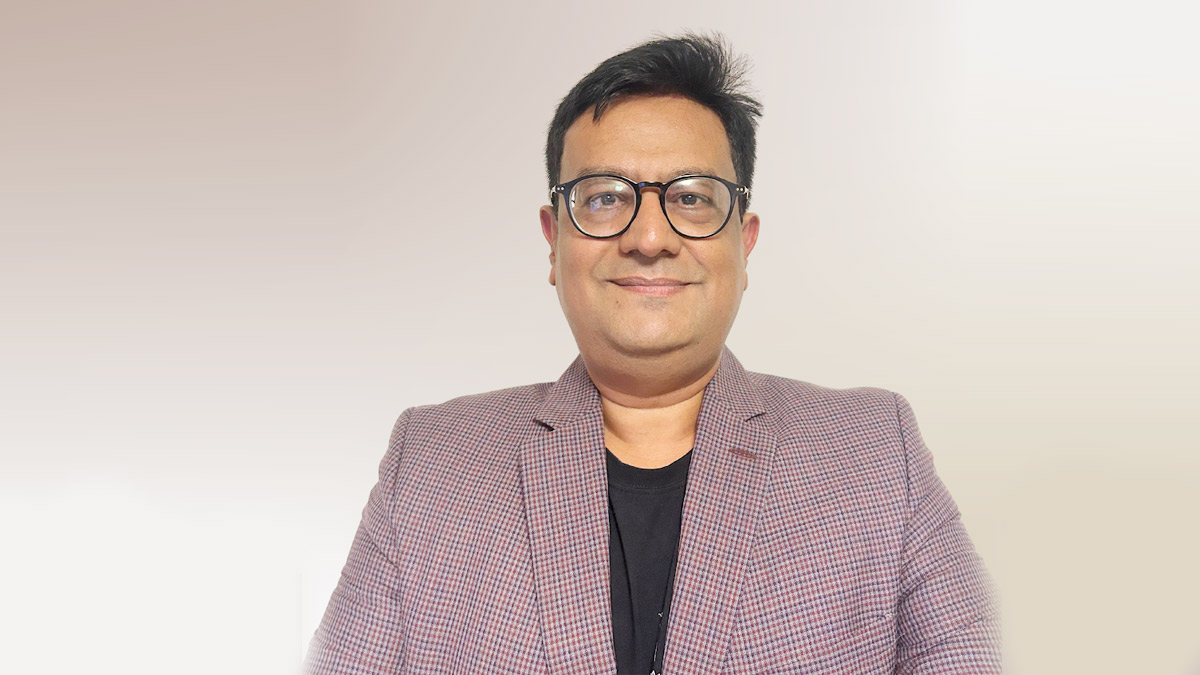
MUMBAI:The global narrative around layoffs in media and technology may suggest contraction, but a deeper transformation is reshaping how creative and tech capabilities are built and deployed. For Sanjil Zaveri, general manager – India at Brandtech+, this shift is less about decline and more about redistribution, one that is positioning India at the centre of a new global operating model. In this piece, Zaveri explores how integrated workflows, AI-powered production, and evolving talent demands are redefining the creative-tech ecosystem, why India is emerging as a strategic hub for global content and innovation, and what this means for the future of media, marketing, and talent.
The global headlines around layoffs in technology and media continue to dominate industry conversations. From platform restructuring to reduced marketing spends, the narrative suggests a slowdown across the creative and digital ecosystem.
But beneath these headlines, a different shift is underway, one that is quietly redefining how creative and technology work is delivered globally.

Hiring is not disappearing; it is being redistributed. And India is increasingly at the centre of this transition.
A structural shift in the creative-tech ecosystem
The media and marketing landscape is undergoing a fundamental reset. Brands today are moving away from fragmented agency models and siloed teams toward more integrated, agile structures.
Creative, technology, and media are no longer operating in isolation. Campaigns are now built through connected workflows, where ideation, production, and optimisation happen simultaneously.
This shift is forcing organisations to rethink where and how teams are built. Increasingly, the focus is on capability, speed, and scalability, rather than geography alone.
India’s emergence as a creative-tech hub
India’s role in this evolving ecosystem has expanded significantly.
Traditionally positioned as a backend execution market, India is now playing a far more central role in global campaign delivery. Teams based here contribute not just to production, but also to strategy, content development, and performance optimisation.
This is particularly relevant in a market where content velocity has increased dramatically. With the rise of digital platforms, OTT, and always-on marketing, brands require high volumes of creative assets without compromising on quality.
Industry insights from Ernst & Young point to India’s growing strength as a global content hub, while NASSCOM continues to highlight the scale and depth of the country’s digital talent pool. Together, these factors create a compelling case for India as a foundation for more efficient, integrated content ecosystems serving global markets.
A global company’s perspective on India
At Brandtech+, this shift is already shaping how we operate.
As a global organisation working across creative, marketing, and technology, our talent strategy is increasingly driven by capability rather than location. India has therefore become a key market for both scale and strategic talent.
In the first quarter of this year, we have significantly accelerated hiring in India across creative, technology, and operations roles, moving well ahead of plan and continuing to build strong momentum. We are actively hiring across multiple functions, with India playing a central role in delivering integrated creativetech solutions for global brands.
These signals reflect a broader change in how global companies view India, not as a delivery centre, but as a hub for connected creative, data, and technology capabilities.
“While much of the global narrative is centred on contraction, what we are seeing in India is a different kind of growth,” says Sanjil Zaveri. “As a global company, we are investing in talent that can work across creative, data, and technology, because that is where the future of marketing is headed.”
AI and the new content economy
Artificial intelligence is playing a critical role in enabling this transformation.
In today’s media environment, the demand for content has scaled exponentially. Brands are expected to create, adapt, and optimise creative assets across multiple platforms in real time. The scale of this demand would be difficult to sustain through traditional production models alone.
AI is helping make this possible.
Rather than replacing roles, AI is streamlining workflows, automating repetitive tasks, accelerating production timelines, and enabling faster experimentation. This allows creative and strategy teams to focus on higher-value outputs.
“AI removes the mundane and elevates the meaningful,” says Zaveri. “It allows teams to focus on ideas and storytelling, while technology drives efficiency.”
For media platforms and advertisers, this is redefining how campaigns are built, moving from linear production cycles to continuous, data-driven content creation.
What this means for media talent
For professionals across media, advertising, and digital, this shift is redefining skill requirements.
The traditional boundaries between creative, media planning, and technology are blurring. Content creators are expected to understand performance metrics. Media professionals are working more closely with data, platforms, and automation. Collaboration across disciplines is becoming a core skill.
This is creating demand for hybrid talent, professionals who can operate across disciplines and adapt to rapidly changing workflows.
India’s talent ecosystem is particularly well suited to this environment. With strong capabilities across content, design, engineering, and analytics, the market offers a unique combination of scale and versatility.
Importantly, global exposure is no longer tied to relocation. Professionals in India are increasingly working on international brands and campaigns, collaborating with teams across markets in real time.
Looking ahead: India at the centre of the reset
What we are witnessing today is not a temporary phase; it is a structural reset in the global creative-tech ecosystem.
Layoffs may continue to shape short-term narratives, but they do not capture where long-term growth is being built. That growth lies in new operating models, integrated workflows, and markets that can deliver both scale and innovation.
India is firmly at the centre of this transformation.
As global media and marketing organisations continue to evolve, India’s role will only become more critical, not as a support market, but as a strategic hub for content, creativity, and technology-led innovation.
The future of creative-tech will be defined by collaboration, speed, and adaptability. And increasingly, it will be shaped from India.
Note: The views expressed in this article are solely the author’s and do not necessarily reflect our own.






