Digital
Google rolls out $15B AI, education and connectivity plan for India
AI tools for 11 million students, new subsea cables, and a national skilling push.


NEW DELHI: Google is backing its words with action. In a major push to future-proof the world’s most populous nation, Google DeepMind has partnered with the Indian government on a large-scale AI initiative.
Announced by CEO Sundar Pichai at the India AI Impact Summit, the deal is less of a gentle nudge and more of a full-throttle sprint into the digital age. Part of Google’s $15 billion commitment to South Asia, the plan aims to weave artificial intelligence into the very fabric of Indian daily life, from the deep ocean floor to the back of the classroom.
The most heart-warming slice of this digital pie is the focus on the next generation. Google is partnering with 10,000 Atal Tinkering Labs, effectively dropping high-tech AI tools into the laps of roughly 11 million students.

The goal? To introduce generative AI assistance in schools, ensuring that the homework of the future is powered by more than just caffeine and late-night panic.
While the kids are busy with AI in the classroom, Google is busy under the sea. The newly minted India-America Connect Initiative involves laying down serious hardware, specifically, new subsea cable routes.
These digital arteries will link India to Singapore, South Africa and Australia. By adding four more strategic fiber-optic routes connecting the U.S. to the Southern Hemisphere, Google is essentially building a “data superhighway” to ensure India’s AI capabilities don’t get stuck in traffic.
Knowing how to use a tool is just as important as owning it. To bridge the gap, Google is launching its most ambitious skilling program yet: the Google AI Professional Certificate. This program is designed to help the workforce master AI without needing a PhD in robotics.
With full-stack connectivity and a massive investment on the table, India isn’t just joining the AI race; it’s looking to set the pace.







Digital
RBI proposes Rs 25,000 compensation cap for small digital fraud losses
RBI, customer bank and beneficiary bank will share payouts
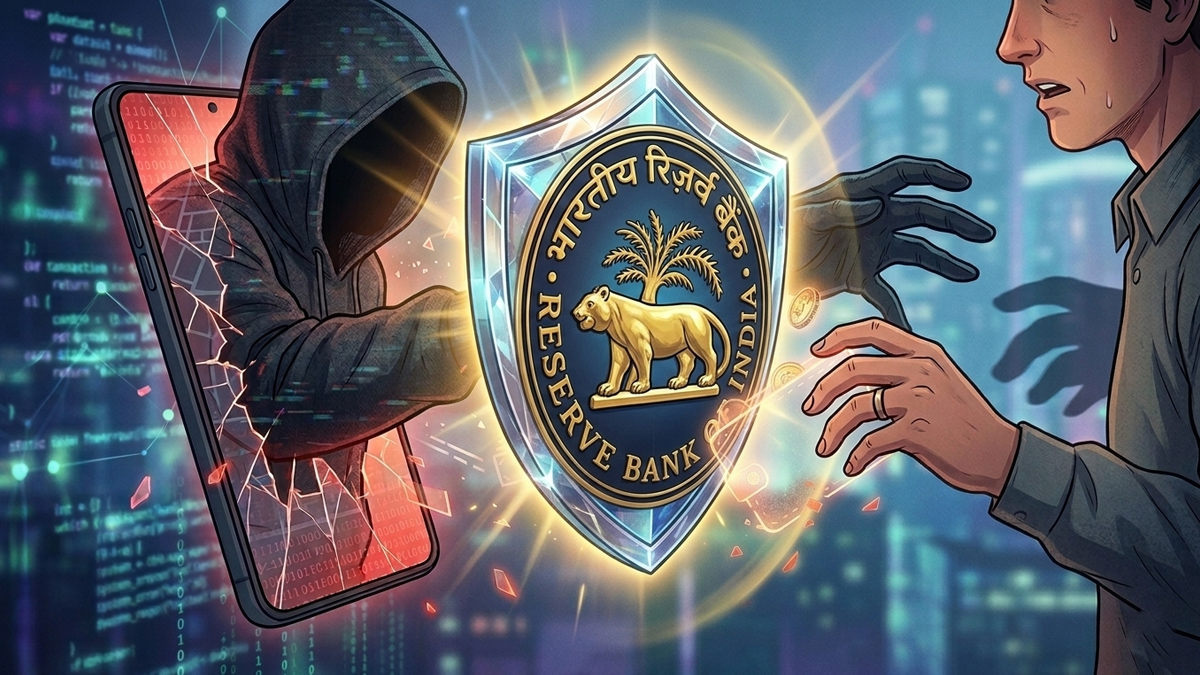
NATIONAL: The Reserve Bank of India has proposed a new compensation framework for small-value fraudulent electronic banking transactions, requiring the central bank, the customer’s bank and the beneficiary’s bank to share payouts to affected customers.
Under draft rules released on Friday, compensation will be capped at the lower of 85 per cent of the net loss amount or Rs 25,000 in cases where the gross loss from a fraudulent electronic transaction is up to Rs 50,000.
The proposal comes as regulators step up efforts to strengthen customer protection amid a rise in digital banking frauds.
RBI governor Sanjay Malhotra had indicated during last month’s monetary policy announcement that the central bank planned to introduce a compensation framework for small-value digital frauds, allowing affected customers to claim relief once during their lifetime.
According to the draft guidelines, when the loss is below Rs 29,412, compensation of 85 per cent of the loss will be paid. Of this amount, 65 per cent will be borne by the RBI, while the customer’s bank and the beneficiary bank will contribute 10 per cent each.
For losses of Rs 29,412 or more but up to Rs 50,000, the compensation will be capped at Rs 25,000. In such cases, the RBI will contribute Rs 19,118, while the customer’s bank and the beneficiary bank will each contribute Rs 2,941.
If funds are later recovered after compensation has been paid, the customer’s bank must recalculate the payout based on the revised net loss and adjust the recovered amount accordingly.
Customers will be eligible for compensation only if they report the fraudulent transaction within five calendar days of its occurrence.
Complaints must be lodged both with the bank and through the National Cyber Crime reporting portal or the National Cyber Crime helpline. Banks must also confirm that the loss is bona fide under their internal processes.
Once a complaint is received, banks must compensate the customer within five calendar days, the draft rules state.
In joint accounts, only one account holder may submit a compensation claim.
The central bank has also proposed tightening transaction alerts by mandating instant SMS notifications for all electronic banking transactions above Rs 500. For transactions of up to Rs 500, banks may decide whether to send alerts based on internal policies.
Banks will not be allowed to charge customers for SMS messages sent to meet regulatory requirements or those used for promotional, marketing or customer awareness purposes.
The draft framework also calls for stronger oversight by requiring banks to periodically report complaints related to fraudulent electronic transactions to their boards or board-level committees. These reports must detail the number and value of cases across categories including card-present transactions, card-not-present transactions, internet banking, mobile banking and ATM transactions.
The RBI has invited public comments on the draft guidelines until 6 April, 2026. The rules are expected to take effect on 1 July, 2026 once finalised.
Banking officials say the proposed sharing of compensation between the RBI, the customer’s bank and the beneficiary bank is intended to increase vigilance across the digital payments ecosystem.