Digital
Election Commission to meet social media platforms on 11 March
Talks focus on tackling misinformation and deepfakes ahead of Assembly polls in multiple states.

MUMBAI: India’s poll watchdog is calling time on deepfake drama because when elections meet AI trickery, even the ballot box needs a fact-check referee. The Election Commission of India will convene senior officials from major social media platforms on 11 March 2026 at Nirvachan Sadan, New Delhi, to discuss the growing challenges of misinformation and deepfakes during elections.
The agenda centres on the “opportunities and challenges” of social media use in the electoral process, with the Commission aiming to develop a framework for its “optimal and responsible” application in line with existing laws. Discussions will cover improved content monitoring, faster responses to election-related complaints, and closer coordination with authorities during campaign periods.
The meeting comes ahead of Assembly elections in several states, including West Bengal, Tamil Nadu, Kerala, Assam and the Union Territory of Puducherry. The rising influence of social media in politics has heightened concerns over manipulated content, including deepfakes, which have been linked to incidents of violence and misinformation in past polls.

In recent elections, political parties and candidates have increasingly used AI tools to create synthetic videos, audio clips and fabricated statements impersonating opponents or falsely showing endorsements. The Election Commission had issued advisories before the 2024 general elections, directing parties to avoid circulating deepfakes and remove misleading material within three hours of detection, citing provisions under the Representation of the People Act, 1951 and the Information Technology Act, 2000.
The consultations follow earlier engagements with tech companies and reflect broader policy debates on regulating AI-generated content. Amendments to the IT (Intermediary Guidelines and Digital Media Ethics Code) Rules, 2021 shortened the removal timeline for unlawful content from 36 hours to three hours, a change that has drawn criticism from industry players for leaving limited room for careful legal and factual review.
Executives from global platforms, including Meta, have argued that while they are committed to addressing harmful content, the tight deadline complicates compliance.
As deepfakes blur the line between real and reel, the Election Commission isn’t just monitoring posts, it’s trying to keep the vote real in an age where reality itself can be edited.


Digital
Maharashtra partners OpenAI, Sarvam AI to boost state’s tech ecosystem
State to set up dedicated AI department and roll out frontier technology policies
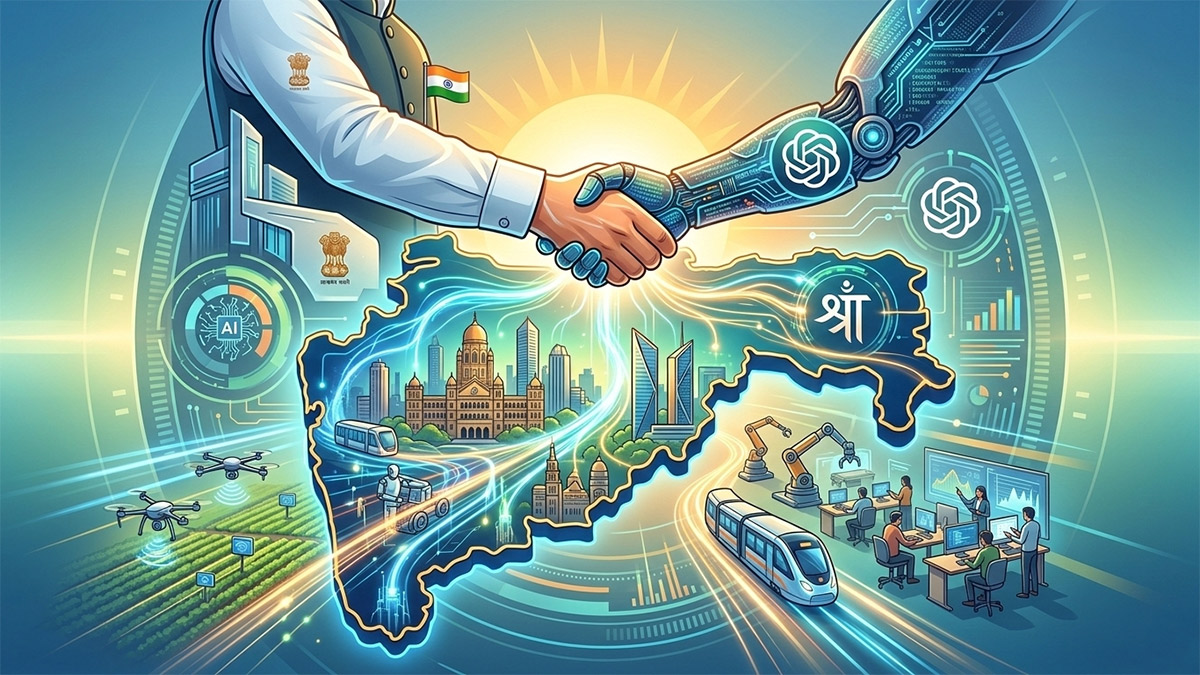
MUMBAI: Maharashtra is set to become a primary hub for artificial intelligence following the 2026–27 Budget announcement. chief minister Devendra Fadnavis confirmed that the state has signed letters of intent with global giant OpenAI and national pioneer Sarvam AI to integrate advanced technology into the state’s economic and administrative framework.
The collaboration with OpenAI and Sarvam AI marks a shift towards adopting cutting-edge generative tools for governance. These partnerships, alongside MoUs with IIT Bombay and BharatGen, are designed to create a robust ecosystem for research and innovation. The move signals the state’s intent to bring together global technology leaders and domestic research institutions to accelerate the development and adoption of artificial intelligence across sectors.
Regarding the strategic intent of these alliances, chief minister Fadnavis stated, “With the objective of making the State’s Information Technology and Artificial Intelligence sector dynamic, letters of intent have been signed with globally and nationally reputed institutions like OpenAI and Sarvam AI to facilitate the Information Technology and Artificial Intelligence sector in the state.”
To manage these high-level partnerships and ensure effective implementation, the government is establishing an independent department of electronics, Information technology, and artificial intelligence. The new department will function with a dedicated commissionerate and specialised technical manpower, enabling faster decision-making, improved coordination, and stronger accountability in executing technology-driven initiatives.
The state also plans to introduce special policies aimed at strengthening its position in emerging technology sectors. These policies will focus on advancing Maharashtra as a global hub for frontier technologies such as artificial intelligence, quantum computing, drones, autonomous vehicles, and deep technology.
According to the chief minister, “The state government plans to introduce special policies to develop Maharashtra as a world-class hub for frontier technologies such as Artificial Intelligence, quantum computing, drones, autonomous vehicles and deep technology.”
Artificial intelligence is already being integrated into the state’s governance framework. A collaboration with Microsoft has led to the development of MahaCrimeOS AI, a platform that has reportedly reduced police investigation times by 80 per cent across 23 police stations in Nagpur. The initiative demonstrates how AI-driven tools can significantly enhance law enforcement efficiency and data analysis capabilities.
The government is also working toward building a fully digitised administrative ecosystem. Plans are underway to achieve complete digitisation of land transactions and implement electronic office systems across departments, paving the way for a paperless government. In addition, a pilot project will introduce AI-powered solutions in 75 selected villages to improve infrastructure, governance efficiency, and overall quality of life in rural areas.
To strengthen digital infrastructure and data protection, the state also intends to establish an advanced data centre in Nagpur. This facility will be designed to safeguard sensitive and sovereign information while supporting large-scale digital services and government platforms.
These initiatives form part of Maharashtra’s broader cyber security and digital transformation strategy aligned with the Viksit Maharashtra 2047 vision. By partnering with global and domestic technology leaders such as OpenAI and Sarvam AI, the state aims to build a secure, future-ready digital ecosystem that enhances citizen services, supports innovation, and strengthens India’s position in emerging technologies.