Digital
Authbridge finds 5.61 per cent discrepancy rate in on-demand hiring
White-collar roles show 4.33 per cent overall as employment history leads at 11.15 per cent in H1 FY26.

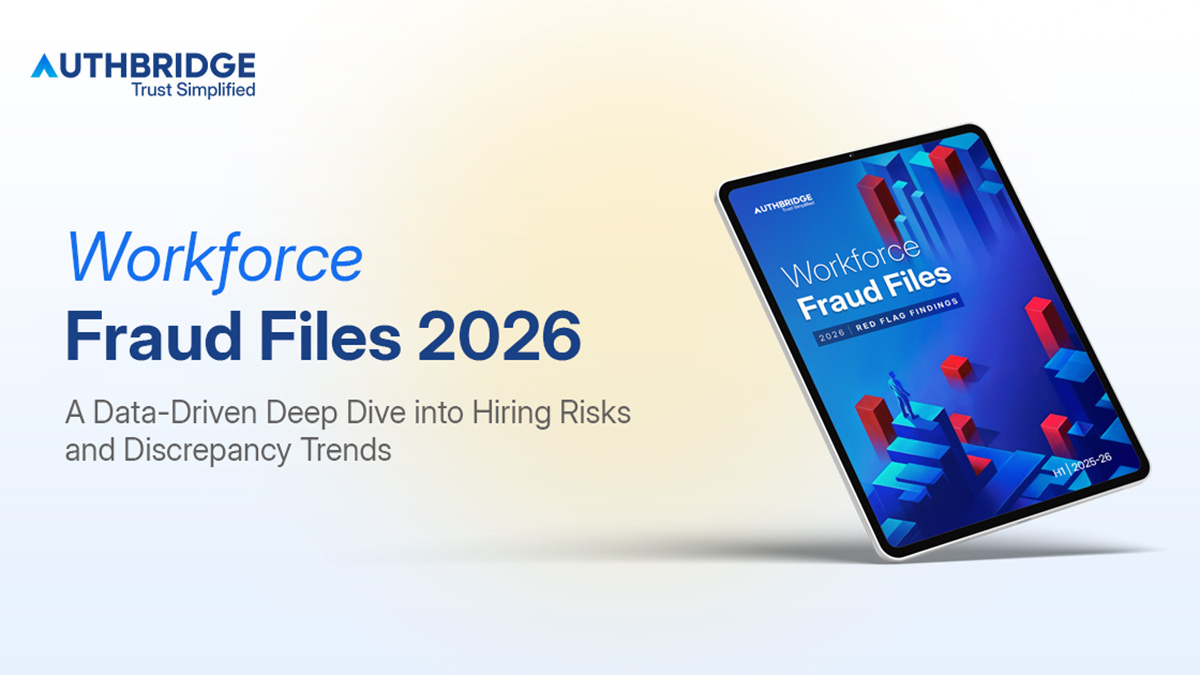
MUMBAI: India’s hiring scene is pulling a classic bait-and-switch, candidates promise the world on paper, but the background check reveals the plot twist nobody saw coming. Authbridge, the country’s top trust and authentication tech firm, released its Workforce Fraud Files – H1 FY26 report (covering July–December 2025) around 16–17 February 2026, crunching data from millions of verifications across identity, address, employment history, education, criminal records, and CV validation.
The headline numbers paint a sobering picture: white-collar hires clocked an overall discrepancy rate of 4.33 per cent, while the on-demand ecosystem (gig and flexible roles) fared worse at 5.61 per cent showing that the faster, looser world of app-based work comes with extra red flags.
For white-collar folks, employment verification topped the trouble list at 11.15 per cent, followed by address checks at 7.68 per cent, education at 4.49 per cent, and references at 4.17 per cent. Drug screening (1.87 per cent) and criminal records (0.50 per cent) stayed relatively tame, but still popped up enough to matter.

The gig side showed even sharper vulnerabilities, address discrepancies hit 9.70 per cent, identity (NID) issues 2.53 per cent, and criminal record mismatches 2.23 per cent particularly worrying for roles with direct customer contact or field duties.
Industry breakdowns add colour, address problems plagued Telecom (15.42 per cent), IT (12.02 per cent), Pharma (11.21 per cent), Retail (10.64 per cent), and Banking & BFSI (10.23 per cent). Employment verification headaches were biggest in Retail (16.37 per cent), Telecom (14.32 per cent), Banking & BFSI (13.00 per cent), and Pharma (12.10 per cent). Education slips stood out in Retail (9.16 per cent) and Telecom (7.80 per cent), while CV validation mismatches appeared in IT (12.80 per cent) and Banking & BFSI (2.91 per cent).
Authbridge CEO and founder Ajay Trehan didn’t mince words, “The H1 FY26 Workforce Fraud Files clearly show that hiring-related discrepancies remain a persistent and structural challenge. Despite faster and more digitised hiring workflows, we continue to see gaps in fundamental checks such as employment history, address, and education. These are not minor inconsistencies; they have direct implications for organisational risk, compliance, and trust.”
The report stresses ditching one-and-done checks, start screening pre-offer to avoid nasty surprises post-joining, and layer in periodic reviews like drug tests, court records, and lifestyle assessments for ongoing risk management. Tools like Authbridge’s Authnumber (consent-based digital credentials) and Authlead (deep-dive leadership vetting) get a nod for cutting friction and blind spots.
Bottom line? In a job market racing for speed and scale, skimping on trust verification is like building a house on sand, one solid background check away from watching the whole thing crumble.




Digital
OpenAI to roll out ads for free ChatGPT users in the US
Criteo tie-up signals shift as OpenAI explores ads to fund growth

CALIFORNIA: OpenAI is set to introduce advertisements for users on the free and Go versions of ChatGPT in the United States, marking a notable shift in how the platform plans to fund its rapid growth.
The move, confirmed by a company spokesperson in a statement to Reuters, follows earlier reporting by The Information and signals OpenAI’s deeper push into advertising as a revenue stream.
At the heart of this rollout is a partnership with Criteo, an advertising technology firm now integrated into OpenAI’s pilot programme. The company provides tools that help advertisers buy placements and sharpen targeting, suggesting that ads shown to users will be increasingly tailored.
According to reports, Criteo has been pitching advertisers on commitments ranging from $50,000 to $100,000, hinting at serious commercial intent behind the experiment. OpenAI has also advised advertisers to supply multiple versions of ad copy and visuals, a move designed to boost visibility and improve campaign performance.
The development comes as OpenAI looks to diversify its income streams. With ChatGPT’s popularity surging globally, the company is grappling with rising costs tied to computing infrastructure, even as competition in the generative AI space heats up.
For users, the change may soon mean a more familiar internet experience, where conversations come with the occasional commercial break.








