Brands
Aloke Singh to step down as Air India Express chief
Hamish Maxwell takes charge of compliance and safety as carrier reshapes operations

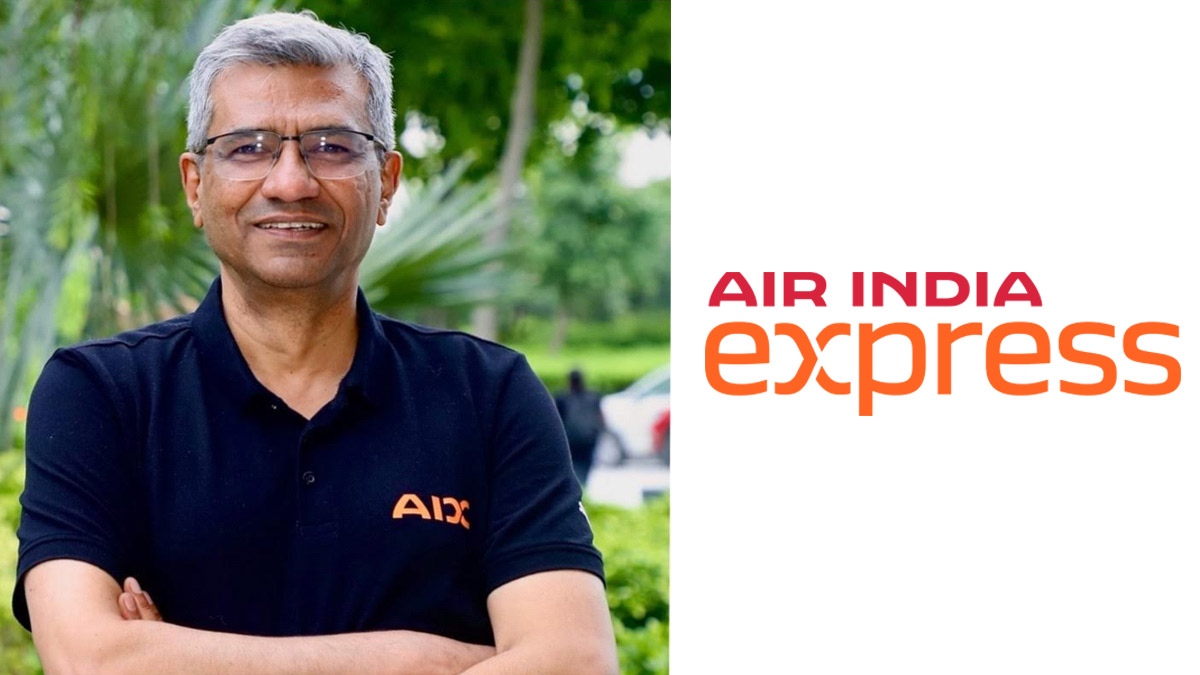
MUMBAI: Aloke Singh is set to step down as chief executive of Air India Express, drawing the curtain on what he calls a five year phase of “defining transformation” at the Tata Group’s low cost international carrier.
In a farewell memo to employees, Singh reflected on an airline that, in his words, evolved from a “sub-scale niche operator into India’s third-largest narrow-body carrier”. It was a tenure marked not just by change, but by scale. Under his leadership, the fleet expanded four fold to more than 100 aircraft, while the workforce grew to around 8,300 people.
The airline confirmed that Hamish Maxwell, currently chief operating officer, will assume the role of accountable manager. He will oversee regulatory compliance, operational performance and safety, taking charge at a time when operational discipline is central to the airline’s next phase.

Singh’s departure comes as Air India Express continues to streamline its fleet and network while aligning more closely with the broader ambitions of the Air India group. The integration drive, following the merger with AirAsia India, aims to simplify operations and strengthen the carrier’s position in India’s fiercely competitive budget travel market.
Reflecting on the intense merger process and rapid fleet expansion, Singh told employees that what would endure most was the “team’s resolve and professionalism during high-pressure moments”. The tone of his note was both proud and personal. “Ours has been a journey without parallel. I would not trade a single chapter,” he wrote.
A seasoned aviation executive, Singh has led Air India Express since November 2020. Before that, he served as senior advisor for airline consulting at CAPA – Centre for Aviation and was co founder and chief executive of OpenSky Resorts. Earlier in his career, he held the role of chief officer network planning at Oman Air in Muscat, and spent more than two decades in various roles at Air India Limited, culminating as executive director for strategy and planning.
As Singh signs off, Air India Express finds itself larger, leaner and mid transition. With Maxwell now overseeing compliance and safety, the airline’s message is clear: the transformation story may have a new narrator, but the flight path remains firmly set.







Brands
Kwality Wall’s reports standalone losses following strategic HUL demerger
Ice cream major faces Rs 64 crore Ebitda loss amid commodity inflation and muted Q3 sales
MUMBAI: Kwality Wall’s (India) Limited (KWIL) has released its first set of financial results as a standalone entity, revealing a challenging start to its independent journey. Following its successful demerger from Hindustan Unilever Limited (HUL) on 1st December 2025 and its subsequent listing on 16th February 2026, the company is navigating a transition period marked by structural changes and high input costs.
For the quarter ended 31st December 2025, the company reported revenue of Rs 222 crores. Despite the revenue base, the bottom line was impacted by several factors, resulting in an Ebitda loss of Rs 64.2 crores. When calculated on a Pre-IND AS 116 basis, the Ebitda loss stood at Rs 83.8 crores.
Organic Sales Growth (OSG) declined by 6.5 per cent year-on-year during the quarter. Volume growth, however, saw a marginal increase of 1.2 per cent. The company reported a gross margin of 41.5 per cent. Additionally, exceptional expenses amounting to Rs 94 crores were recorded, primarily linked to non-recurring costs during the transition phase.
Performance across portfolios and channels was mixed. Within the impulse portfolio, brands such as Magnum and Cornetto recorded mid-single digit volume growth, indicating steady demand in on-the-go consumption. However, the in-home portfolio, which includes take-home packs, experienced muted consumption. The company is planning a relaunch of this category with improved offerings ahead of the 2026 season.
Quick commerce (Q-Com) continued to emerge as a strong growth driver, delivering robust double-digit growth during the quarter. Meanwhile, the company also expanded its physical distribution network by increasing the number of company-owned cabinets across markets.
Margin pressure during the quarter was driven by a combination of one-off factors and broader cost inflation. Gross margins were impacted by around 600 basis points due to trade investments made for stock liquidation. Additionally, cocoa price inflation contributed to another 400 basis points of pressure on margins.
Deputy managing director Chitrank Goel attributed the muted performance partly to prolonged monsoons and transitional challenges linked to the GST framework. Operating expenses also increased as the company invested in establishing its standalone supply chain, operational systems and corporate infrastructure following the demerger.
Looking ahead, the management remains focused on a volume-driven growth strategy. To restore profitability, the company has initiated a cost productivity programme aimed at reducing non-consumer-facing costs. It is also working on building regional manufacturing networks to optimise logistics expenses and improve operational efficiency.
The commodity outlook for the near term remains mixed. Dairy prices are expected to remain firm due to tight supply conditions and rising fodder costs. Sugar prices may also move higher following increases in the Minimum Selling Price (MSP). While cocoa prices have moderated recently, currency depreciation has offset some of the potential cost relief for the company.