DTH
Tata Play Binge adds BBC Player to its streaming menu, bringing British classics to Indian screens

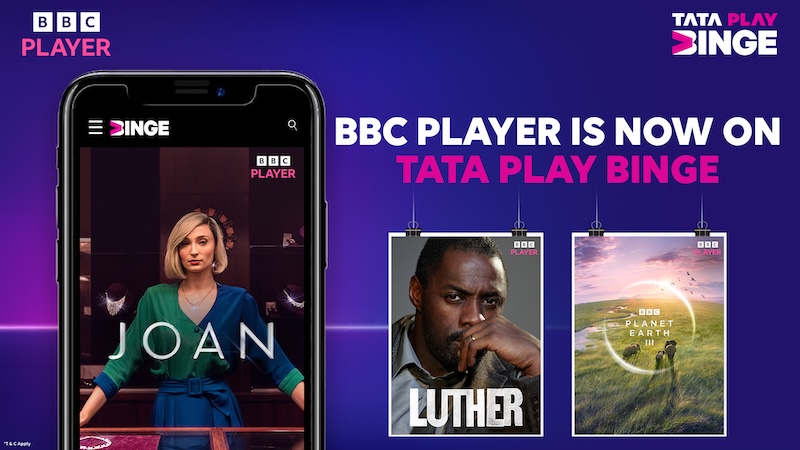
MUMBAI: Tata Play Binge has inked a fresh deal with BBC Player, injecting its content library with a world of British brilliance. Subscribers are now in for a treat with a treasure trove of critically acclaimed BBC titles—Luther, Doctor Who, Top Gear, Planet Earth III, and more—joining the platform’s extensive streaming lineup.
The partnership aims to offer a mix of iconic dramas, sharp-witted comedies, genre-defining documentaries, and engaging family-friendly content—all under one roof. From the legendary Mr. Bean to the culinary magic of Nigella Lawson and Jamie Oliver, there’s something for everyone. Even the kids can dive into animated favourites like Andy’s Aquatic Adventures and Junior Bake Off.
Tata Play chief commercial and content officer Pallavi Puri said, “This partnership underscores our commitment to bringing the best of global content to our viewers, all in one place. BBC Studio’s premium storytelling and rich library of highly celebrated shows perfectly complement our growing content roster, and we are confident that our users will love this addition.”

BBC Studios vice-president distribution Stanley Fernandes added, “, “We’re excited to bring BBC Player to more homes across India with Tata Play Binge, offering the best of British entertainment—from acclaimed dramas to inspiring lifestyle shows and kids’ favourites—all in one place. This marks a new chapter in our partnership with Tata Play as we expand into their OTT aggregation space, building on our strong collaboration.”
BBC Player joins a star-studded lineup of over 30 streaming apps already available on Tata Play Binge, including Apple TV+, Amazon Prime Video, SonyLIV, and Zee5, making it a one-stop shop for diverse content. With this latest addition, Tata Play Binge continues its mission to be the ultimate hub for premium streaming.





DTH
Dish TV moves court seeking level playing field with DD Free Dish
DTH player flags unfair edge as free platform reshapes pay-TV market
MUMBAI: Dish TV has approached the Kerala High Court, seeking a level playing field with DD Free Dish, the free-to-air satellite platform run by Prasar Bharati.
At the heart of the dispute is what Dish TV calls a regulatory imbalance. The company has urged the Ministry of Information and Broadcasting to bring DD Free Dish under the same rules as private direct-to-home operators, including mandatory encryption and compliance with the Digital Addressable System under existing laws such as the Indian Telegraph Act and the Cable Television Networks (Regulation) Act.
Private DTH platforms are required to encrypt their signals, meaning viewers need authorised set-top boxes and paid subscriptions. In contrast, DD Free Dish remains unencrypted, allowing access through basic equipment without monthly fees, a difference Dish TV argues creates a structural advantage.
In its petition, Dish TV has described the current framework as arbitrary and discriminatory, alleging it undermines constitutional guarantees of equality and the right to trade. The company pointed out that while private operators shoulder the cost of encryption infrastructure, licensing fees and regulatory levies, DD Free Dish operates without similar obligations despite scaling up significantly.
Originally launched to distribute Doordarshan channels, DD Free Dish has steadily morphed into a quasi-commercial platform. It now carries around 120 private channels and generates substantial revenue through slot auctions, with earnings rising sharply over the years, according to the petition.
The case also throws a spotlight on shifting dynamics within India’s television market. Pay DTH operators have been grappling with a shrinking subscriber base, which has fallen from nearly 70 million in 2021 to about 51 million in 2025. At the same time, DD Free Dish has expanded its reach to roughly 53 million households, buoyed by viewers in price-sensitive regions opting for free access over paid subscriptions.
The migration has been further fuelled by broadcasters placing popular channels on the free platform, making it an increasingly attractive alternative for households looking to cut costs.
The Kerala High Court has admitted the petition and scheduled the next hearing for June 2, 2026. It also noted that a recent notice by Prasar Bharati inviting regional channels to uplink on DD Free Dish without carriage fees until March 31, 2026 will remain subject to the final outcome of the case.
Regulators have already acknowledged the gap. The Telecom Regulatory Authority of India, in its July 2024 recommendations, proposed a shift towards an addressable system for DD Free Dish, though these suggestions are not binding. The government is yet to take a final call, mindful of the platform’s reach among millions of households.
The petition follows repeated representations from private players and bodies such as the All India Digital Cable Federation, all flagging the same concern: a fast-growing free platform competing in a paid market without the same rulebook.
As the courtroom battle unfolds, the outcome could redraw the contours of India’s pay-TV ecosystem, deciding whether the free ride continues or the rules of the game finally converge.






