iWorld
Quick commerce drives 45 per cent of festive buys, says WPP–Meta report

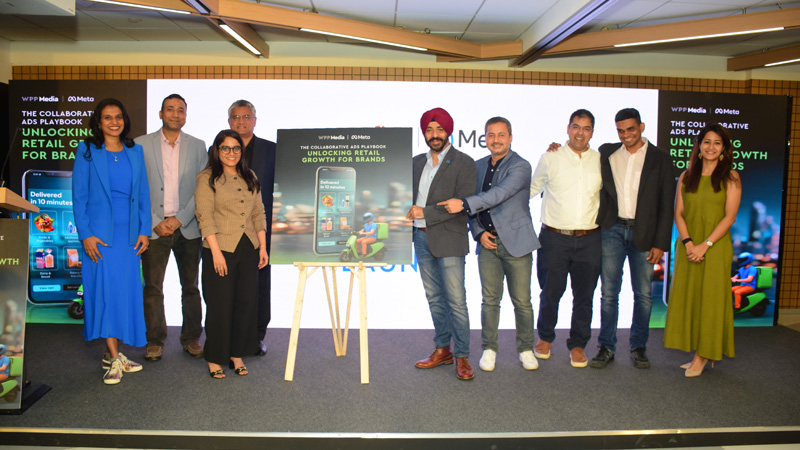
INDIA: Quick commerce has muscled its way into India’s shopping habits, powering 45 per cent of festive purchases this year as consumers shift from planned buys to split-second decisions. A new Collaborative Performance Advertising Solutions (CPAS) playbook from WPP India and Meta shows how discovery on social platforms now converts directly into sales on retailer apps, compressing the journey from browse to buy into minutes.
Awareness of quick commerce stands at 91 per cent, with more than half of internet users placing an order in the past week. Adoption is rising fastest in smaller cities, where the segment is expanding at 8–9 per cent a year. Groceries still dominate, but fashion accessories and bags have surged past Rs 40 crore a month, more than doubling in six months.
The playbook draws on consumer insights, retailer data and Meta’s platform signals, stitched together by WPP Media’s CPAS expertise. It highlights the rise of high-intent shoppers who move from inspiration to checkout in one session, forcing brands to plan for full-funnel commerce rather than lower-funnel metrics alone.

Brands using CPAS are already reaping gains. Coca-Cola’s sugar-free portfolio delivered a 39 per cent jump in Retail & Quick Commerce in India (ROAS) and 40 per cent lower acquisition costs by targeting high-intent audiences through retailer-linked catalogues. Britannia cut its cost per purchase by 45 per cent and lifted ROAS from 0.6 to 1.0 through dynamic product ads and real-time data sync across Blinkit, Swiggy, Zepto and others.
WPP Media South Asia COO Ashwin Padmanabhan, said the “meteoric rise” of quick commerce had squeezed the purchase funnel like never before. WPP Media South Asia CEO Prasanth Kumar, said the model was “redefining the future of retail advertising”. Meta agencies and VC partnerships (India) director Gaurav Jeet Singh, said India was leading the global shift from discovery to instant purchase.
The CPAS model, which has delivered a 24 per cent rise in ROAS year on year across collaborative ads, offers brands a route to measurable, outcome-led growth as India’s retail market tilts further towards instant gratification.







iWorld
JioHotstar enters micro-drama space with 100 shows under Tadka banner
Short-form push targets 300M users as content meets commerce in new format
MUMBAI: JioStar has made a bold play in India’s fast-growing micro-drama space, rolling out over 100 short-form shows under its new Tadka banner on JioHotstar, timed with the massive viewership surge of the Indian Premier League 2026.
The scale of the launch signals clear intent. Rather than testing the waters, the company has dived in headfirst, releasing a wide slate of content on day one. Each show is designed for quick consumption, with episodes running 60 to 90 seconds in a vertical format tailored for mobile-first audiences.
The move comes as India’s micro-drama market, currently valued at around $300 million, is projected to grow tenfold to over $3 billion by 2030. Globally, the format has already proven its mettle, with China’s micro-drama sector recording explosive growth in recent years.
What sets this rollout apart is its built-in monetisation strategy. The shows are free to watch and ad-supported, with brand integrations woven directly into storylines from the outset. It reflects a broader shift where content and commerce are increasingly intertwined, rather than operating in silos.
The timing is equally strategic. With more than 300 million users already tuning in for IPL action, JioHotstar is effectively turning cricket’s biggest stage into a discovery engine for its new format.
The company is not entering an empty arena. Early movers like Kuku TV, MX Player and platforms backed by Zee Entertainment Enterprises have already laid the groundwork, building audiences and validating demand for snackable storytelling.
Now, with scale, distribution and advertiser interest aligning, the big players are stepping in. For JioStar, Tadka may well serve as a proving ground for the next evolution of digital entertainment, where every minute counts and every second sells.
If the bet pays off, India’s next big content wave might just arrive in under 90 seconds.






