MAM
FMCG brands tap into speed and creativity to win the race for attention

Mumbai: FMCG brands are in a competitive race for media visibility, aiming to capture consumer attention amidst a flood of advertisements. Coca-Cola set a precedent with its innovative content and wide-reaching campaigns, followed by Colgate’s effective use of multi-platform advertising to engage audiences.
It has sparked a lively debate on ambush or guerilla marketing as these brands are not only vying for advertising space but also driving engaging content, seizing cultural moments with wit and creativity within 24-48 hours, to stay relevant. Their strategies highlight the need for engaging and innovative content across platforms in a short time.
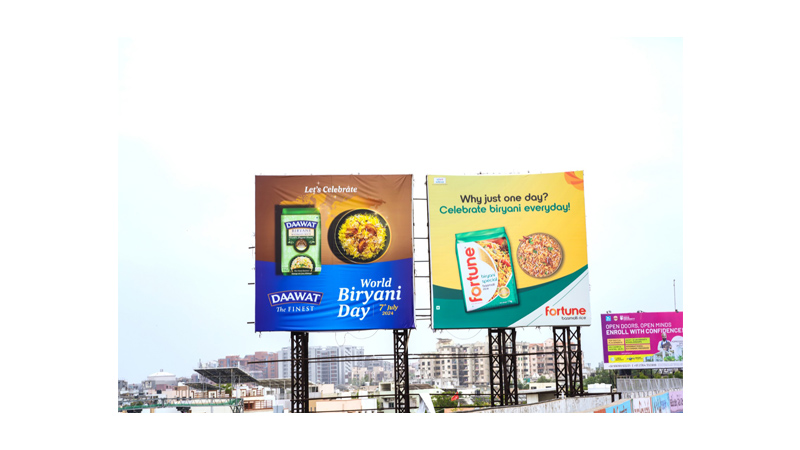
Take, for instance, the recent showdown surrounding Biryani Day between Dawaat Rice and India Gate Rice, where each brand claimed supremacy in the hearts of biryani enthusiasts across the country. When Dawaat Rice went ahead and declared ‘Biryani Day’, competitors like Fortune Biryani Special Basmati Rice were swift in their responses to counter the claim with wit. These brands didn’t just participate in the banter; they invested in ad space to amplify their messages and engage consumers across digital platforms.

This playful yet strategic approach is reshaping how FMCG brands interact with their audience. They not only build emotional connections with consumers but are also demonstrating agility and relevance through quick-turn content and engaging narratives.
Moreover, these campaigns highlight the power of data-driven insights and creative storytelling in shaping compelling narratives in the world of marketing and the digital age. Brands leverage consumer behaviour analytics to tailor messages that resonate deeply with their target audiences, enhancing their impact and reach. These campaigns emphasise maintaining transparency and building trust through genuine storytelling and authentic brand values, which are essential in nurturing long-term loyalty.






Brands
ZEEL transfers syndication business, invests Rs 505 crore in IP push
Restructuring, stake buy and FCCB moves signal sharper content strategy
MUMBAI: In the content economy, owning the story is half the battle monetising it is the real game, and Zee Entertainment Enterprises is doubling down on both. The company has approved the transfer of its syndication and content licensing business to its wholly owned subsidiary ZI-IPR Enterprises, alongside an investment of Rs 505 crore aimed at strengthening its play in content intellectual property (IP) acquisition, management and monetisation. The move, effective April 1, 2026, will see the business transferred on a slump sale basis at book value, including all associated assets, liabilities and commercial rights effectively consolidating IP operations under a more focused structure.
At its core, the restructuring signals a strategic shift. As content consumption increasingly fragments across digital and global platforms, the value of IP lies not just in creation but in how efficiently it can be distributed, repackaged and monetised across markets. By housing its syndication engine within ZI-IPR Enterprises, ZEEL appears to be building a more agile and scalable ecosystem, one that can better extract value from its vast content library while adapting to evolving distribution models.
But the company’s ambitions are not limited to restructuring. ZEEL has also approved an investment of up to Rs 20.09 crore in Culture of Real Experiences (CORE), acquiring a 51 per cent stake in the entity. The move expands its footprint into the broader creative and experiential space, suggesting a push beyond traditional broadcasting into areas where content, culture and immersive experiences intersect.
At the same time, ZEEL has moved to tidy up its financials, approving the redemption of $23.9 million in outstanding foreign currency convertible bonds (FCCBs) and cancelling an unused $215.1 million commitment. The twin steps are expected to ease pressure on its treasury, freeing up capital and improving financial flexibility as the company invests more aggressively in its IP strategy.
Taken together, the decisions reflect a company in recalibration mode streamlining legacy structures, sharpening its focus on content ownership, and exploring new avenues for growth. In a market where the lines between television, streaming and experiential entertainment are increasingly blurred, ZEEL’s latest moves suggest it is not just creating content, but building a system to make that content travel further and pay better.






