MAM
Alexa doubles time with kids: Animal sounds to folktales

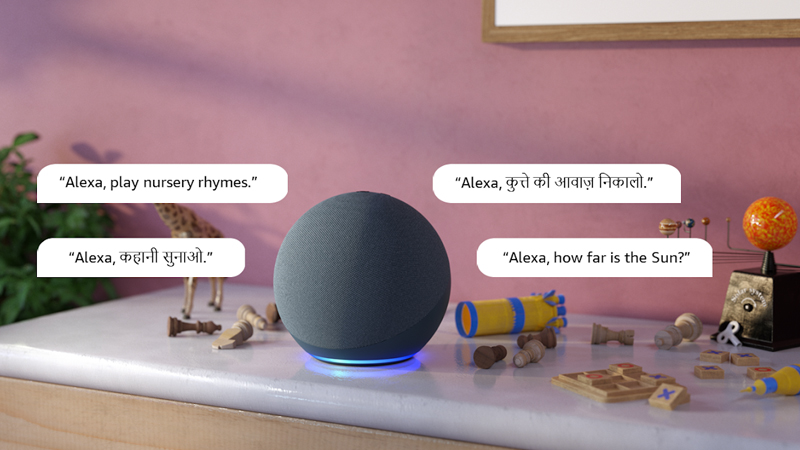
Mumbai: From listening to Indian folktales to playing animal sounds, Indian households with young kids who use Alexa at home are two times more engaged than other users. Parents of young kids take Alexa’s help in managing their day-to-day parenting tasks and keeping their kids engaged by asking Alexa for rhymes, stories, games, GK-related questions, and more. Users enjoy the ease and convenience of giving simple voice commands to Alexa in Hindi, English, and Hinglish – making the AI a great aid for parents and a companion for kids.
Alexa’s ability to produce animal sounds through the Wild Planet skill recently helped save a 13-year-old girl and her 15-month-old niece from a monkey attack in Basti, Uttar Pradesh. By asking “Alexa, kutte ki awaz nikalo”, the girl was able to scare away the monkeys.
“Parents often tell us how Alexa has become a companion in their parenting journeys. The option to access a number of useful kid-friendly experiences with simple voice commands makes Alexa a great addition for a family with young kids,” said Alexa Amazon India director and country manager Dilip R.S. “While it is a great learning and entertainment tool for kids, Alexa can help parents manage their day-to-day tasks better. Whether it is controlling smart home appliances with voice while juggling numerous tasks or asking for a bedtime story as part of their child’s daily routine, Alexa’s right there to help them.”

Today, families across India are asking Alexa for information, games, quizzes, music, managing day-to-day tasks, stories, and much more. In fact, weekends are family time with Alexa – last year there was a 15 per cent increase in requests to Alexa over the weekends in requests for music with many of them being for kids’ music. The top five, most popular songs for kids on Alexa are Baby Shark, Lakdi Ki Kathi, Johnny Johnny Yes Papa, Wheels on the Bus, and Twinkle Twinkle Little Star. Indian folktales, like Akbar Birbal, Tenali Raman, and Panchatantra stories, see high interest from customers, especially in Hindi. In 2023, customers asked for these stories on an average of 34 times every hour.
With numerous voice-first engaging experiences for kids, parents can introduce their children to Alexa smart speakers like Echo Dot or Echo Pop that are safe because of on-device privacy settings and control over personal data usage via the Alexa privacy hub.
For young parents looking to introduce Alexa to their children, here are some things to try:
● Improve kid’s listening skills and their attention span
Kids can listen to bedtime stories in both English and Hindi. Parents can just say, “Alexa, tell me a bedtime story”, “Alexa, open Amazon Storytime”, or “Alexa, बच्चों की कहानी सुनाओ”.
● Engage and entertain them with kids’ music, animal sounds, and nursery rhymes
Parents can ask Alexa in English, Hindi, and Hinglish to play popular nursery rhymes including Baby Shark, Lakdi ki Kathi, Nani Teri Morni, and Twinkle Twinkle Little Star. From kids’ music to mainstream hits, parents can put up songs for their kids to dance, sing, and have fun at home. Introduce them to animal sounds with Wild Planet by just asking, “Alexa, make lion sound” or “Alexa, शेर की आवाज सुनाओ”.
● Encourage curiosity about the world by asking for information
Parents can nurture their children’s inquisitiveness by asking Alexa questions about history, science, general knowledge, geography, sports and more. Asking for information is as easy as saying, “Alexa, what is the capital of Spain?”, “Alexa, how far is the sun?” or “Alexa, how do I spell technology?”.
● Make learning fun with conversational games and quizzes
Just say, “Alexa, open games for children” and choose from a range of games for kids including Animal Game, Chhota Bheem Adventures, Number Guessing Game, True or False, and more. By asking, “Alexa, open 1-2-3 Math” or “Alexa, teach me English”, parents can help kids apply mathematical concepts and hone their vocabulary and grammar.



MAM
India’s employability gap persists despite strong hiring intent
Only 1 in 5 institutions achieve 76 to 100 per cent placements within six months of graduation.
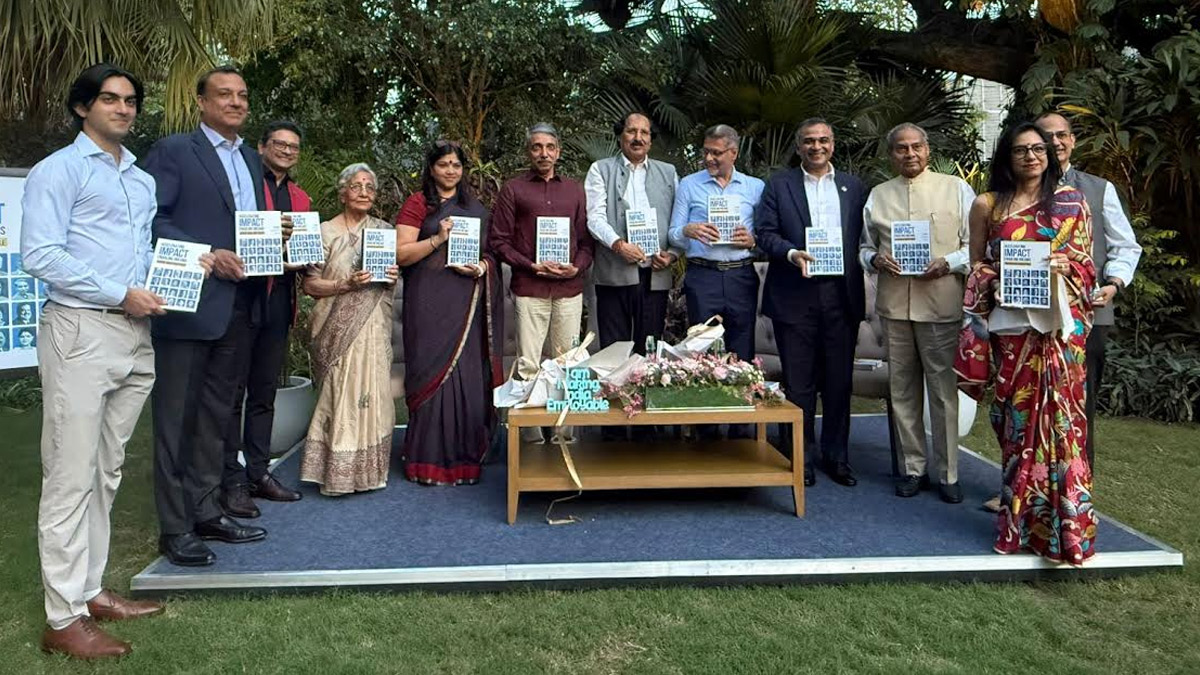
MUMBAI: India’s young workforce is ready in numbers, but the real question is whether they are ready for work and senior leaders from industry, academia and policy gathered in Delhi to find practical answers. A closed-door roundtable hosted by Vaishali Nigam Sinha, co-founder of Renew, brought together key voices to discuss actionable solutions for bridging the persistent employability gap. The session highlighted that while job opportunities are expanding, the alignment between education and industry needs remains a critical challenge.
According to Teamlease EdTech’s Career Outlook Report HY1 2026, 73 per cent of employers plan to hire freshers in the first half of 2026, signalling steady recovery in entry-level hiring. However, employers are shifting focus from mere qualifications to demonstrable capability, placing greater value on internships, live projects and proof-of-work.
Teamlease Edtech, founder and CEO Shantanu Rooj emphasised the need for better alignment, “India’s employability challenge is no longer about access alone, but about alignment between education and work. Employers are increasingly relying on demonstrable capability such as internships, projects, and applied learning as indicators of readiness.”
Vaishali Nigam Sinha stressed the importance of execution over intent, “India has both the talent and the opportunity. What is needed now is alignment. We have to move from intent to execution by embedding employability into the system itself.”
Other prominent speakers included Dr Chenraj Roychand, Chancellor of Jain (Deemed-to-be) University, who called for universities to evolve from degree providers to ecosystem enablers, Prof M. Jagadesh Kumar, Chairman of the Board of Governors at IIM Calcutta, who highlighted the need for flexibility and multidisciplinary learning, and Dr T.N. Singh, Director of IIT Patna, who advocated deeper industry engagement through research and experiential learning.
The discussion also drew insights from the book Accelerating Impact. Enabling Dreams – Making India Employable by Shantanu Rooj and co-authors, which features contributions from leaders like Kiran Mazumdar-Shaw, Dr Krishnaswamy Kasturirangan and Gurudev Sri Sri Ravi Shankar.
During the event, Teamlease Edtech Foundation launched Project SEED, a national initiative aimed at bridging the education-employability gap for underserved youth. The project focuses on early intervention at the school level to guide students towards informed career choices and work-integrated pathways.
With only 16.67 per cent (1 in 5) of institutions achieving 76–100 per cent placements within six months of graduation, the conversation made one thing clear, India’s demographic dividend will deliver real value only when education and employability walk hand in hand. The gathering served as a timely reminder that the future of India’s workforce depends not just on creating more jobs, but on preparing young people far better to seize them.






