iWorld
Nearly 90 per cent of sports fans use a second screen while watching live matches
Google says most viewers watch matches on TV but engage with sports on their phones


MUMBAI: The television may show the match, but the real action is often happening in the viewer’s palm.
As India celebrated a nail-biting cricket finale and the trophy’s return home, millions of fans were not just watching the game. They were also scrolling, searching and sharing on their phones. According to Google, nearly 90 per cent of sports fans use a second screen while watching live matches, turning mobile devices into the centre of real-time engagement.
Shubha Pai, head of YouTube sales and solutions at Google India, says the shift reflects a deeper behavioural change among viewers. Live sport remains a “lean back” experience on television, but the smartphone has become the “lean-in” hub where fans dive deeper. They check statistics, watch short-form clips, discuss moments online and even buy merchandise as the match unfolds.

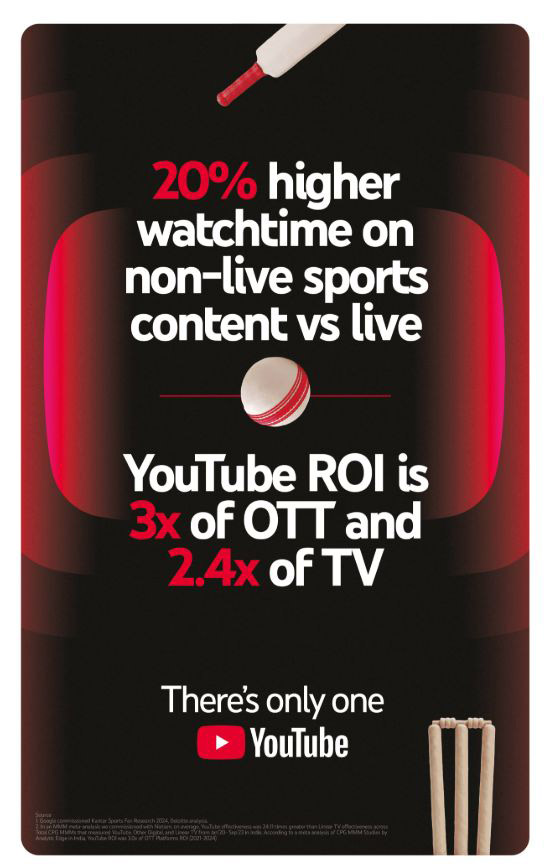
The numbers underline the shift. About 67 per cent of Indian sports viewers now turn to YouTube for sports-related content, putting the platform ahead of both OTT services and social media channels, according to Google.
The audience is also changing. Pai notes that YouTube Shorts has become the top destination for Gen Z viewers and female sports fans, groups increasingly drawn to short, authentic and interactive content rather than traditional broadcasts.
For brands, the shift has commercial implications. Google says advertising returns on YouTube are three times higher than OTT platforms and 2.4 times higher than television, citing a meta-analysis of consumer packaged goods marketing mix modelling studies by Nielsen.
The lesson for marketers is clear. The television may still host the match, but the battle for attention has moved elsewhere. As fans cheer, argue, search and shop all at once, the second screen is no longer just a companion to sport. It is fast becoming the main event.







iWorld
Bill Ackman’s Pershing Square makes $64 billion bid to acquire Universal Music Group
Ackman pitches NYSE relisting plan as UMG board weighs unsolicited offer

The hedge fund has proposed a business combination that values UMG at €30.40 per share, representing a hefty 78 per cent premium to its current trading price. The offer includes €9.4 billion in cash alongside stock in a newly formed entity, with shareholders set to receive €5.05 per share in cash and 0.77 shares in the new company for each UMG share they hold.
Under the proposal, UMG would merge with Pershing Square SPARC Holdings Ltd and re-emerge as a Nevada-based entity listed on the New York Stock Exchange. The move is designed to boost investor visibility and potentially secure inclusion in major indices such as the S&P 500.
Pershing Square Capital Management ceo Bill Ackman argued that while UMG’s operational performance remains strong, its market valuation has lagged due to external factors. “UMG’s stock price has languished due to a combination of issues that are unrelated to the performance of its music business,” Ackman said, pointing to concerns ranging from shareholder overhang to delayed US listing plans.
Ackman also flagged what he sees as untapped potential in UMG’s balance sheet and a lack of clear capital allocation strategy. He added that the market has not fully recognised the value of UMG’s €2.7 billion stake in Spotify, alongside gaps in investor communication.
The proposed transaction would also result in the cancellation of around 17 per cent of UMG’s outstanding shares, while maintaining its investment-grade balance sheet. Pershing Square has said it will fully backstop the equity financing, with debt commitments secured at signing. The deal is targeted for completion by the end of the year.
UMG, however, has struck a measured tone. The company confirmed that its board has received the non-binding proposal and will review it with advisers. It reiterated confidence in its current strategy and leadership under Lucian Grainge, signalling no immediate shift in stance.
The proposal comes at a time when global music companies are navigating evolving investor expectations, streaming economics and capital allocation pressures. For Pershing Square, the bet is clear: sharpen the financial story, relist in the US, and let the music play louder in the markets.
Whether UMG’s board is ready to change the tune remains to be seen, but the spotlight on its valuation just got a lot brighter.






