I&B Ministry
Telecast ban withheld in two of 31 cases; no IMC recast plan

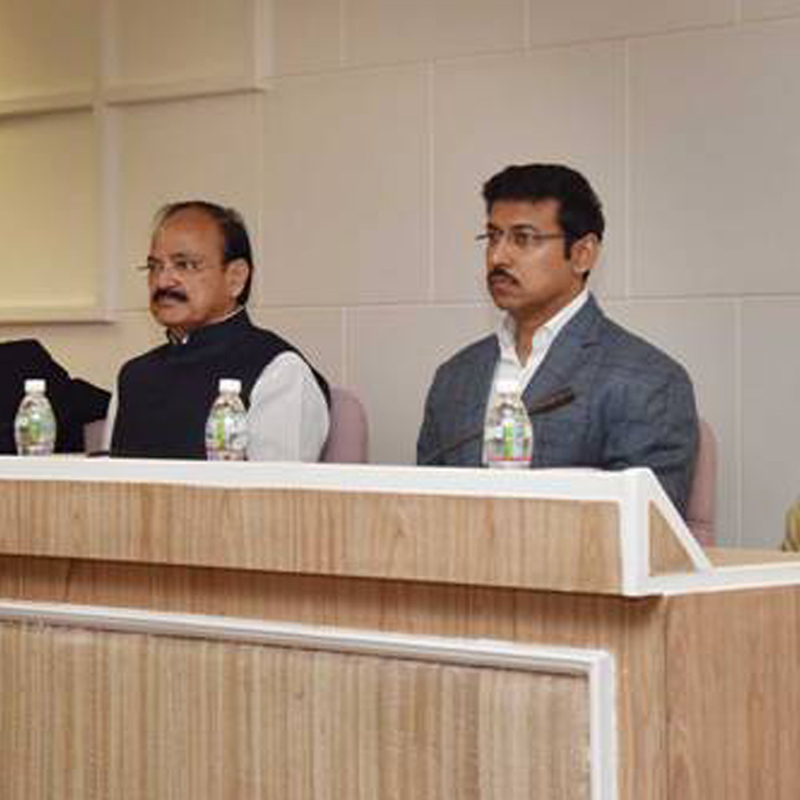
NEW DELHI: Information and broadcasting minister M Venkaiah Naidu has said that there have been only two cases in the past two years and the current year where the government has put on hold its orders asking TV channels to prohibit transmission for limited time.
These relate to channel DY 365 for a news broadcast on 12 June 2014 and the NDTV India for a report on 4 January 2016, Naidu told the Parliament. In both cases, he said, the channels had made representations to the ministry which were under consideration.
The minister of state for information and broadcasting Rajyavardhan Rathore, answering a supplementary, said that there was no proposal to re-constitute the Inter-Ministerial Committee (IMC) which already includes representatives from the industry.

DY 365 TV channel telecast news bulletin revealing identity of rape victims in two separate news reports. The matter was placed before the IMC on 13 January 2015 in which a representative of the channel was also afforded an opportunity of personal hearing. IMC recommended that the channel may be taken off air for a day due to multiple violations. With the approval of competent authority, an order dated 26 March 2015 was issued to DY 365. Subsequently, the channel submitted a representation on 27 March.
NDTV India TV channel telecast a report on Pathankot terrorist attack disclosing sensitive information well beyond the briefing given by the designated officer while the anti-terrorist operations were still under way. The content was found in violation of Rule 6(1)(p) of the Programme Code. The matter was placed before the IMC on 25 July, 2016, in which representative of the channel was also afforded an opportunity of a personal hearing. It was recommended that the channel may be taken off air for at least one day keeping in view the gravity of the violation and an order issued on 2 November 2016. Subsequently, the channel submitted a representation dated 7 November 2016 which is pending.
(Meanwhile, the Bombay High Court has admitted for hearing a petition by Care World India challenging a week-long telecast prohibition order.)
In reply to another question, Rathore said as many as 31 TV channels had been ordered to stop transmission for periods ranging from one to 60 days since 2005. These include Care World India and AXN two times each, News Time Assam for three news items.
The authority for exercising powers under Cable Act by Central Government or concerned Government/ authorised officers are provided under various sections of the Cable Act and mainly under Section 19 & 20.







I&B Ministry
MeitY extends deadline for feedback on digital media rules overhaul
Government gives stakeholders more time to respond to proposed changes in intermediary guidelines.
MUMBAI: When the rulebook gets a rewrite, even the internet needs a little extra time to read the fine print. Regulators have extended the deadline for public feedback on a proposed overhaul of India’s digital media and intermediary liability framework, giving stakeholders until April 29 to submit their views. In a notice issued on April 10, the Ministry of Electronics and Information Technology (MeitY) said it was extending the consultation period for draft amendments to the Information Technology (Intermediary Guidelines and Digital Media Ethics Code) Rules, 2021, following representations from several stakeholders.
At the heart of the proposals is a significant shift in how social media platforms and other intermediaries must respond to government communications. A new provision would make compliance with official “clarifications, advisories, directions, standard operating procedures and guidelines” a formal part of the due diligence obligations required to retain safe harbour protection under Section 79 of the Information Technology Act.
The amendments would also expand the scope of content oversight under Part III of the rules. The digital media ethics code would now apply not only to publishers but also to intermediaries hosting or transmitting user-uploaded news and current affairs content. This could bring user-generated news more directly under regulatory scrutiny.
Additionally, the Inter-Departmental Committee’s powers would be broadened, allowing it to take up matters referred directly by the ministry rather than waiting for formal complaints. This signals a more proactive approach to content monitoring.
The existing IT Rules already impose strict requirements on intermediaries, including timely removal of unlawful content, grievance redressal mechanisms, and traceability in certain cases. Recent updates have also introduced obligations around labelling synthetically generated content.
Officials have described the amendments as necessary to create an “Open, Safe, Trusted and Accountable Internet” while improving legal clarity and enforceability.
With the extended deadline now set for April 29, the government has given industry bodies, civil society, and digital platforms additional time to respond to changes that could significantly reshape how online platforms operate and are governed in India.
In the fast-scrolling world of digital regulation, a little extra time to read the small print might just prevent bigger headaches down the line.







