
Executive Dossier
‘Turning producer was a logical extension of my career’ : Soni Razdan


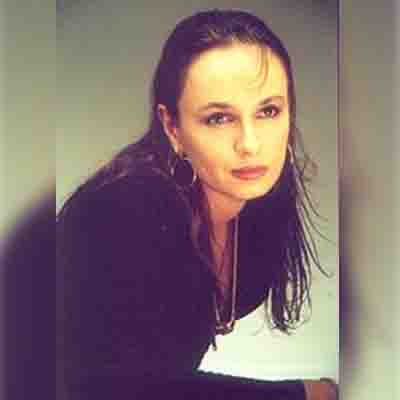
Soni Razdan, actor, is not new to audiences. Her metamorphosis into a producer and now, a director, however, has not been as talked-about though. Her forays into production have been few, but not run-of-the-mill. Her first venture as producer was Aur Phir Ek Din on Star Plus, directed by Vinta Nanda, starring Kiran Kumar and Soni herself in lead roles.
Next came Hamare Tumhare, a story of two sisters who have a strained relationship, due to some mysterious incidents in the past. A fresh storyline and strong performances ensured that both serials left a strong impact on viewers’ minds. Soni is now ready with her third offering Jo Dil Chahe for Zee, which features the lives of five central female characters based in Delhi; their trials and tribulations. Her first venture as director- a movie based on the novel Difficult Daughters, will also go on the floor shortly.
Soni is placed in a unique position. Neither a big time corporate giant like Balaji Telefilms, nor a struggling producer, she can objectively analyze several issues confronting the industry.
Excerpts of an interview with indiantelevision.com’s correspondent, Amar.
What made you turn producer?
I guess turning producer was a logical extension of my career. I had been an actor for more than 30 years and wanted to give something back to the medium. The most feasible way was to produce the kind of programmes I really liked and which appealed to my sensibilitiesWhat kind of storyline appeals to you?
Stories that have a strong subject with an enormous scope for drama. Ideally, I love stories based on relationships with a strong undercurrent of passion.
|
‘Ideally, I love stories based on relationships with a strong undercurrent of passion’ |
 |
How do you choose a director?
I chose Vinta Nanda for Aur Phir Ek Din because I have always admired her capabilties for directing and we share a great rapport and understanding. As for Hamare Tumhare, the story and the treatment were both different and new. Also, apart from the two sisters who were the central characters, there were four children who were very important in the development of the story and to whose characters full justice had to be done. Keeping these factors in mind, I had to take someone who was young and had not got typecast into any category.
On what basis do you choose a channel?
Frankly, as a producer who has just one serial on air at a time, I am a little selfish in my choice of a channel. I prefer Zee for the viewership it gets my serial and also because I find it more receptive to new ideas. But I am open to considering other channels, including Sahara, which I believe has a great vision. As I roll out more serials, I will also consider other channels.
Are you open to producing a daily serial?
Yes, but I will do it only if the budgets are really good. I will not produce a daily just for the sake of producing one.
What are the disadvantages of producing a daily?
There are so many disadvantages. It is very difficult to keep a tab on the quality when shooting is on for 20-25 days of the month. The sheer pressure of shooting so many episodes at one go is not the way most creative people would like to work. Besides, due to budget constraints, it is not possible to get good quality actors either.
Do you like to work with a closed group of actors or do you like to experiment?
I like to experiment. I like to take on new people depending on the requirements of the role. One of my favourite actors on TV, though, is Kiran Kumar.
What is your production set up like?
We have a small set up. I head the creative team, carry out negotiations with the channel, see to the development of the storyline….. I have a team of writers helping me with the story. We have a chief executive producer; with an assistant who oversees the actual organization of the shoots, submission of tapes etc.
 |
‘ I will do it only if the budgets are really good. I will not produce a daily soap just for the sake of producing one’
|
How does your association with Vishesh Films help?
Vishesh Films is our official financier. Besides, even though he does not like to be involved so much, Mahesh (Bhatt) is always there with his creative inputs. In fact, he had a major role to play in developing Hamare Tumhare.
Are you continuously hassled by the executive producers in channels over the storyline, casting etc.?
No, not at all. I feel the involvement of the executive producers is a very valuable exercise. TV is a business of ideas, though I would maintain there is a difference between making suggestions and being maniacal about them. However, I have been lucky not to be forced to do anything unfeasible.
How often have you been asked to re-shoot an episode ?
Touchwood. Never.
How much of financial and mental insecurity does a producer have to put up with today? Wasn’t Zee’s abrupt ending of your programme a major blow?
There is a huge amount of insecurity no doubt, but that is true of most businesses. With competition warming up, TV has become no different. But as far as the winding up of my serial Hamare Tumhare goes, in all fairness to Zee, we had been asked not to shoot beyond a given number of episodes and we had not exceeded that.
India is probably the only country where producers don’t get a share of the channel revenues even after forfeiting their rights. Your comment?
Yes, that’s really bad. The re-run rights are the bare minimum a producer can ask for, because they serve as an incentive to produce better quality stuff. Till now, we did not even have a body to take up these issues but hopefully the Indian Television Academy (ITA) will take them up now.
Do corporate giants like Balaji and UTV have a monopoly over the best time slots?
Not that I am aware of.
Which are the areas where a Balaji or UTV is able to obtain economies of production and save costs vis-?-vis a producer like you?
A Balaji or UTV is a manufacturing factory. They have their own studios and editing facilities, and this reduces costs drastically. Also, when manpower is employed on a regular basis and optimally utilized, it tends to come cheap compared to when it is hired from time to time.
Are enough issues being tackled in terms of entertainment or have we reached a dead end?
On TV, we can never reach a dead end . Yes, about six months ago, there was a dominance of saas-bahu sagas, but Zee’s new programmes have come as a breath of fresh air. See, when a bomb is dropped, the effects of this are bound to be felt all around. Similarly, Kyunki Saas Bhi Kabhi Bahu Thi (KSBKBT) and Kahanii Ghar Ghar Kii (KGGK) led to a trend into which all other channels were indirectly getting carried. But luckily that’s no more the case.
Which do you think has been the best phase of programming in Indian TV history?
I feel the best is yet to come. Programming per se is yet to evolve fully. In fact, I would say it is in its infancy stages. The mid-eighties were still a much better phase compared to other phases. We had varied programmes like Yeh Jo Hai Zindagi, Buniyaad, Tamas – all very different from one another and rich in content.
How do you balance your roles as a producer, actress and now director?
(laughs) I don’t balance them. They get balanced. In any case, so many things get stalled over here for several reasons – channel approval, finances etc. So it’s really not as hectic as it seems. In fact, I plan to roll out more programs as producer. I feel I am in a position to do that.
At this point of time, are you really excited about any subject?
I have a vague idea – a story of a family that spans three continents in three different time periods. I can’t say anything more about it at the moment.






